
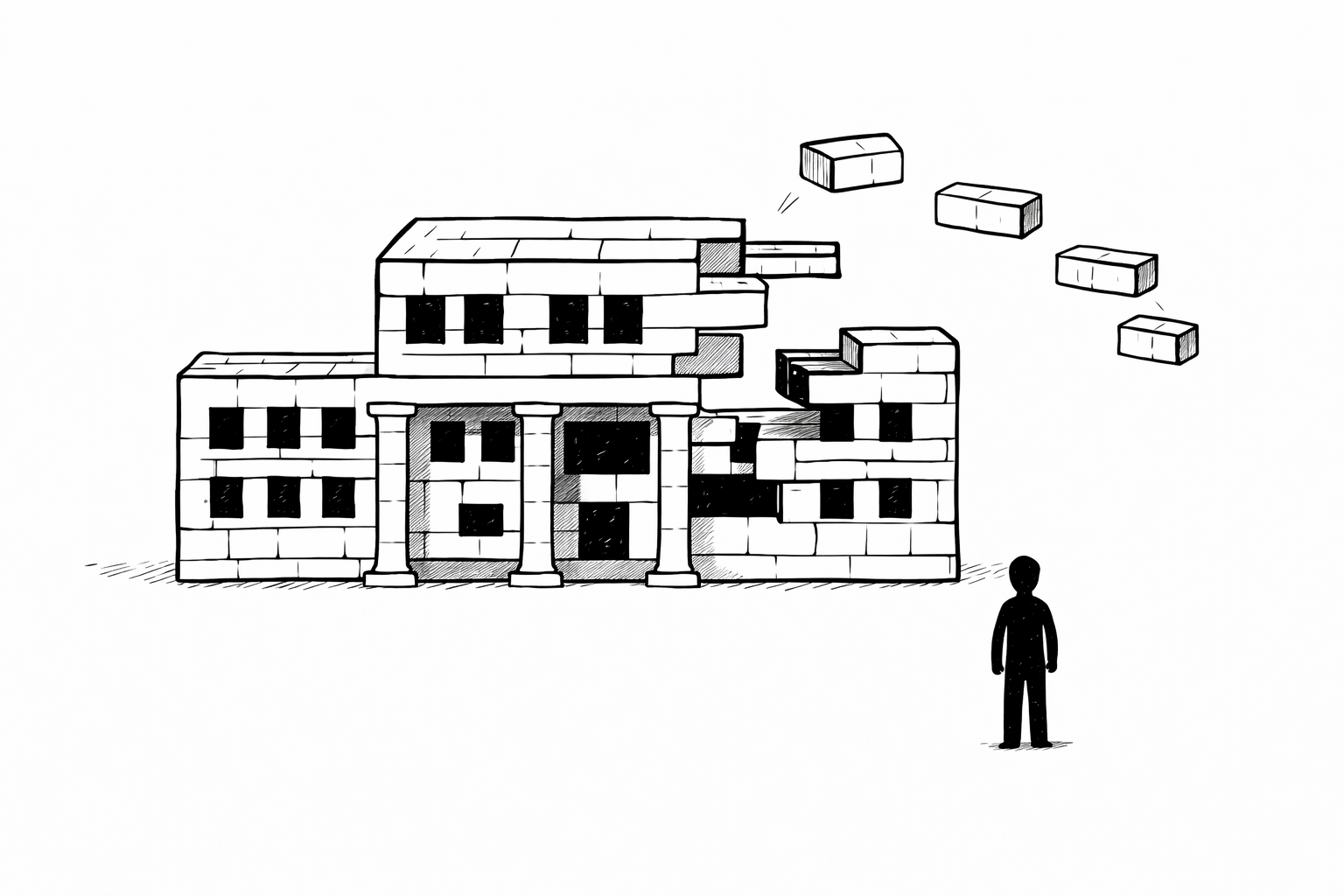
The Department of Education has not been eliminated. What is happening may be more consequential than that.
One year after an executive order targeted the agency, the administration has taken its most significant structural step yet: transferring the federal student loan portfolio — valued at approximately $1.7 trillion — to the Treasury Department. The department has not been formally dissolved. It is being hollowed out from the inside, its core functions redistributed across other agencies through interagency agreements that require no congressional action.
The strategy allows programs tied to education — student aid, civil rights enforcement, funding oversight — to continue operating in some form while being moved outside the department that was built to house them. Workforce reductions have already hit the Office of Civil Rights and Federal Student Aid, raising serious questions about capacity and continuity. The agency still exists on paper. The question is whether it still functions in the way most people expect it to.
For borrowers, the shift to Treasury introduces real and immediate uncertainty. Repayment systems, forgiveness programs, and dispute resolution processes are all potentially affected when the institution managing them changes. Supporters of the restructuring describe it as reducing bureaucracy and returning authority to states. Critics argue it weakens oversight, delays civil rights investigations, and creates confusion for the people navigating an already complex system — particularly those with the least margin for error.
The deeper concern is structural. Federal education policy has historically operated through a centralized framework. When that framework fragments — when multiple agencies share pieces of the same system without a clear center of accountability — outcomes become harder to track, standards harder to enforce, and responsibility harder to assign when something goes wrong.
For students, families, and borrowers, that fragmentation tends to show up quietly at first: delays, gaps in service, reduced clarity about where to turn. Over time, it can reshape the experience of navigating education entirely — making it more uneven, more localized, and more dependent on which state you happen to live in.
This is no longer a debate about whether the Department of Education should exist. The implementation has already begun. And once systems change at this scale, the historical record suggests they are rarely rebuilt the way they were.
WHY IT MATTERS
This is less about whether the Department of Education “exists” and more about whether it still functions in the way people expect.
When institutions are restructured before replacement systems are fully stabilized, the impact is rarely immediate—it shows up in delays, gaps in service, and reduced accountability. For millions of borrowers, that could mean confusion around repayment, forgiveness programs, or dispute resolution. For students and families, it could mean less clarity about where to turn when something goes wrong.
There is also a broader shift taking place: federal responsibility is being redistributed without a single, visible point of control. That changes how accountability works. When multiple agencies share pieces of the same system, it becomes harder to track outcomes, enforce standards, or assign responsibility when failures occur.
In the long run, the question is not just about policy direction, but about infrastructure. Education has historically operated through a centralized federal framework. If that framework becomes fragmented, the experience of navigating education—from financial aid to civil rights protections—may become more uneven, more localized, and more difficult to navigate.
This moment signals a transition from debate to implementation. And once systems change at this scale, they are rarely easy to rebuild.
The Access Shift
The gradual redefinition of who systems are designed to serve.
Across sectors—from public infrastructure to healthcare to everyday spaces—access is no longer assumed. As costs rise and systems face increasing pressure, services once built for broad reach are becoming more selective, more conditional, and less universal. The Access Shift explores how these changes are unfolding in real time—and what they reveal about who is included, who is left out, and how the structure of everyday life is quietly being reshaped.