
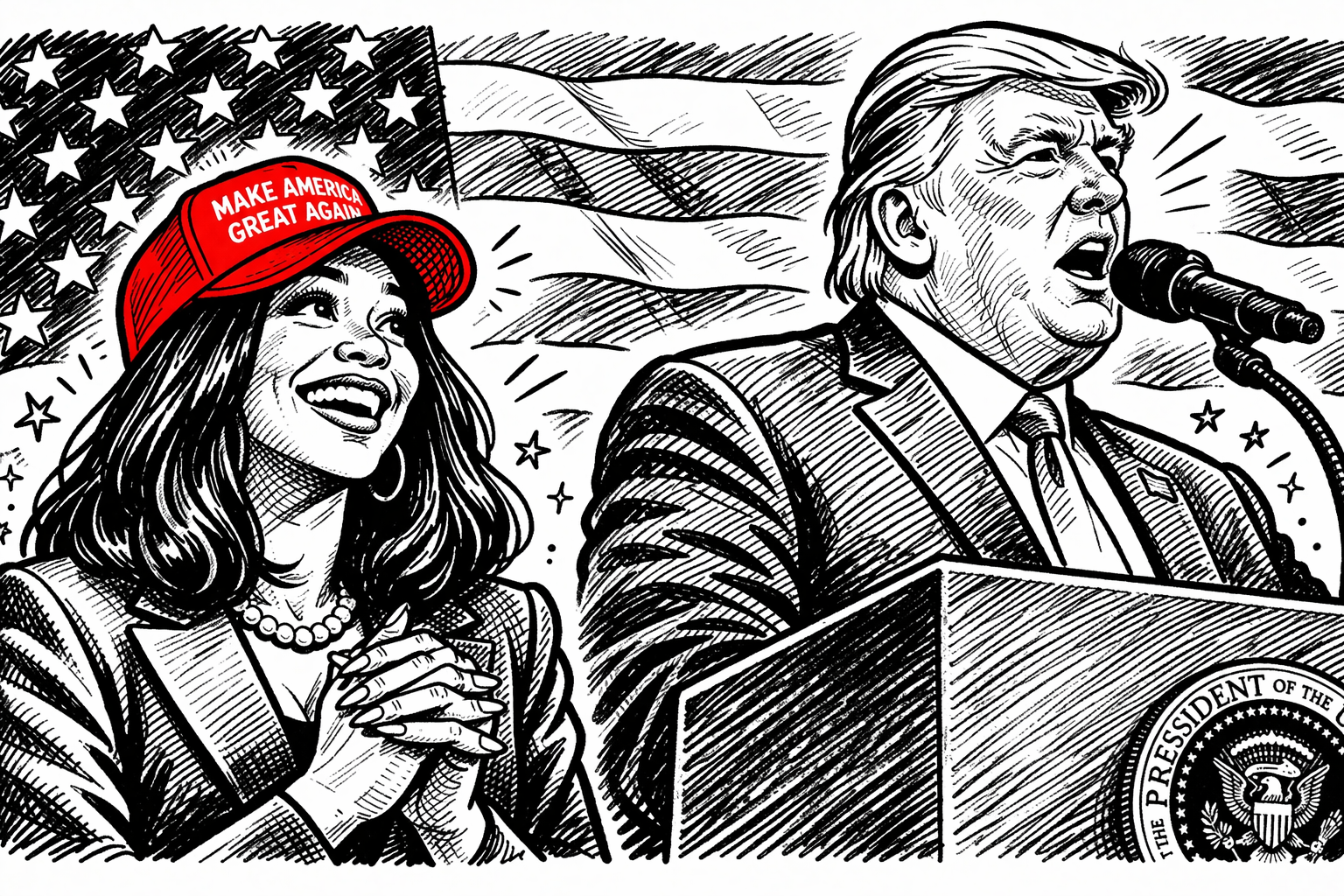
Recently, a world-renowned artist appeared alongside a highly polarizing political figure during a widely publicized media tour. Photographs of the two walking hand in hand circulated quickly across social media, transforming what might otherwise have been a routine appearance into a cultural flashpoint. Within twenty-four hours, the artist had reportedly lost more than 100,000 followers online. The reaction was not limited to casual fans. One reality television personality — long known for publicly celebrating the artist and defending them across social media — posted a video shortly after the images circulated, expressing deep disappointment and announcing that they could no longer offer the same support they once had.
The moment illustrated something larger than a celebrity controversy. It revealed the reputational gamble public figures take when they align themselves with polarizing political figures — specifically, when that alignment collides with the very audience that helped build their career. Celebrities have never existed completely outside politics. Actors campaign for candidates, musicians headline fundraising concerts, and athletes use their platforms to speak about social issues. Historically, however, many public figures approached political alignment carefully because broad cultural appeal often depended on maintaining some distance from partisan identity. That distance helped preserve a sense of universality in how audiences connected to artists.
Today that caution has largely disappeared. Social media has created an environment where public figures are often expected to declare where they stand on political and cultural questions, and many willingly step into those debates, seeing advocacy as part of their public identity. Political expression itself is rarely the risk — many artists have spoken openly about issues without experiencing major backlash, and in some cases those statements strengthen the bond between celebrity and audience. The volatility emerges when alignment with a deeply controversial figure conflicts with the interests and identities of the fan base that elevated them.
Celebrity influence is built on a relationship. Fans do not simply consume the work; they form an emotional connection with the person behind it. Over time that connection becomes part of the celebrity’s cultural identity. When that identity suddenly appears to shift — or align with figures whose policies or rhetoric conflict with the interests of the fan base — the reaction can move beyond disagreement. For many supporters the moment feels less like a political difference and more like a break in a relationship they thought they understood. Surveys from Pew Research Center have consistently shown that Americans are more politically divided today than in previous decades, meaning public figures now navigate audiences that are far less politically uniform than they may appear. A gesture that resonates with one segment of fans can alienate another, and in a polarized climate even small moments of political alignment can carry outsized consequences.
The tension can be especially pronounced when identity and community are central to the relationship between a celebrity and their audience. Many artists in music, film, and fashion have long been embraced by LGBTQ communities — in some cases those communities helped elevate performers early in their careers through enthusiastic fandom, club culture, and online advocacy that amplified their visibility. That history creates an additional layer of expectation. Fans are not only responding to the work; they are responding to what feels like shared cultural alignment and mutual recognition. When a celebrity later aligns with political figures or movements associated with rolling back LGBTQ protections, the reaction can be particularly intense — less like a political disagreement and more like a rupture in a relationship that once felt affirming. What may be intended as personal political expression can instead read as a signal about whose identities and interests are being valued.
This is where the reputational gamble becomes most visible. Political alignment can energize one audience while distancing another. A move that appears authentic to supporters may look contradictory or alienating to those who once felt culturally connected to the artist. In some cases the shift becomes measurable almost immediately — lost followers, public criticism, broken alliances within a celebrity’s own fan ecosystem. What begins as a moment of personal expression can quickly reshape how a public figure is understood by the people who once championed them.
Because in the end, the true risk of celebrity politics is not simply choosing a side in a national debate. Public figures have always had opinions and have occasionally used their influence to advance causes they believe in. The deeper risk lies in how those choices reverberate through the communities that helped elevate them in the first place. When political alignment collides with audience identity, the consequences can extend far beyond the original moment. And sometimes the most difficult realization arrives afterward — when the audience who once felt connected to you no longer recognizes the person standing beside you.