
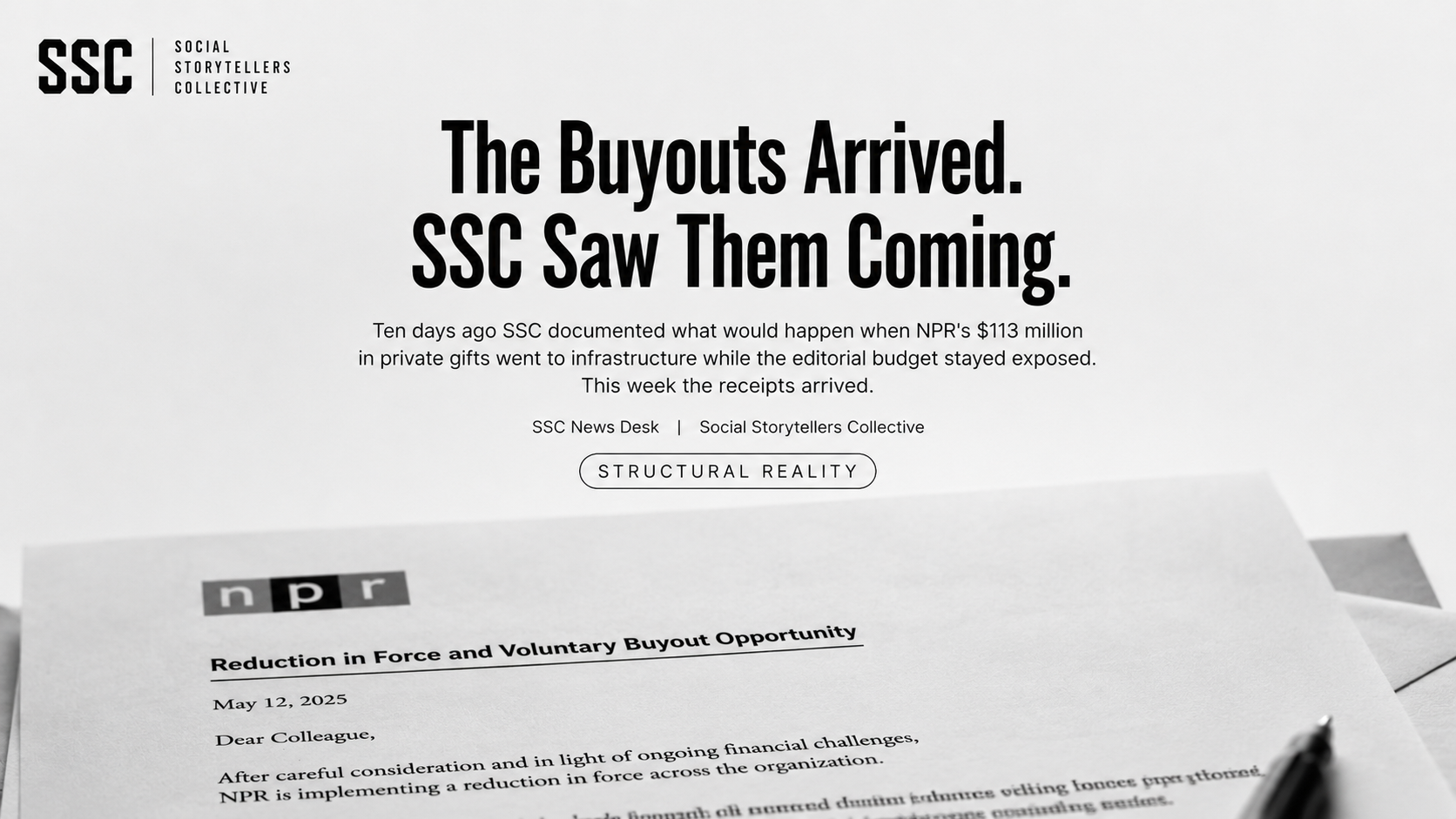
On May 20th, SSC published The Money Went to the Machine. The Journalists Got Buyout Notices. The argument was precise: NPR had just received $113 million in private gifts — the second and third largest donations in the network’s 56-year history — and the money was going primarily to technology infrastructure. Digital modernization. Platform development. Audience expansion tools. The donors funded the container. The journalists, the piece argued, were the contents. And the contents were negotiable.
This week NPR laid off 10 journalists and offered buyouts to 18 more. The reductions amount to 4 percent of all newsroom and podcast staff and are projected to save $8 million in response to a projected $15 million drop in member station fees. Among those accepting buyouts: national political correspondent Don Gonyea, managing editor Vickie Walton-James, and investigations correspondent Joe Shapiro — three of the journalists who carried the deepest institutional knowledge and the longest source relationships in the building. That expertise does not transfer to a content management system. It walks out the door with the person who built it.
NPR senior editor Geoff Brumfiel captured the tension plainly in a public post this week. He named the alternatives to institutional journalism directly — influencers paid with dark money, sycophantic AI telling people what they want to hear, rage farming and spin driving the algorithm instead of facts. He is right about all of it. He is also describing the vacuum these layoffs are expanding. Every journalist who leaves NPR is one fewer person standing between the information environment Brumfiel described and the communities that public media was built to serve.
The structural argument SSC made ten days ago has not changed. Federal defunding of public broadcasting is not a budget decision. It is an information architecture decision. When you eliminate the funding mechanism for non-commercial journalism you are not saving money — you are choosing which information environment replaces it. Private philanthropy filled part of the gap NPR lost when Congress cut federal subsidies. But philanthropy builds what donors value. It funds what it can measure. It scales what technology can carry. It does not have a mandate to serve the rural communities, underserved regions, and places where local news infrastructure has already been hollowed out that public media was specifically built to reach.
This connects to every media story SSC has covered this month. The same outlets now puzzled by Black men’s migration away from mainstream media spent years cutting the journalists most likely to cover their communities accurately. When the Story Keeps Getting You Wrong, You Stop Reading It documented that pattern in detail. The NPR buyouts are the same pattern wearing a different institution’s name. The journalists leaving are not leaving because public media failed. They are leaving because the system that was supposed to sustain public media was deliberately dismantled — and the replacement doesn’t need as many of them to run.
The buyouts are the receipt. SSC had already read the bill.