
Gallup’s June 2026 Values and Beliefs survey found that 65 percent of Americans support same-sex marriage, down from a 71 percent peak in 2022 and 2023. The survey also found that 62 percent believe gay or lesbian relations are morally acceptable — the lowest level since 2016 — while 38 percent said changing one’s gender is morally acceptable, an eight-point decline over the past five years. The findings were released as Pride Month begins amid a legislative environment in which the ACLU has tracked more than 530 anti-LGBTQ+ bills introduced in state legislatures in 2026 alone, according to the ACLU.
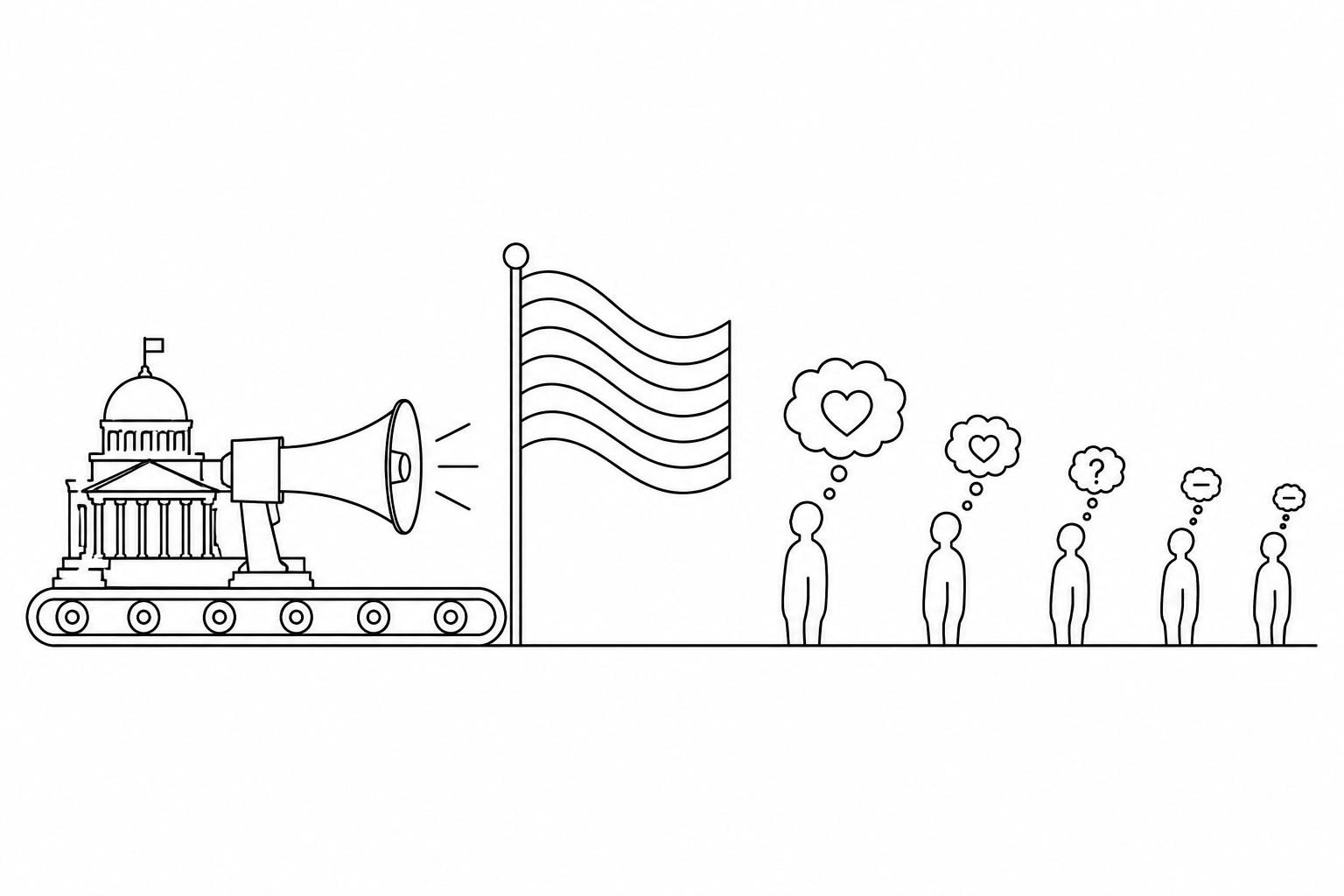
Public opinion rarely develops independently of institutions. Legislatures, advocacy organizations, media outlets, courts, and political campaigns all compete to define which issues receive sustained public attention and how those issues are understood. Polling often measures the cumulative effect of those efforts rather than the sudden emergence of new attitudes.
The Gallup findings arrive after several years in which LGBTQ+ issues increasingly moved from advocacy organizations and court decisions into state legislatures, school policies, healthcare debates, athletic associations, and national political campaigns. Pride Month itself has become part of that contest, with disputes over public programming, corporate sponsorship, school participation, and municipal recognition making the celebration as much a political event as a cultural one.
The generational breakdown makes the data significant. Gallup’s broader research has consistently found that younger Americans express more supportive views on LGBTQ+ rights than older generations. Understanding whether the recent decline reflects changing attitudes within younger cohorts or the persistence of older attitudes carries very different implications for the future trajectory of public opinion. The topline numbers measure movement, but the cohort dynamics determine whether that movement is temporary or structural.
The polling also intersects with another measurable trend: the business climate surrounding LGBTQ+ issues has deteriorated in several states as legislative activity has intensified. Employers competing for talent increasingly evaluate social policy alongside taxes, infrastructure, and education because workforce recruitment depends on whether prospective employees view a location as welcoming. Public opinion and business climate indicators are measuring different dimensions of the same institutional environment.
Polls are often treated as snapshots of culture. They are also historical records of sustained political, legislative, and media activity. By the time attitudes shift in measurable ways, the institutions competing to shape those attitudes have frequently been operating for years. Public opinion is often the lagging indicator. Organized infrastructure is the leading one.