
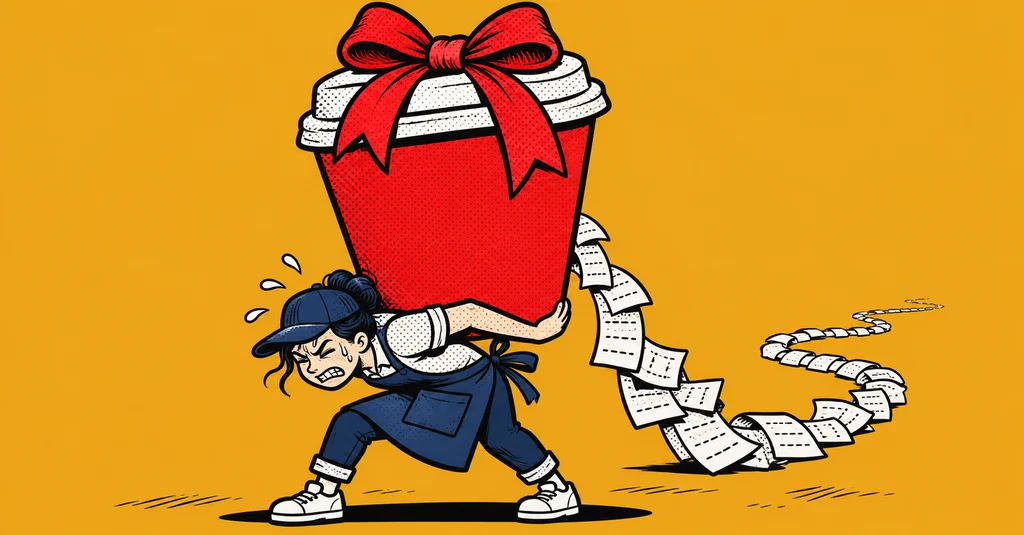
The company’s busiest promotion returns Tuesday. Five years after baristas first unionized, the fight has moved from the picket line to the customer.
Starbucks’ Red Cup Day returns Tuesday, November 17, when customers who buy a holiday drink get a free reusable red cup while supplies last. It’s one of the chain’s busiest days of the year, and for baristas, it’s become one of the hardest. Workers have used the day to protest three times in four years, including a 2025 strike that started on Red Cup Day and grew, by the union’s count, to 2,500 baristas at more than 120 stores before most returned to work in December.
This year, Starbucks moved first. On Thursday, the company said nearly 80% of its baristas will receive the first $300 quarterly bonus under its “Best of Starbucks Reward” program, which pays up to $1,200 a year when a store hits sales, operations and customer service targets. The payout follows four straight quarters of growth, including a 7.7% rise in same-store sales last quarter.
A bonus isn’t a contract
The bonuses are real money, but they’re conditional by design. SSC noted when the program was announced in April that performance pay shifts how baristas are paid without guaranteeing a higher baseline, and a store that misses its targets earns nothing that quarter. For unionized stores, Starbucks has said the program is subject to collective bargaining, which brings the story back to the contract that still doesn’t exist.
More than four years after the first store voted to join Starbucks Workers United, the two sides have not reached an agreement. In March, the union proposed a $17 minimum wage, 4% annual raises and a rule that at least three workers be on the floor whenever a store is open. Starbucks has called earlier union proposals financially unsustainable and says it bargains in good faith. The union says starting pay is $15.25 in most states and that many baristas average too few hours to qualify for benefits.
From strike to boycott
The union’s strategy has changed. Instead of walking out on Red Cup Day, Starbucks Workers United is now asking customers and institutions to stay away, with campus actions this week at more than 40 universities pushing schools to drop their Starbucks contracts. It’s also still growing: stores in New Jersey and Massachusetts voted to unionize in the past week, and the union says it represents more than 700 locations and 12,000 workers.
The shift puts the pressure on customers rather than on the baristas’ own paychecks, after a strike many workers couldn’t afford to keep going. It also lands as Starbucks closes hundreds of underperforming stores while renovating others, and after the company stopped covering GLP-1 prescriptions for workers even as it marketed to GLP-1 customers.
What the red cup holds
On Tuesday, the free cup will be the story most customers see. Behind the counter, the questions are the same ones baristas have raised for five years: how many people are scheduled, how many hours they get and whether pay depends on a quarterly target or a contract. Starbucks has shown it can grow sales and pay bonuses at the same time. Whether it can reach a deal with the workers making those holiday drinks is still the unanswered part.