
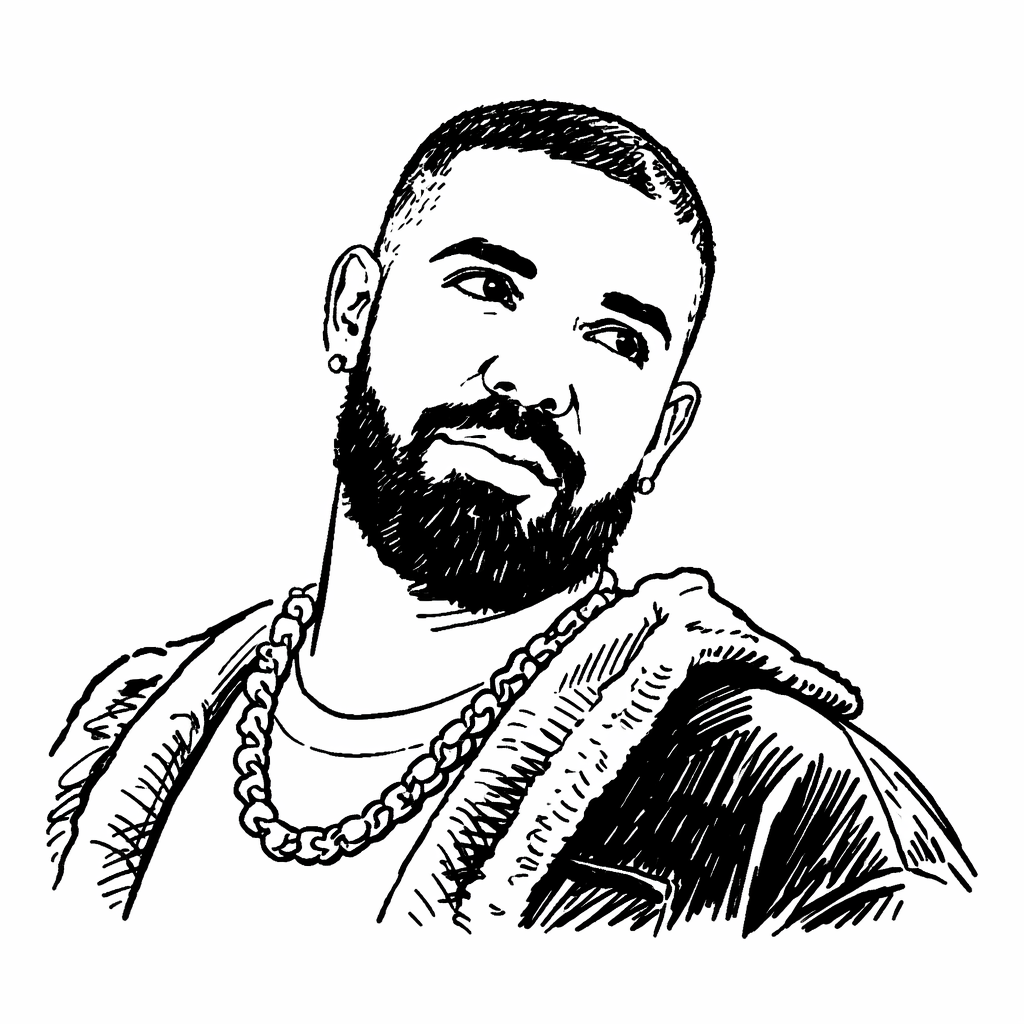
For nearly two decades, Drake hasn’t just participated in rap — he’s defined its commercial center. From the breakout of So Far Gone to the chart dominance that followed Thank Me Later, his presence has been constant, calibrated, and nearly impossible to avoid. Visibility wasn’t a byproduct of success; it was the strategy, and for years it compounded in his favor.
That’s what makes this moment feel different. In the aftermath of his public clash with Kendrick Lamar, Drake hasn’t disappeared — he’s done something far more unusual for an artist of his scale: he’s reduced his presence. Fewer releases, less noise, a noticeable step back from the constant cycle that once worked in his favor. For an artist whose power was built on omnipresence, even a slight withdrawal reads as a meaningful shift. And then, when he did resurface, he did it on his own terms — dropping the comeback single “What Did I Miss?” which reached No. 2 on the Billboard Hot 100, and beginning a slow, deliberate rollout for his forthcoming album Iceman. The message attached to a recent teaser said everything about the posture he’s chosen: “What I was doing when you thought I was crying.”
That is not the language of an artist in retreat. It is the language of someone who understood that stepping back was itself a move. While the culture was writing its narrative about his decline, Drake was quietly making his own. In late 2023, he purchased The Inn at Dos Brisas — a 313-acre Texas ranch in Brenham, between Austin and Houston — for $15 million. A Mediterranean-style estate with equestrian facilities, an organic farm, and the state’s former only Forbes five-star restaurant. Whatever the next chapter looks like, he wasn’t building it from a place of defeat.
J. Cole, who knows both artists personally and watched the fallout unfold from the inside, offered the clearest outside read on what actually happened. In a recently surfaced conversation with Cam’ron, Cole said what many in the industry have been reluctant to name directly: “It’s disgusting how people tried to use that opportunity to either show how they really felt about Drake the whole time or just pile on and tear this dude down and create a narrative as if he’s not great. It was a whole campaign and probably still is ‘til this day.” Cole described the culture splitting along political lines — you were either Kendrick or you were Drake — and said he was “disgusted both ways.” He’s now rooting for Iceman to go crazy. That kind of candid peer acknowledgment is rare, and it reframes the silence differently. Drake wasn’t just losing — he was being targeted, and he knew it.
Understanding why the targeting stuck requires understanding the environment it played out in. As we explored in If Beef Is No Longer a Game, What Is It Now?, the conditions surrounding modern hip-hop conflict have fundamentally changed. What once functioned as a competitive ritual — diss, response, escalation, and eventual fade — now behaves more like a permanent fracture. Algorithms reward division over breadth, fans become aligned constituencies rather than casual observers, and narrative forms quickly and stays in place. In that environment, the upside of conflict remains high but the downside has expanded considerably. Reputation can be locked in within a single cycle. Drake didn’t just lose a battle — he lost it inside a system designed to make the loss permanent.
But he’s also fighting back on a second front. Drake has filed an amended lawsuit against Universal Music Group — his own label — alleging that UMG intentionally promoted Lamar’s diss track “Not Like Us” to damage his reputation, leveraged industry relationships to secure Grammy nominations and wins for the song, and orchestrated Lamar’s Super Bowl halftime performance as what his complaint calls the first show “orchestrated to assassinate the character of another artist.” The suit also alleges that threats against Drake and his family increased significantly following the Super Bowl performance, including a shooting at his home that wounded a security guard. UMG has called the lawsuit “frivolous and reckless,” and noted pointedly that “Drake will personally be subject to discovery as well.” Whatever the legal outcome, the complaint reveals something important — Drake isn’t processing this chapter quietly. He is documenting it, and he is naming names. The recalibration has a paper trail.
That’s where the broader repositioning becomes necessary. His recent appearance in the UK — where he suggested that some of the most compelling rappers are emerging from there — wasn’t just a throwaway comment. Whether interpreted as global awareness or cultural provocation, it reflects a strategic expansion beyond a U.S.-centric narrative, reframing influence for a global era rather than rejecting its origins. The Iceman rollout follows that same logic — staged, patient, and deliberately paced to build anticipation rather than flood the zone.
What’s also shifting is the ecosystem Drake helped build. A generation of artists who rose in his wake — benefiting from the melodic, personality-driven, crossover blueprint he normalized — are now defining themselves in contrast to it. As we noted in our review of Monica: The Album Where Jack Harlow Finally Stops Rapping, Harlow has moved decisively away from the rap-forward formula that first made him famous, leaning fully into melody, mood, and a sonic identity that owes a debt to the blueprint Drake helped normalize — while quietly distancing itself from it. Harlow has acknowledged coming from the “school of Drake, absolutely,” while making clear his focus now is on finding his own voice and avoiding anything derivative. The implication is subtle but important: influence doesn’t disappear — it gets absorbed, then resisted, and what once functioned as a template eventually becomes something the next wave has to move beyond.
For an artist at Drake’s scale, reinvention rarely looks dramatic and rarely announces itself loudly. It looks like restraint — stepping back just enough to allow the narrative to cool, to create distance from conflict, and to reset expectations in a landscape where constant output can dilute impact rather than reinforce it. Absence, when intentional, becomes a form of control, restoring curiosity and reestablishing leverage in a way that constant presence no longer can. The Iceman rollout — cryptic teasers, no confirmed features, a careful drip of imagery and language — is that strategy made visible.
That pacing is now visible in real time. As SSC examines in The Rollout Is the Story Now, the ICEMAN campaign has restructured the album release itself around the logic of attention — a block of ice in downtown Toronto, melting in public, carrying a date inside it that the internet is being asked to wait for. The music has not arrived. But Drake is already everywhere.
Drake’s career has been defined by his ability to read the moment before others do. The current moment is more complicated than any he has previously navigated — a legal battle with his own label, a cultural narrative that declared him finished, a peer acknowledging that what happened wasn’t just competition but a coordinated effort, and an algorithm-driven ecosystem that turned a rap battle into a permanent verdict. The question is no longer just whether he can make a comeback. It is whether the infrastructure he built his dominance on is still aligned with his interests — and what he builds in its place if it isn’t. Based on the ranch, the rollout, the lawsuit, and the teaser that started it all — he was never crying. He was planning.