
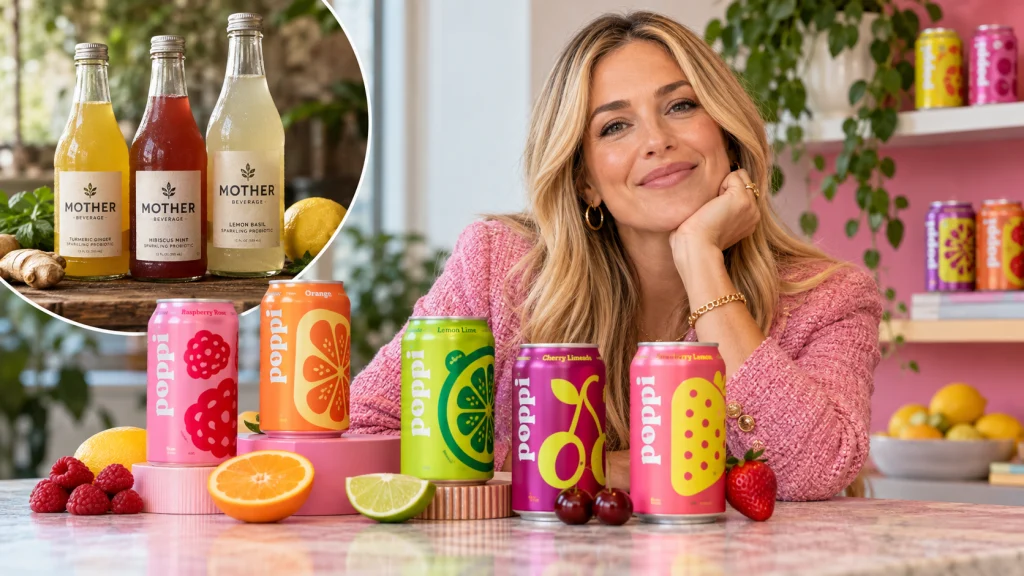
Allison Ellsworth was experimenting with apple cider vinegar, fruit juice and sparkling water in her Texas kitchen in 2015 when she began developing a drink that would eventually become one of the most recognizable new soda brands in America. She wanted something she could enjoy without the sugar typically associated with soft drinks, and believed other consumers might want the same thing.
Her husband, Stephen Ellsworth, helped turn those experiments into a business. They called it Mother Beverage, bottled the drinks themselves and began selling them at farmers’ markets around Dallas. The packaging looked nothing like the Poppi cans consumers recognize today. A decade later, PepsiCo acquired their company for $1.95 billion.
The acquisition, completed in May 2025, was an extraordinary outcome for a business that began with homemade drinks and direct conversations with customers. It also reflected a change in the American beverage industry, where emerging brands can build enormous consumer followings before traditional giants fully recognize the opportunity.
The Farmers’ Market Was Their First Test
Allison began experimenting with apple cider vinegar because of her interest in wellness. Its sharp taste was difficult to enjoy on its own, so she combined it with fruit and other ingredients. Stephen helped develop production, including adapting equipment to carbonate their drinks.
At Dallas-area farmers’ markets, shoppers could taste the drink, ask questions and decide whether it was worth purchasing. The couple could observe which flavors attracted interest and learn whether enthusiasm translated into sales.
But local demand was only the beginning. Production, packaging, customer acquisition and distribution all presented challenges. Selling a drink at a farmers’ market was one thing. Getting that drink onto supermarket shelves nationwide required a different operation.
A Television Appearance Changed the Company’s Trajectory
In 2018, the Ellsworths appeared on ABC’s Shark Tank, presenting Mother Beverage to investors who could help the small business grow. Rohan Oza, an investor with experience building consumer beverage brands, agreed on the show to invest $400,000. His involvement and the backing of CAVU Consumer Partners brought expertise and industry relationships.
The founders and their investors eventually transformed Mother Beverage into Poppi. The new name was short and playful; the packaging shifted toward brightly colored cans. Rather than center the identity on apple cider vinegar, the company could present a refreshing soda that appealed to consumers who might not be interested in wellness supplements.
Poppi launched under its new identity in 2020, as the COVID-19 pandemic disrupted retail operations. The timing helped push the company toward digital channels.
Allison Ellsworth Became One of Poppi’s Most Effective Marketing Tools
On TikTok, Allison presented herself as a founder explaining how she created a beverage in her kitchen and tried to turn it into a business. She experimented with recipes, family videos and different ways to introduce the product. Her origin story connected with viewers.
Consumers were following someone who had started a company with her husband, taken it onto national television and kept building. That gave Poppi a personality and made its cans recognizable before some shoppers had even tried the drink.
In a September 2025 How I Built This interview, the Ellsworths described how social media and Amazon became important as the business expanded. Poppi also invested in conventional marketing, retail expansion and celebrity partnerships. Its founder-led storytelling helped generate early familiarity without relying exclusively on traditional advertising.
When a Brand Becomes Bigger Than Its Product
By 2025, Poppi had national retail distribution, a substantial social media presence and a distinctive visual identity. Its bright cans and playful typography made it stand out against conventional soft drinks.
The beverage combined sparkling water, fruit juice, apple cider vinegar and prebiotic ingredients. PepsiCo said its drinks contained no more than five grams of sugar per serving. Poppi offered an alternative to conventional soda while presenting itself as a modern, flavorful soft drink.
Its success also created scrutiny. As a company associates products with wellness, its claims attract attention from consumers, researchers and litigants.
The Health Claims That Complicated Poppi’s Success
In 2024, consumers filed lawsuits challenging Poppi’s marketing of its drinks as beneficial for gut health. Plaintiffs argued that the prebiotic fiber in the beverages was insufficient to deliver the advertised benefits.
Poppi denied wrongdoing. In its settlement agreement, the company maintained that it had not unlawfully or deceptively marketed its drinks and said it had decided in late 2023 to remove references to gut health from product labels. It agreed to establish an $8.9 million settlement fund. In April 2026, a federal judge in California granted final approval, resolving the litigation without a trial determining whether its marketing was unlawful.
Poppi also drew criticism in February 2025 for sending branded vending machines to influencers as part of a Super Bowl campaign. Ellsworth publicly disputed claims about the machines’ cost and acknowledged the criticism. The episodes showed how the direct consumer relationship that helped the brand grow could expose it to immediate scrutiny.
Why PepsiCo Was Willing to Spend Nearly $2 Billion
PepsiCo announced its agreement to acquire Poppi in March 2025, as consumer interest in lower-sugar beverages and wellness-associated products continued to grow. Poppi had already developed a recognizable identity in the emerging prebiotic soda category.
The transaction closed on May 19, 2025, for a reported $1.95 billion, including $300 million in anticipated cash tax benefits. PepsiCo also disclosed contingent consideration with an acquisition-date fair value of approximately $200 million, tied to performance-related provisions.
The corporate purchase price was not a direct payment to Allison and Stephen personally. Poppi had outside investors and other equity holders, and the founders’ individual proceeds have not been publicly established in acquisition disclosures.
For PepsiCo, buying Poppi offered a way to acquire a consumer following and brand identity that its manufacturing and distribution infrastructure could expand. The purchase was part of a broader interest in younger food and beverage brands, including its acquisition of Siete Foods.
What the Ellsworths Built That PepsiCo Couldn’t Simply Manufacture
PepsiCo already knew how to make soda, distribute it nationally and advertise it. Poppi brought a relationship with consumers built through a founder’s story, farmers’ market feedback, outside investment, rebranding and digital marketing.
Each stage addressed a different challenge. The first product gave the founders something to sell. Customer feedback demonstrated interest. Investors supplied expertise and resources. The new identity helped the cans compete for attention. Social media gave consumers reasons to remember them.
The Ellsworths were willing to abandon their original brand name and packaging while continuing to pursue the opportunity that motivated them: a lower-sugar soda people would enjoy.
The Business Began With a Drink Someone Wanted to Make Better
It is tempting to look at the acquisition price and treat the outcome as inevitable. The early business had limited distribution, unfamiliar ingredients and a name that would eventually disappear. The founders had to persuade shoppers to try the drink, investors to support it and retailers to make room for it.
Poppi benefited from experienced investors, capital, strategic marketing and a growing consumer category. Those advantages help explain why it succeeded where many promising products struggle to scale. But the company still began with a recognizable entrepreneurial instinct: Allison saw a product she wanted to exist and decided to make it herself.
Ten years later, PepsiCo was willing to pay nearly $2 billion for the business she and Stephen built. The cans had changed. The name had changed. The scale was almost unrecognizable. What remained was the original observation: people still wanted soda, but some were looking for a different kind. Poppi turned that observation into a business large enough to attract one of the industry’s most powerful companies.