In June 2024, Pharrell Williams released LVERS — his first fragrance as Men’s Creative Director of Louis Vuitton, crafted in collaboration with master perfumer Jacques Cavallier Belletrud. The question Pharrell reportedly asked at the start of the process was simple: “What does sunlight smell like?” The answer Cavallier Belletrud arrived at — galbanum, bergamot, ginger, cedar, and sandalwood, built around an Iranian gum resin rarely used in modern perfumery to evoke the warmth of forest light — is genuinely good. The fragrance is solar and grounded, gender-neutral in intention and execution, and packaged in an iridescent bottle that earns its $320 price point aesthetically even before you spray it. As a fragrance, LVERS delivers.
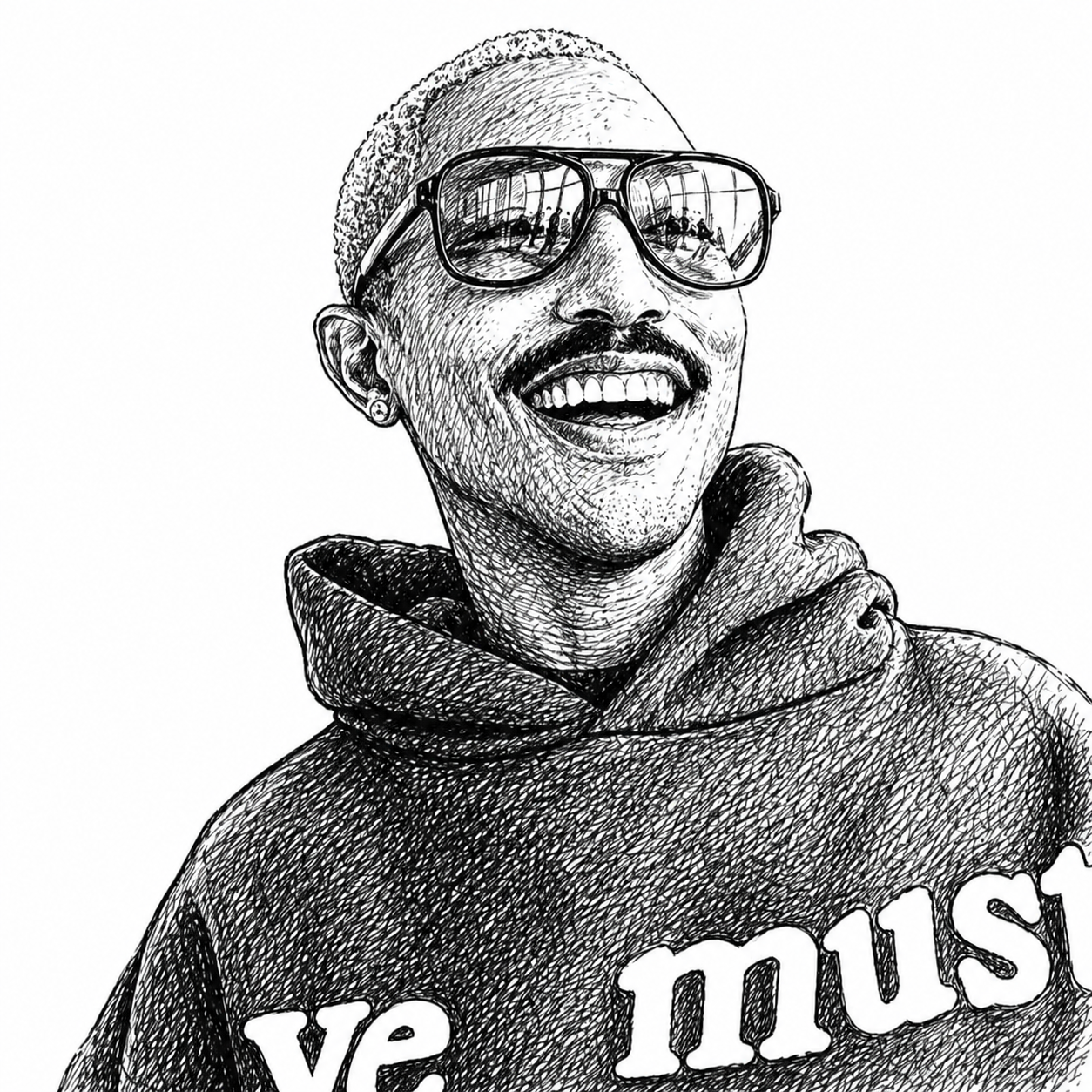
But the fragrance is not the story. The story is who is making it and what house he is making it for.
Louis Vuitton relaunched its fragrance program in 2016 after decades away from the category, establishing a creative atelier in Grasse and installing Cavallier Belletrud as its in-house perfumer. That program — built around European craftsmanship, Parisian heritage, and the kind of quiet exclusivity that luxury houses use to signal who they are for — has never been designed with Black consumers at the center of its imagination. Louis Vuitton sells to Black consumers. It does not historically speak to them, build for them, or reflect them in its creative leadership. That is the context in which Pharrell’s appointment in 2023 landed, and it is the context in which LVERS should be read.
What Pharrell brought to LV was not just creative direction — it was cultural permission. His Damoflage print, a camouflage riff on the house’s Damier checkerboard, is now on the LVERS travel case. His debut runway show on the Pont Neuf, lit in the gold tones that inspired the fragrance’s concept, was the first LV men’s show that felt like it was made for an audience that included Black people without making Blackness a costume. The fragrance is the olfactory extension of that project — an attempt to translate his philosophy, not just his aesthetic, into a product.
The philosophy is optimism. “The theme of light highlighted in Pharrell’s first show gave us the desire to translate photosynthesis into an olfactory score,” Cavallier Belletrud explained at launch. Photosynthesis — the process by which living things convert light into sustenance — is not a subtle metaphor for a Black creative director working inside one of the world’s most powerful luxury houses. Whether it was intended that way is almost beside the point. The resonance is there for anyone paying attention.
What LVERS does not resolve is the access question. At $320 for 100ml, the fragrance sits comfortably within Louis Vuitton’s established price architecture — aspirational for most, attainable for some, symbolic for many. The people most energized by Pharrell’s presence at LV are not necessarily the people who can walk into a Louis Vuitton store and buy the thing he made. That gap between cultural representation and economic access is not Pharrell’s failure. It is the structure he is operating inside. His presence at the table changes what gets made. It does not change who can afford to buy it.
That tension is worth holding rather than resolving. LVERS is a good fragrance made by a Black man at the top of the world’s most valuable luxury house, in collaboration with a master perfumer whose previous work includes Acqua di Gio and Bvlgari Pour Homme. It smells like something genuinely worth smelling. It also costs $320 and comes in a travel case that runs another $630. Pharrell being there matters. The price tag being what it is also matters. Both things are true, and the Critic’s Room is not interested in pretending otherwise.