
Part of The Access Shift — an ongoing series examining how access is being quietly reshaped across American life.
NEWS DESK | SOCIAL STORYTELLERS COLLECTIVE
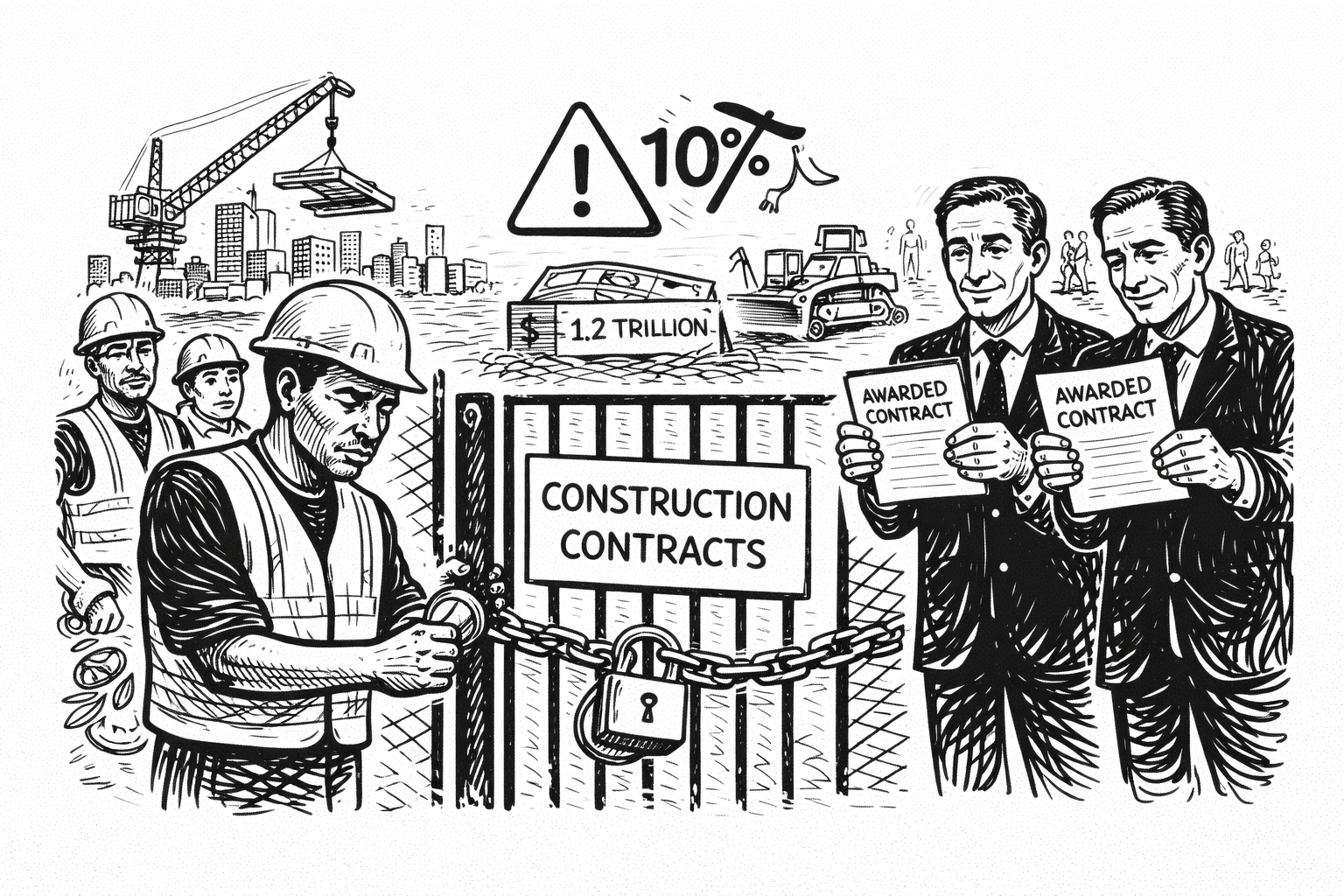
The 2021 Bipartisan Infrastructure Law promised $1.2 trillion to rebuild American roads, bridges, airports, and transit systems. It also included a mandate that at least 10% of surface transportation funding flow to disadvantaged businesses — a provision specifically designed to route federal dollars toward minority and women-owned firms that had been locked out of the construction industry for generations. That promise is now being systematically dismantled.
The Department of Transportation’s Disadvantaged Business Enterprise program — a 42-year-old federal initiative — is now in flux after a court ruling cleared the way for the administration to end the program’s automatic presumption that businesses owned by racial minorities or women were socially and economically disadvantaged. An Interim Final Rule that took effect October 3, 2025 eliminated that presumption entirely and required all 50,000 currently certified DBE firms nationwide to reapply under new standards that cannot consider race or sex as factors.
The practical consequences are immediate. In more than 25 interviews, minority contractors told Reuters the changes have already contributed to declining profits, layoffs, and project delays. Some local minority subcontractors have seen their weekly contract solicitations drop from dozens down to just one or two. In Minnesota, state transportation officials dropped the minority participation goal on a $1.8 billion bridge replacement project — the largest in the state’s history — after the ruling took effect. Florida is pushing to repeal the program altogether.
The framing around this dismantling is important to name. The infrastructure law was bipartisan. The DBE program was created during the Reagan administration. The court challenge that triggered this crisis was filed by two non-minority Indiana firms arguing the presumption of disadvantage was unconstitutional. None of this is incidental. It reflects a coordinated effort to use legal and regulatory mechanisms to achieve outcomes that would be politically difficult to pursue directly. As SSC has tracked in The Neighborhood Got a Whole Foods and across the Access Shift series — the people who absorbed decades of exclusion from these industries are once again being asked to prove their disadvantage individually, in a system that has never acknowledged it structurally.
Why This Matters
The infrastructure law was one of the clearest opportunities in a generation to direct federal investment toward communities that built this country’s roads and bridges without receiving proportionate access to the contracts they created. Removing the mechanism that made that possible — while leaving the funding intact for others to capture — is not a neutral legal outcome. It is a redistribution. And the communities that lose access to these contracts don’t just lose revenue. They lose the generational wealth, employment, and institutional credibility that federal contracting has historically provided to the communities it was designed to serve.
The Access Shift
The gradual redefinition of who systems are designed to serve.
Across sectors—from public infrastructure to healthcare to everyday spaces—access is no longer assumed. As costs rise and systems face increasing pressure, services once built for broad reach are becoming more selective, more conditional, and less universal. The Access Shift explores how these changes are unfolding in real time—and what they reveal about who is included, who is left out, and how the structure of everyday life is quietly being reshaped.