
Part of Culture in Motion — examining who defines culture, how it moves, and what it reveals about the moment.
Shai Gilgeous-Alexander has spent the past few seasons building something rare in the modern NBA. He is not just an elite scorer for the Oklahoma City Thunder — currently on a historic run that has him surpassing Wilt Chamberlain’s record of 126 consecutive 20-plus point games. He has also become one of the league’s clearest cultural figures, an athlete whose influence extends from pregame tunnel fits to full-scale fashion collaborations. His partnership with Converse has now reached its most personal milestone: the release of his first signature sneaker, the Shai 001.
The title matters as much as the shoe. Gilgeous-Alexander has been appointed creative director of basketball at Converse — not just an endorser, not just a collaborator, but an architect with a seat at the design table. “Collaborations and PEs are fun, but a signature is different. You’re building something that feels like you,” Gilgeous-Alexander told Highsnobiety. “From the shape to the materials to the little details, every design decision means something.” That level of ownership is not standard in athlete footwear deals. It is the thing that makes the Shai 001 worth examining beyond the colorways.
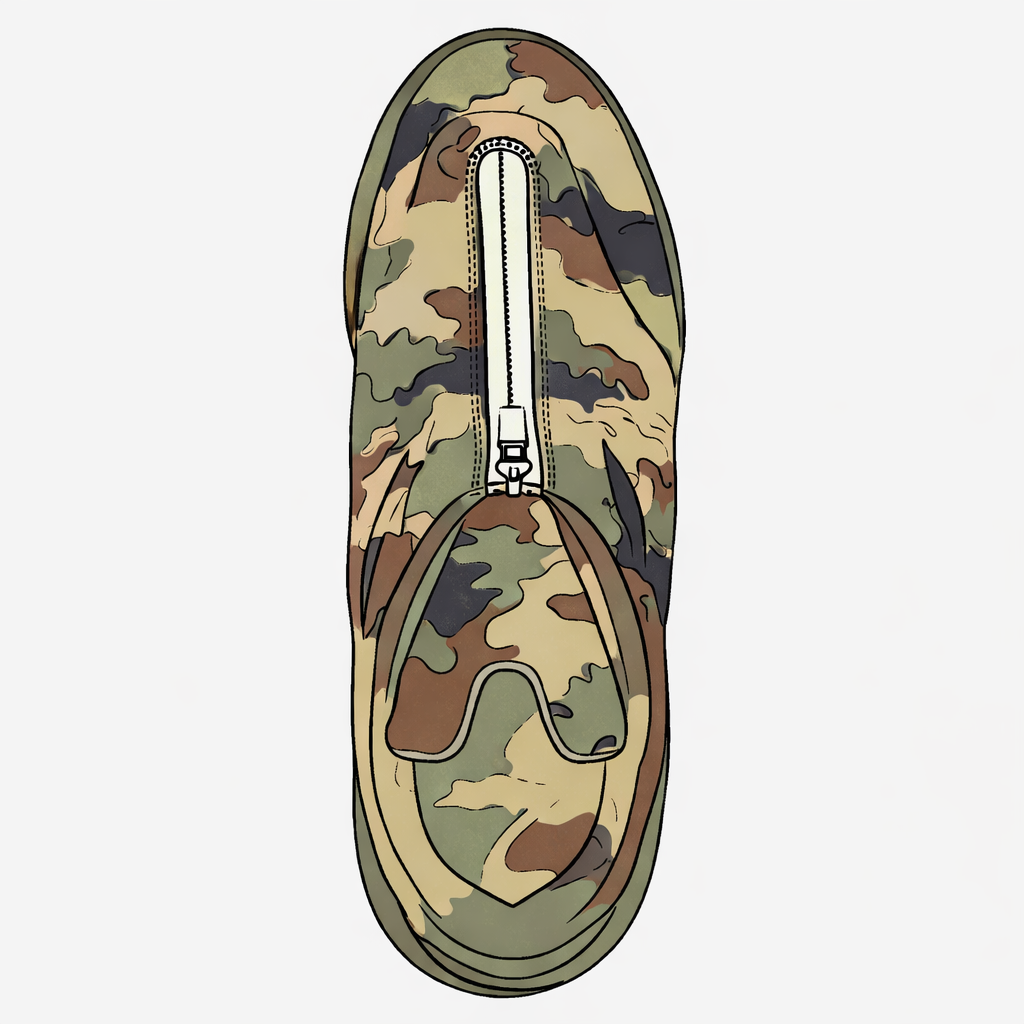
The story behind the shoe’s design reveals how seriously he took that role. Converse’s team described him as calling daily, reviewing details down to the centimeter, catching missed embossing decisions that most athletes would never notice. He sketched. He had a point of view on product — not a performed one, but a functional one built from genuine engagement with design. That process shows in the result. The initial version leaned into a clean, tonal aesthetic built with premium textures and a zipper construction that blurred the line between sport and fashion. It did not just perform. It styled.
The rollout has moved quickly and with intention. The Shai 001 Lux debuted during All-Star Weekend 2026 in a “Truffle” colorway — soft nubuck, muted tones, a quiet luxury direction that Gilgeous-Alexander described as giving him room to explore materials in a way that still felt true to him. The camouflage colorway — officially named “Echo” after his dog — dropped April 2 and marks the first time the silhouette introduced an all-over print for a wider release. Most recently, Gilgeous-Alexander previewed a lace-up version on Instagram, removing the signature zipper entirely and signaling that the shoe is being built for longevity, not novelty. Every new colorway has sold out quickly.
There is a competitive layer underneath all of this. Signature sneakers live in a crowded ecosystem where cultural credibility often matters as much as performance specs. Converse itself had spent years as a fashion staple falling out of favor with mainstream consumers after years of oversupply — and the Shai 001 was an explicit bet on returning to basketball’s hardwood as a cultural entry point. That bet required an athlete who could carry both lanes simultaneously, someone whose tunnel fits and scoring titles reinforced each other rather than creating cognitive dissonance. Gilgeous-Alexander is built for exactly that intersection.
This connects to a pattern SSC has been tracing across Culture in Motion: the shift in how Black athletes are negotiating their relationship to the brands that carry their name. As covered in the analysis of the Jay-Z GQ interview, the question of authorship — who controls the product, who shapes the narrative, who holds creative authority over the thing that bears their identity — is increasingly central to how the most culturally conscious athletes are making deals. Gilgeous-Alexander’s creative director title is not ceremonial. It is structural. As Converse’s Adrian Stelly put it, “The special thing about him and our brand — we’re for creators. He fit into that space of being the architect and not just an endorsee.”
In a sneaker market still recalibrating after the Adidas Samba saturation wave, the next phase belongs less to mass adoption and more to distinct point of view. The Shai 001 has earned its early credibility by being coherent — aesthetically, culturally, and personally. It knows what it is, because the person who designed it knows who he is.
The result is a shoe that feels less like a launch and more like a foundation. Not trying to capture a moment. Positioning for continuity.
Why This Matters
The signature sneaker has always been one of the most legible measures of an athlete’s cultural power — but the terms of that power are shifting. The athletes who will define the next decade of sports culture are not just lending their names to products someone else designed. They are building creative authority into the deal from the start. Gilgeous-Alexander’s approach — creative director, daily design calls, full aesthetic ownership — is a model worth watching, because it represents what athlete-brand relationships look like when the athlete arrives with genuine leverage and uses it. That is not just a sneaker story. It is an authorship story.