
Part of Society & Economy — an ongoing series examining how economic forces reshape everyday life.
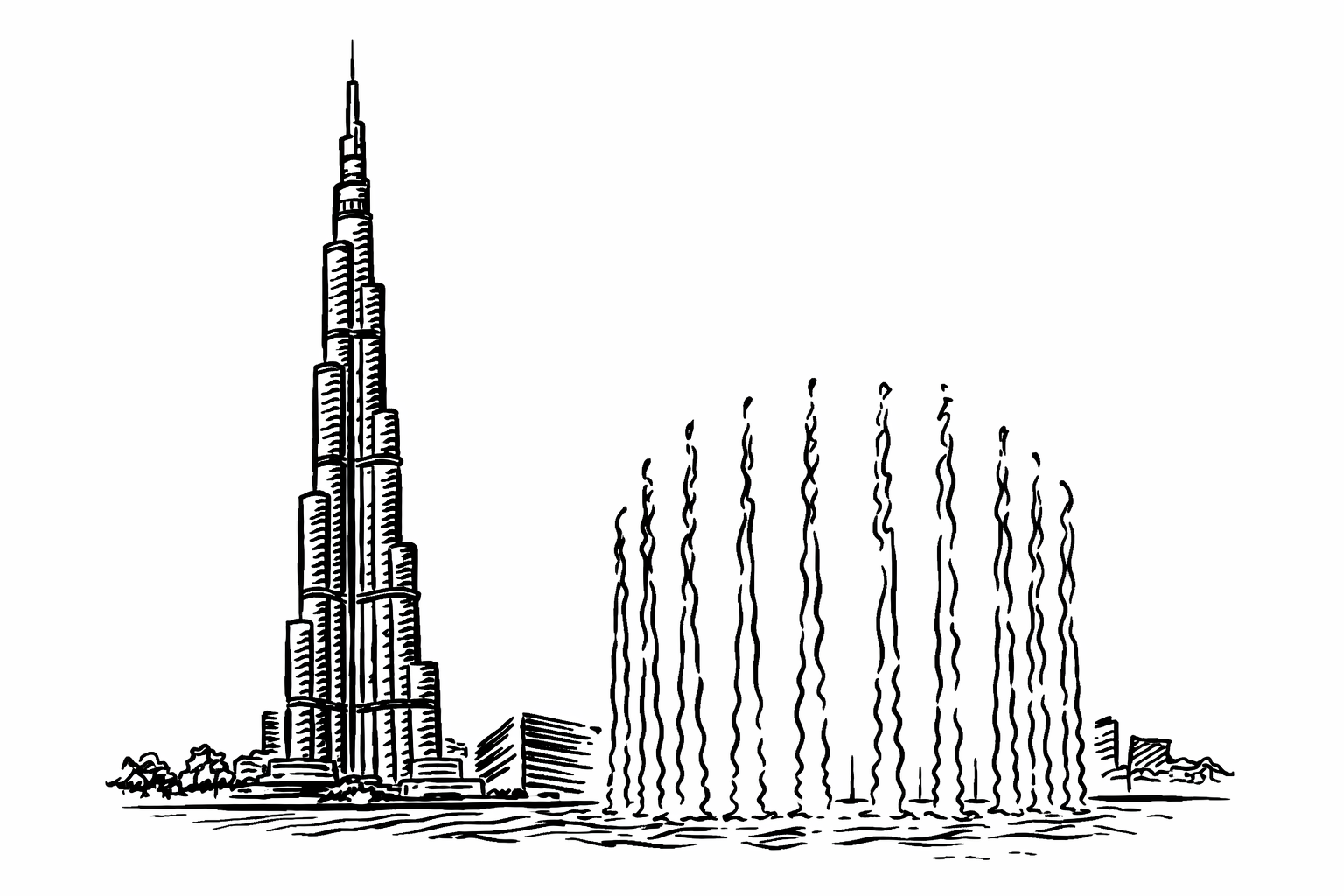
Dubai’s tourism sector hasn’t shut down — but it has been disrupted. Flights have been delayed, rerouted, and in some cases suspended following recent regional tensions, creating uncertainty for travelers moving in and out of the city. Bookings have dipped, cancellations have surged, and confidence has softened. But on the ground, the system is still running.
That distinction matters. Dubai is not experiencing a collapse of tourism infrastructure — it’s experiencing a shock to mobility. And in a system as tightly structured as Dubai’s, when movement becomes unpredictable, dependence increases.
At the center of that system is the hotel. In many destinations, hotels function as a base. In Dubai, they function as hubs — housing restaurants, nightlife, retail, and curated experiences within a controlled environment. When flights are stable and movement is fluid, that model feels like convenience. When travel becomes uncertain, it becomes something else entirely.
The shift is subtle but measurable. As Travel to Dubai Faces New Uncertainty Amid Rising Regional Tensions reported, confirmed drone strikes have hit civilian landmarks including the Fairmont The Palm and the Burj Al Arab, a fuel storage tank near Dubai International Airport was struck forcing a suspension of all arrivals and departures, and the U.S. State Department has issued a Level 3 advisory urging travelers to reconsider their plans entirely. Demand hasn’t disappeared — it has become deeply uneven, fluctuating in response to flight reliability and traveler confidence rather than collapsing altogether. Travelers facing delays or uncertainty about departure timelines are more likely to remain within their immediate environment. Venturing out becomes less appealing when logistics feel unstable. What follows is a compression of activity — more time spent inside hotel ecosystems, where options are available but rarely inexpensive.
This is where the economics shift. Costs that might have been distributed across a city — meals, transportation, entertainment — become concentrated within a smaller set of venues. Pricing reflects that concentration. Without easy alternatives, spending becomes less flexible, more reactive, and often higher than planned. The disruption doesn’t create the system — it reveals it.
Dubai’s tourism model has long been built on vertical integration, where hotels act as gateways to affiliated experiences and services. Under normal conditions, that structure maximizes convenience. Under strain, it reduces optionality. The city continues to operate — hotels remain open, attractions continue with adjustments, flights still move in and out — but the experience is uneven. And as The U.S.-Iran War Isn’t Just a Conflict. It’s a System Reset. examined, regional conflict doesn’t stay regional for long — it moves through energy markets, travel infrastructure, and consumer confidence in ways that reshape daily life far from the source.
The broader implication extends beyond Dubai. As destinations become more curated and consolidated, the balance between convenience and control becomes more pronounced. When everything works, the system feels seamless. When it doesn’t, it becomes more visible — and more binding. Dubai remains one of the most efficient tourism ecosystems in the world. But recent disruptions have exposed a different layer of that efficiency. The question is no longer just what the city offers — it’s how much flexibility travelers retain once they arrive, and how quickly that flexibility can narrow when the system is under pressure.