
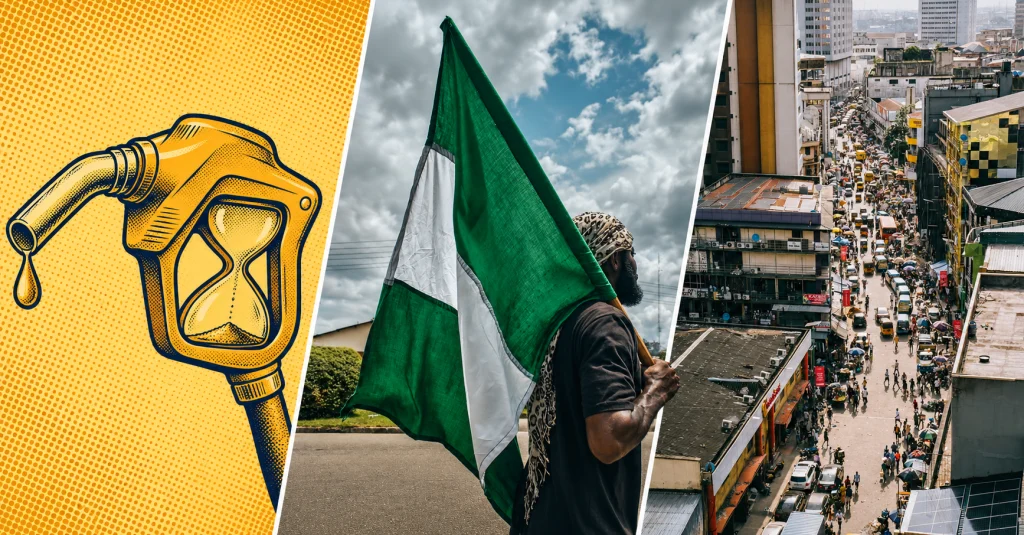
Natural gas is cutting some Nigerian drivers’ fuel cost per trip by more than 80%. Buying it can take three hours.
Nigeria ended its gasoline subsidy in 2023, and drivers in Lagos, its largest city, now pay about $1 a liter (₦1,340 to ₦1,400). Many are switching to compressed natural gas, the same fuel that runs many American city buses. A November 14 investigation by Aderonke Oni of the Nigerian outlet TheCable found that the cheaper fuel costs drivers something else: time.
By the numbers:
- Fuel per trip: about $1.50 (₦2,000) on gas vs. $8.30 (₦11,250) on gasoline, based on figures from Lagos bus operator Lawal Adeyinka
- Wait to refuel: two to three hours, sometimes overnight or in another state
- Cost to convert a vehicle: up from about $665 (₦900,000) to roughly $1,000 (₦1.35 million)
- National minimum wage: about $52 a month (₦70,000)
The savings are real. Adeyinka told TheCable that $4.45 (₦6,000) worth of gas now covers three trips, where he used to spend $33 (₦45,000) on gasoline for four. He says he passes the difference on to riders as lower fares, which is exactly what the government’s gas program was built to do.
The line eats the savings. Commercial drivers are paid by the trip, so every hour spent at the pump is fares they don’t collect. Riders lose too, because a bus waiting for gas isn’t carrying anyone.
The stations aren’t there yet. President Bola Tinubu ordered 500 more refueling stations in August. In Lagos, the state-owned Ibile Oil and Gas Corporation runs just three stations and plans to have 19 by early 2027. Its managing director, Tayo Gbajumo, told TechEconomy reporter Joan Aimuengheuwa that too few stations are the reason the lines exist.
Why This Matters
- The fuel bill moved to drivers. Ending the subsidy shifted fuel costs from the national budget to drivers’ daily earnings. The gas program only gives relief back to drivers who can afford to convert.
- $1,000 is more than 19 months of minimum-wage pay. The conversion cost decides who gets the cheaper fuel, and most drivers can’t pay it on their own.
- Americans know this problem. It’s the same standoff that slowed electric cars here: drivers won’t switch without chargers, and investors won’t build chargers without drivers. Nigeria got drivers to switch before the stations were built.
What’s next: Fares are likely to stay high through 2027. Until stations open faster than vehicles get converted, every new gas-powered bus makes the line longer for the ones already running, so cheaper rides will show up first on routes that pass a pump.