
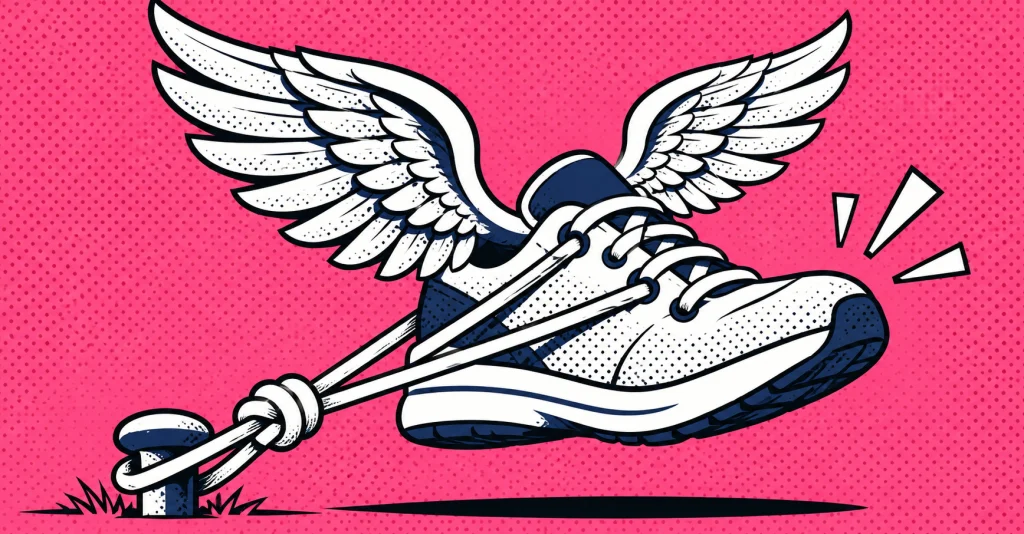
A fatwa against the swoosh shows how a brand’s symbols can turn into a religious and political fight in a country where most of the “Nikes” aren’t real.
Libya’s highest religious authority, the Dar al-Ifta, has issued a ruling telling Muslims not to buy, sell or wear clothing with the Nike logo, BBC News’ Basma El Atti reported. The Tripoli-based institution argued that Nike is named for the Greek goddess of victory and that its swoosh was inspired by her wings, so wearing it amounts to promoting symbols tied to polytheism. The fatwa, approved by Grand Mufti Sadiq al-Gharyani, also accused Nike of supporting Israel and pointed to the council’s 2023 call to boycott Western companies it considers supportive of Israel during the war in Gaza. The irony is that Nike doesn’t even have an official store in Libya. Much of the swoosh on Libyan streets is counterfeit.
Why it matters: A religious ruling can shape what people wear without any law behind it, and in Libya the people most exposed to this one are local sellers, not Nike.
- It’s influence, not law. A fatwa is a religious opinion. This one announces no state ban and no penalties, and Libya is split between rival authorities in the east and west.
- It has happened before. Last year the Dar al-Ifta ruled against Van Cleef & Arpels jewelry, arguing that its four-leaf clover design was tied to Christian beliefs and the pursuit of good luck.
- The market is mostly fakes. Nike-branded goods reach Libya through local sportswear retailers, and counterfeits fill the markets, as they do across North Africa.
- There’s a wider conservative push. In 2025, eastern authorities restricted rap music, theater and dance performances, and those measures later spread to western Libya.
The business angle: Boycotts are supposed to hurt a company’s revenue. This one mostly reaches the shop owners and street vendors who sell the swoosh, real or not, because Nike has almost no direct sales in Libya to lose. Social media reaction was split: some welcomed the ruling, and others called it ironic or a distraction from more pressing problems. That split is what will decide its impact. A fatwa without enforcement works only as far as people choose to follow it.
What’s next: Expect little measurable damage to Nike, whose global sales don’t depend on Libya. Expect the bigger effects locally, on retailers deciding whether to keep the stock and on young Libyans deciding whether the swoosh is worth the social cost. Also watch whether eastern authorities, which already went further on music and performance, turn this religious opinion into rules.