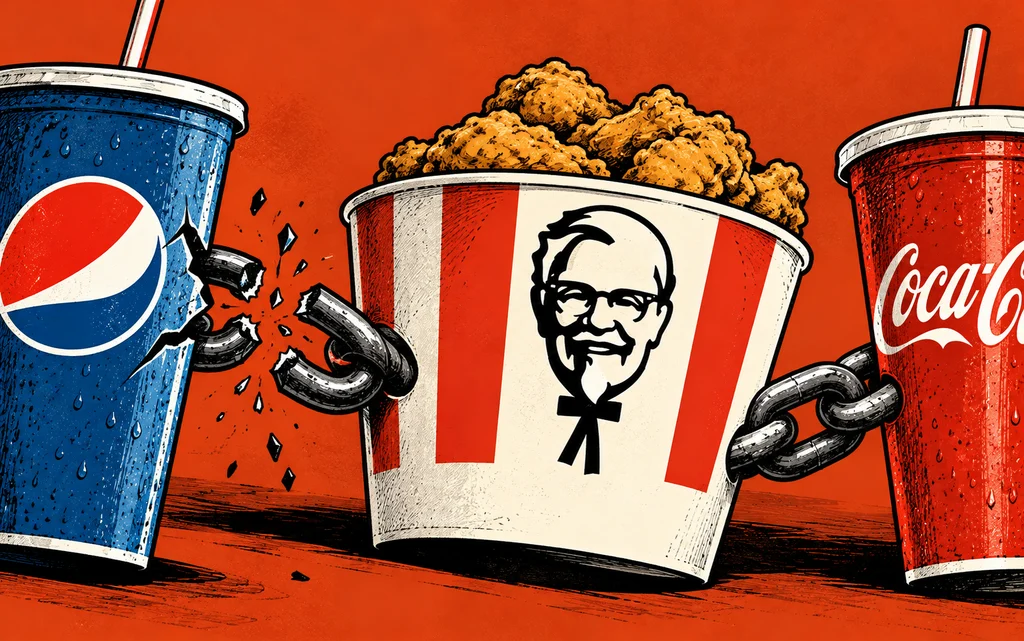
KFC is ending one of the most recognizable pairings in American fast food. Beginning in January, its U.S. restaurants will start replacing Pepsi products with Coca-Cola, with the transition expected to reach all locations by spring 2027. The change ends a relationship dating to 1986, when PepsiCo acquired KFC, and will bring Coke products into roughly 3,600 U.S. restaurants for the first time.
On its own, losing KFC is unlikely to materially damage PepsiCo’s earnings. Reuters reported that analysts expect the direct financial impact to be relatively small. But the symbolism is harder to dismiss. Pepsi has now lost a highly visible restaurant account at a moment when its North American business is already under pressure from softer consumer demand, rising costs and slower growth. Coca-Cola, meanwhile, continues to expand an already substantial food-service footprint that includes McDonald’s, Wendy’s and numerous other major chains.
That makes KFC more interesting as a competitive signal than as a soda story. Other reported examples include other high-profile accounts that have moved toward Coca-Cola, including Costco and Marriott, raising a legitimate question about whether Coke is becoming more effective at winning large institutional customers away from longstanding Pepsi relationships. We cannot conclude from those moves alone that Pepsi has a systemic retention problem, but multiple marquee losses make the question increasingly difficult to ignore.
For KFC, the switch also fits into a larger effort to reposition the brand. Company executives have described the Coca-Cola partnership as part of a push to modernize restaurants and make KFC more relevant to current consumers. The company is simultaneously developing new beverage concepts and overhauling other parts of the customer experience, suggesting Coke is being treated as part of the turnaround strategy rather than simply a replacement fountain contract.
The broader story, then, is not that Coca-Cola won another soda fountain. It is that a relationship once reinforced by corporate ownership and nearly four decades of habit was still vulnerable when KFC decided it needed something different. For PepsiCo, the question is whether KFC represents an isolated contract loss or another indication that Coca-Cola is finding ways to persuade major customers that switching is worth breaking with history.