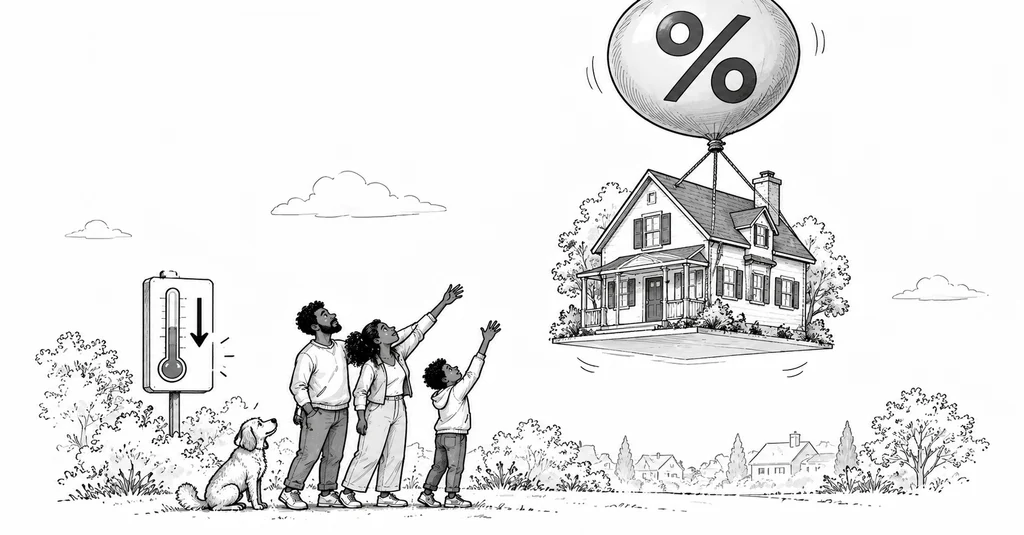
August inflation surprised economists in the right direction. But mortgage rates remain above 7% and long-term Treasury yields have climbed to levels not seen in decades. A better inflation report does not immediately make money cheaper.
The latest inflation report delivered something financial markets have been waiting for: a better number than expected. The Federal Reserve’s preferred inflation measure, the Personal Consumption Expenditures price index, rose 0.3% in August and 3.4% from a year earlier, below economists’ expectations. Investors responded by reducing expectations that the Federal Reserve would raise interest rates again in October. Stocks moved higher and the two-year Treasury yield, which is particularly sensitive to expectations about Fed policy, eased.
For households, however, the economy looks considerably less accommodating. Freddie Mac’s latest weekly survey put the average 30-year fixed mortgage rate at 7.03%, compared with 6.30% a year earlier. The 15-year rate averaged 6.42%. Meanwhile, the yield on the 10-year Treasury has moved above 5%, reaching levels not seen in more than two decades. Those longer-term rates influence borrowing costs throughout the economy, from mortgages and business loans to the financing companies use to make investments.
Inflation and Interest Rates Are Not the Same Thing
The disconnect can be confusing because inflation and borrowing costs are often discussed as though they move together. They influence each other, but they measure different things. Inflation tells us how quickly prices are increasing. Interest rates tell us, in part, what it costs to borrow money. Inflation can slow without prices falling, and a favorable monthly inflation report does not require lenders or bond investors to immediately reduce the rates they charge.
The broader economy is giving them reasons to remain cautious. The government also revised second-quarter economic growth sharply higher Wednesday. Real gross domestic product expanded at a 2.2% annualized rate, up from the previous 1.5% estimate, while consumer spending grew at a 3.8% pace. Business investment was also strong, including spending connected to AI infrastructure. In other words, inflation came in softer than anticipated at the same time the economy turned out to be stronger than previously thought.
That combination creates an unusual problem for borrowers. Strong economic growth is generally welcome, but it can also keep demand for money elevated and make investors less confident that inflation will quickly return to the Federal Reserve’s 2% target. Energy prices, federal borrowing and enormous capital requirements for AI infrastructure are adding additional pressure to long-term bond markets. Reuters reported last week that mortgage rates above 7% were already contributing to weaker home-purchase and refinancing applications.
The Household Economy Moves More Slowly
That is why an inflation report that looks encouraging on Wall Street can feel largely irrelevant to someone trying to buy a house. A $300,000 mortgage at 7% carries roughly a $1,996 monthly principal-and-interest payment, according to Freddie Mac’s consumer guidance. At 6.5%, that payment would be about $1,896. Half a percentage point translates into roughly $100 every month before property taxes, insurance or other housing expenses are added.
The August inflation report therefore changes the direction of the conversation more than it changes household finances today. It reduces some immediate pressure on the Federal Reserve and suggests price growth was not accelerating as quickly as economists feared. But inflation remains above the Fed’s target, mortgage rates remain above 7%, and long-term borrowing costs are still elevated.
For consumers, that is the gap worth watching. Inflation can improve on paper long before affordability improves in a household budget. The next phase of the economy will depend not only on whether prices rise more slowly, but on whether the cost of financing a home, a car, a business or a major purchase eventually follows them down.