
Houston led the nation in population growth for the twelve-month period ending July 1, 2025, adding just under 127,000 new residents — roughly one new resident every 4.1 minutes, or 347 new residents each day. No other major American metro came close: Dallas was second with approximately 124,000 new residents, and no other metro added even half as many as Houston. Houston’s growth rate ran roughly eight times higher than New York or Chicago, while Los Angeles saw its population decline amid high rates of domestic outmigration. These numbers place Houston at the center of one of the most consequential demographic shifts in American urban life — a city growing faster than anywhere else in the country at a moment when growth itself has become politically contested.
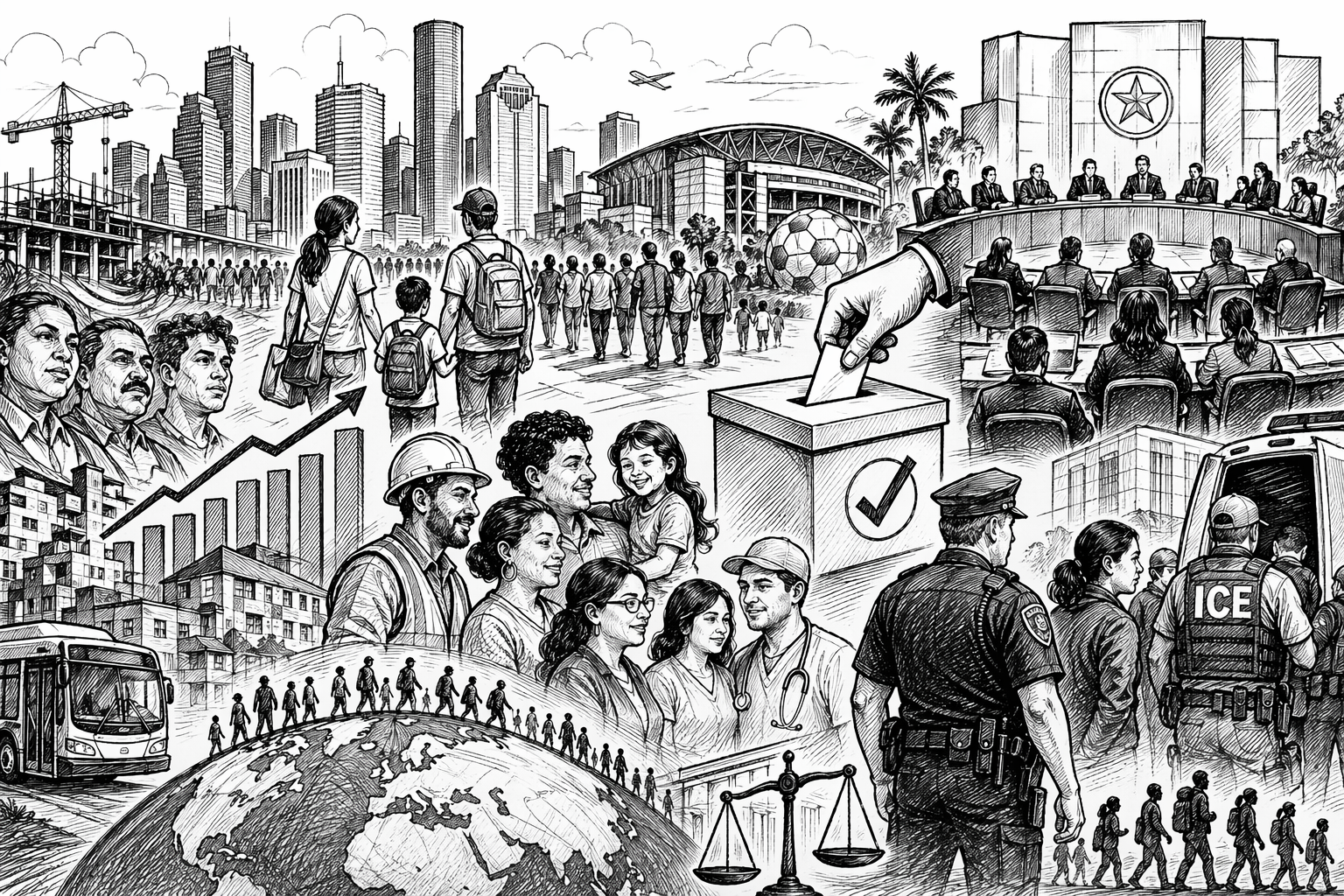
The composition of that growth is the structural story. International migration represented 56.5 percent of Houston’s total population increase — the largest single source, ahead of natural change at 37.7 percent and domestic migration at just 5.7 percent. The people driving Houston’s record population growth are overwhelmingly international migrants: workers, families, and community members whose presence in the city is building the tax base, filling the labor market, and providing the population foundation for the economic activity Houston’s political leadership is working to attract and sustain. The 2026 FIFA World Cup — whose preparations are one of the primary reasons the state’s $110 million funding threat carries such specific leverage — depends on a Houston that can staff, service, and host at international scale. The international migrant population that is fueling Houston’s growth is inseparable from the city’s capacity to do that.
That makes today’s city council vote on the ICE ordinance a specifically stark governance contradiction. The communities whose presence is building the city Houston is trying to become are the same communities whose relationship to local law enforcement is at the center of the ordinance fight. The ordinance’s purpose — ensuring that Houston police focus on criminal activity and maintain community trust rather than functioning as an extension of federal civil immigration enforcement — is not separable from the city’s demographic and economic trajectory. When a city’s population growth is majority-international and its largest anticipated economic event in years depends on that population’s labor and participation, the governance decision about how local police interact with federal immigration authorities is not a peripheral policy question. It is a central infrastructure question — about whether the communities building the city trust the institutions they are funding with their presence, their taxes, and their labor.
The Houston.org April 2026 economic report frames the city’s growth story in terms of economic development activity, job creation, and population attraction — the metrics that appear in site selection rankings and business investment pitches. Those metrics are real and they matter. What the economic framing does not capture is that the population producing them is not a passive input to Houston’s growth story. It is the community whose governance relationship to the city is being adjudicated in real time by a council vote happening today, under financial pressure from a state government that is simultaneously praising Houston’s economic dynamism and threatening to defund it for trying to maintain a policy that the communities fueling that dynamism asked for. That contradiction is not resolvable through an amendment. It is structural, and it will outlast whatever is decided this morning.