
End of Day Closing Note | Saturday, June 20, 2026
June 20, 2026
Weekend Edition – Social Storytellers Collective
Who Moves First
Today: a retailer regenerating a model’s face for new ads after her contract ended, a federal privacy document routing facial recognition through 1,300 local police departments, a president announcing a chip deal before the chipmaker confirms it, an AI company publishing its own regulatory framework before Congress finishes writing one, a $2.99 tote bag reselling for $50,000 overseas, the BBC cutting 550 jobs as global trust in news hits a record low, a wave of tech layoffs financing the AI buildout it’s blamed on, and five historically Black fraternities issuing a rare joint statement on the political moment.
Every story today shares a mechanism: someone moved first, and everyone else found out after the fact. That’s the throughline, not a coincidence of timing — it’s worth naming directly, because once you see it, it’s hard to unsee in the next story too.
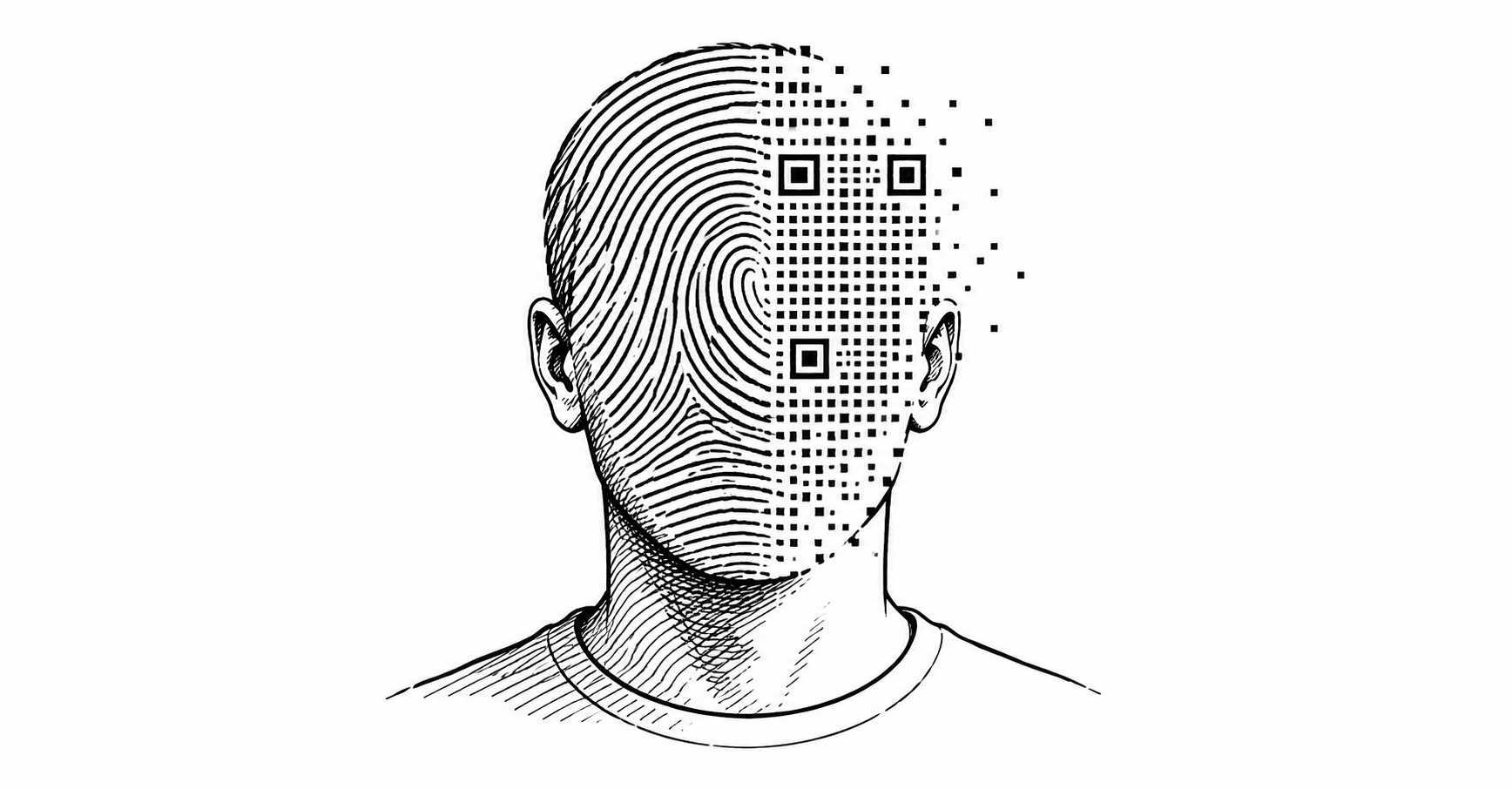
DHS Document Reveals Plan to Put Facial Recognition in Local Police Hands: A Department of Homeland Security document, first reported by 404 Media and detailed further by NPR’s Meg Anderson, outlines plans to issue local police the same facial-recognition app federal immigration agents use to identify people in the field, with photos retained for 15 years regardless of whether the person scanned turns out to be a U.S. citizen. The technology flows through the 287(g) Task Force Model, which already gives roughly 1,300 local police agencies arrest authority on ICE’s behalf, meaning the infrastructure for this expansion didn’t need to be built from scratch — it only needed an app layered onto a partnership structure that already existed. Cooper Quintin of the Electronic Frontier Foundation says the expansion “makes this sort of face surveillance ubiquitous on American streets,” and the document itself is revealing precisely because of where it surfaced: not in a public rulemaking process or a congressional hearing, but in a privacy compliance filing never meant for public debate in the first place.
Trump Says Apple and Intel Will Build Chips Together in the US: Trump announced via Truth Social on June 18 that Apple agreed to let Intel design and manufacture its chips domestically, a deal Reuters reported Intel executives were caught off guard by, with the federal government’s existing 10% equity stake in Intel woven into the arrangement in ways neither company has clarified. Neither Apple nor Intel has confirmed the scope, timeline, or structure of the partnership publicly, which means the only authoritative account of a deal involving two of the country’s largest technology companies currently comes from a social media post by someone who isn’t a party to the contract. That gap between announcement and confirmation is itself worth watching, since it will tell you how much control either company actually has over a decision that’s already being reported as fact.
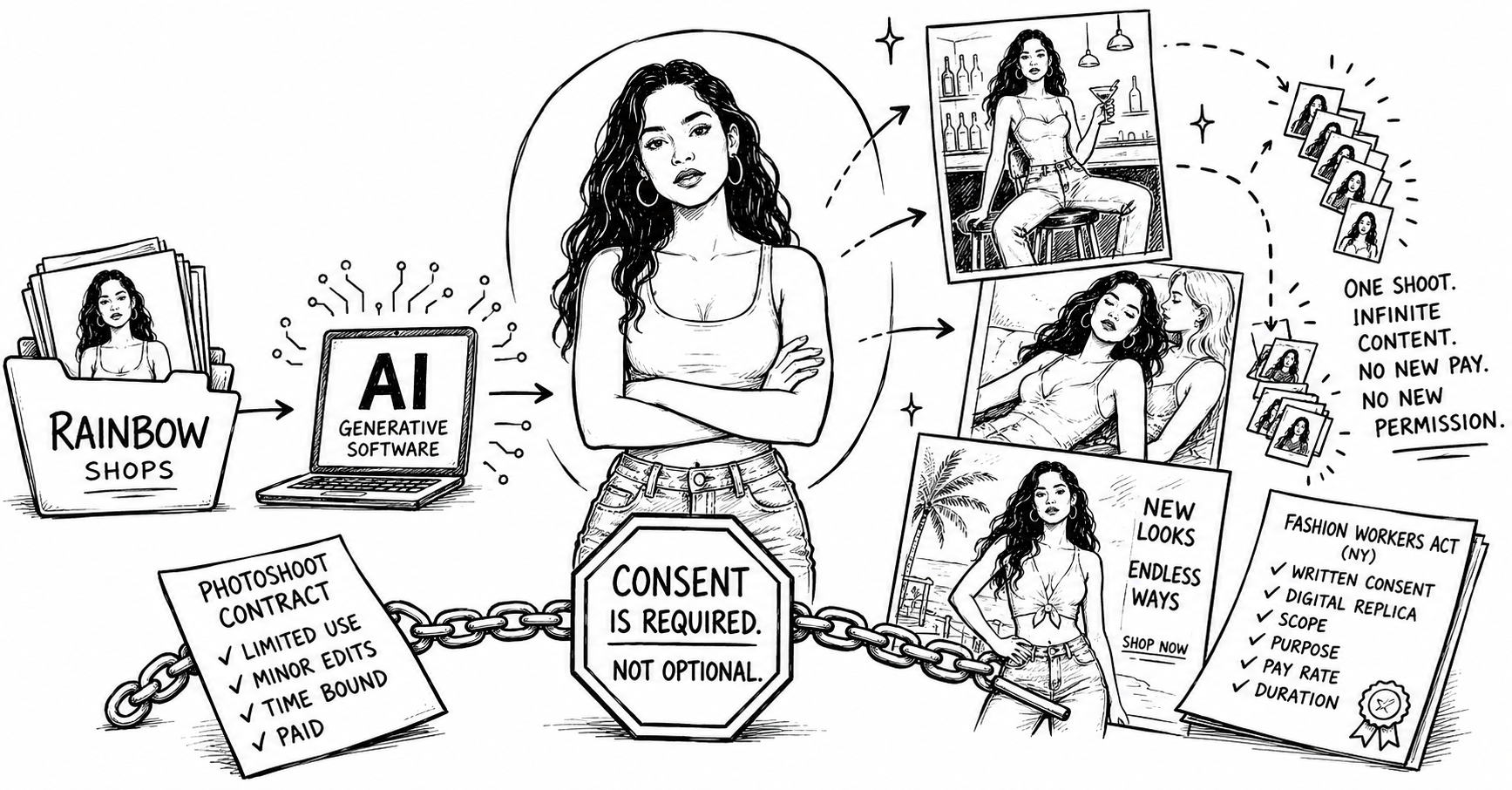
Fashion Models Are Discovering Their AI Doubles at Work: New York model Francheska Pujols refiled a lawsuit against Rainbow Shops on June 15, alleging the retailer used AI to generate new ads from her 2024 photoshoot after the contract had expired — four days before the state’s Fashion Workers Act required separate consent for AI “digital replicas.” Budget retailers have the most incentive to test that law first, since the economics of volume catalog work depend on treating a single paid sitting as reusable raw material rather than a one-time transaction, and Pujols’s case is shaping up as the clearest test yet of whether a consent requirement actually changes that calculation or just becomes a line item in litigation risk. The question underneath the lawsuit isn’t really about one retailer’s judgment. It’s about who owns the right to keep generating new work from a face a company already paid for once.
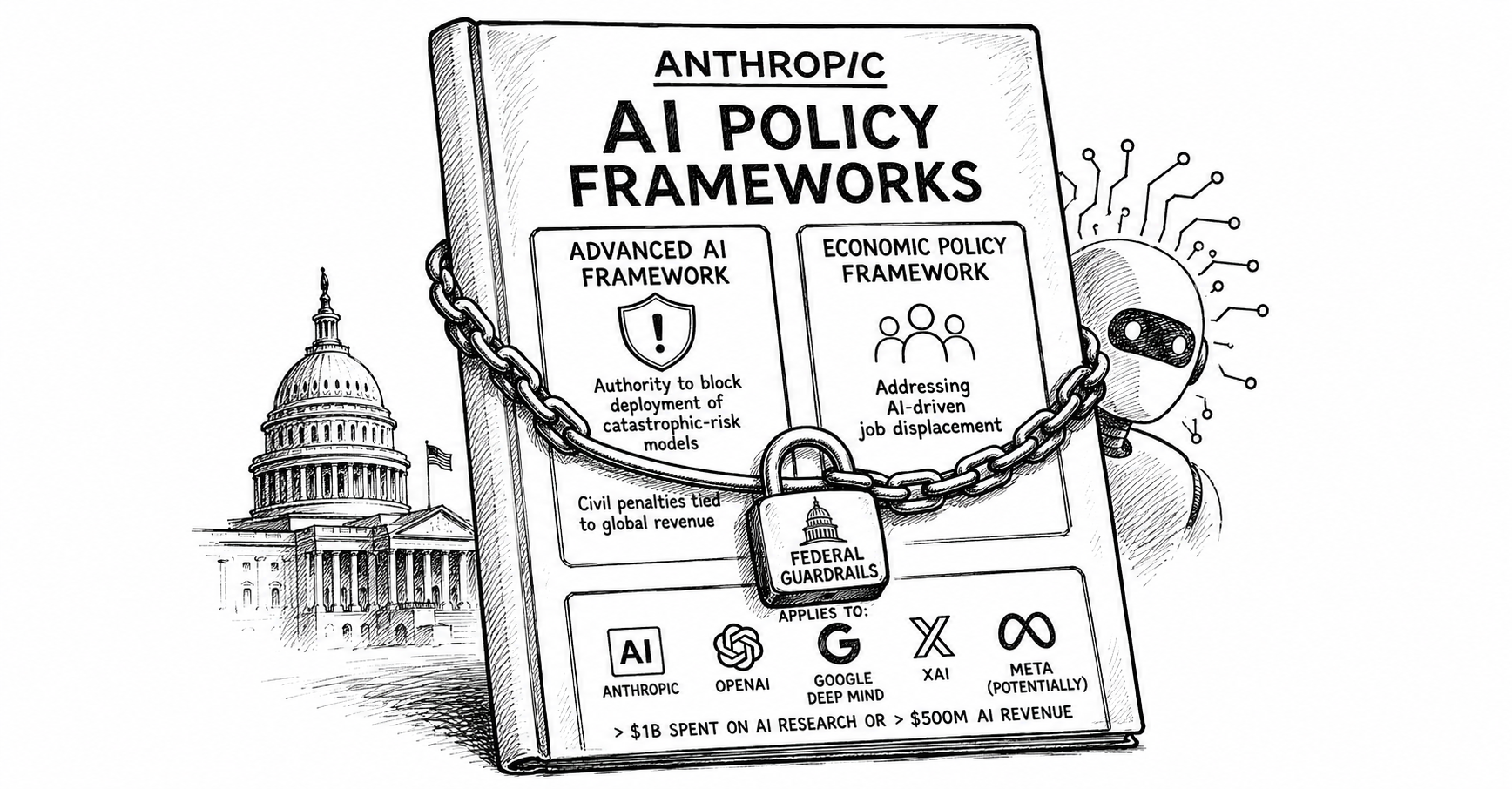
Anthropic and Washington Are Writing AI Rules Together: Anthropic published its own federal AI regulatory framework on June 10, four months after Trump ordered every federal agency to stop using its technology over a Pentagon dispute that escalated into a lawsuit and a federal blacklisting. A company under direct federal sanction ended up writing the rulebook Washington hasn’t finished writing itself, publishing thresholds, penalties, and a preemption test before Congress had finalized any of its own, which means the company effectively set the floor any future federal law will be measured against. Congress is now negotiating in the shadow of a standard it didn’t write, and the practical question going forward isn’t whether lawmakers agree with Anthropic’s framework — it’s whether they’re willing to pass something weaker than what the company they tried to sanction already proposed.
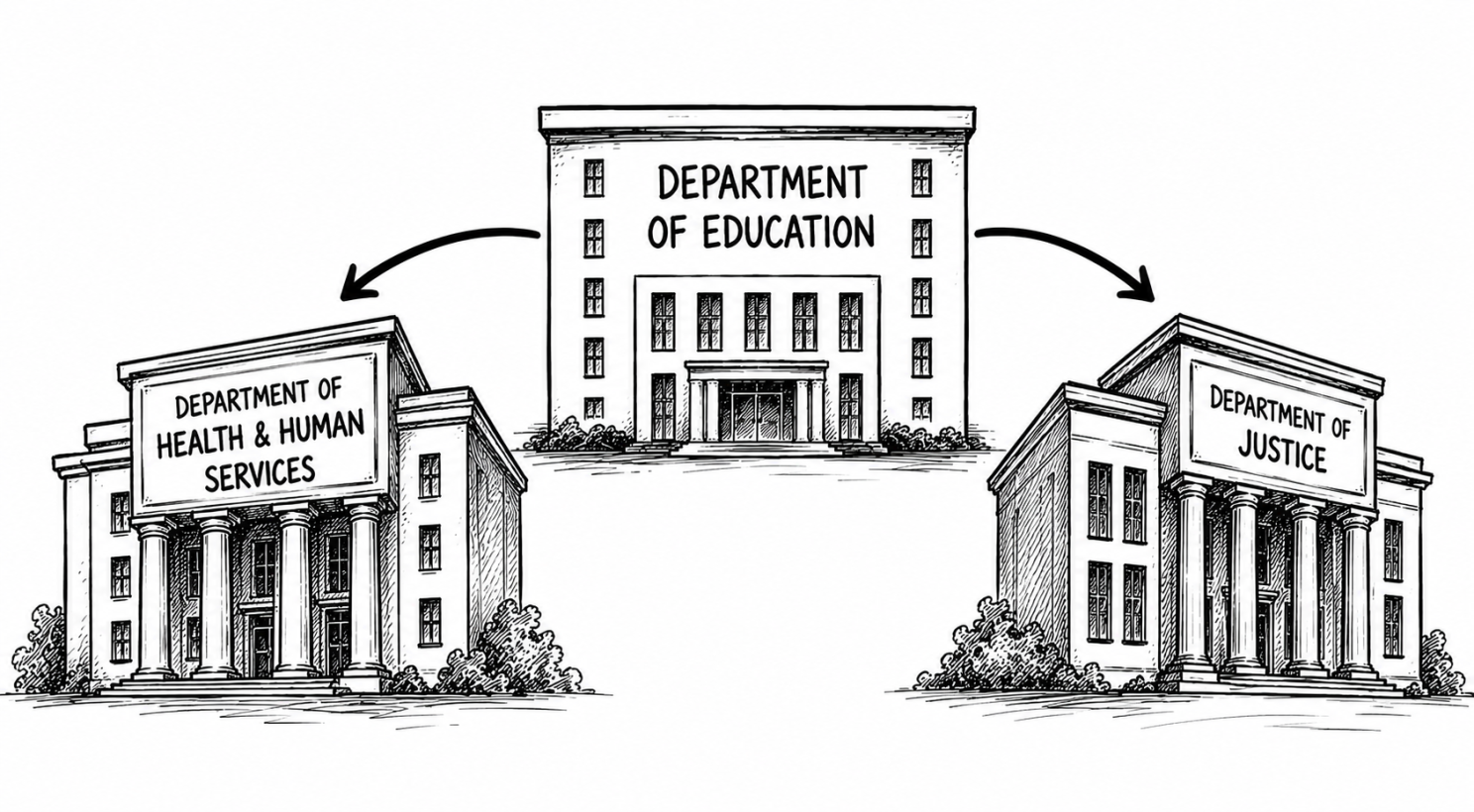
The Education Rights System Is Becoming a Referral Maze: The Department of Education is moving special education oversight to HHS and shifting its civil rights office to the Department of Justice, NPR reported June 16, without a congressional vote — an outcome that produces much of what abolishing the department would accomplish, just through agreements between department heads instead of legislation. The civil rights attorneys currently handling these complaints built their caseload and institutional memory specifically around how discrimination shows up inside classrooms, and that specialization doesn’t transfer cleanly to a Justice Department division that will now weigh school disability cases alongside its existing portfolio of voting rights, housing, and policing work. A family that files a complaint experiences this reorganization as which office answers the phone and whether anyone on the other end understands special education law as well as an office that specialized in nothing else did.
Jeff Bezos Says AI Will Create Labor Shortages. Workers Hear Something Different: Speaking in Paris on June 17, Jeff Bezos predicted AI will create a labor shortage rather than mass unemployment, directly disputing what he called a fear “that many people have, including many smart people,” while simultaneously promoting Prometheus, his own AI startup’s $41 billion bet on industrial automation. His long-run optimism and this month’s layoff numbers aren’t actually contradictory — they’re describing different timelines wearing the same headline, since industrial revolutions have historically destroyed specific jobs while expanding total employment over decades, and that pattern could hold again here too. But the workers losing positions this month don’t get to wait out a multi-decade adjustment, and a labor market that reads itself as resilient because the long-run forecast is rosy will underbuild the safety net the short-run disruption actually requires.
Kroger Is Cutting Prices Because Inflation Changed Consumer Behavior: Kroger CEO Greg Foran told Bloomberg the company will cut prices “across thousands of products” to close the gap with Walmart, Costco, and Aldi, describing the strategy as a Formula One race where Kroger is stuck in the midfield trying to catch the leaders. Kroger isn’t choosing to compete on price so much as conceding that price was never really its decision to make alone — a Bank of America pricing study found Kroger’s price gap with Walmart had already narrowed from 14% to 10% even before this latest push, evidence the market was moving in that direction with or without the company’s cooperation. The mechanism is straightforward once you see it: every dollar Kroger doesn’t spend on overhead becomes a dollar it can use to undercut a competitor’s shelf price, and the company is betting customers will reward that trade with loyalty before they notice what got cut to fund it.
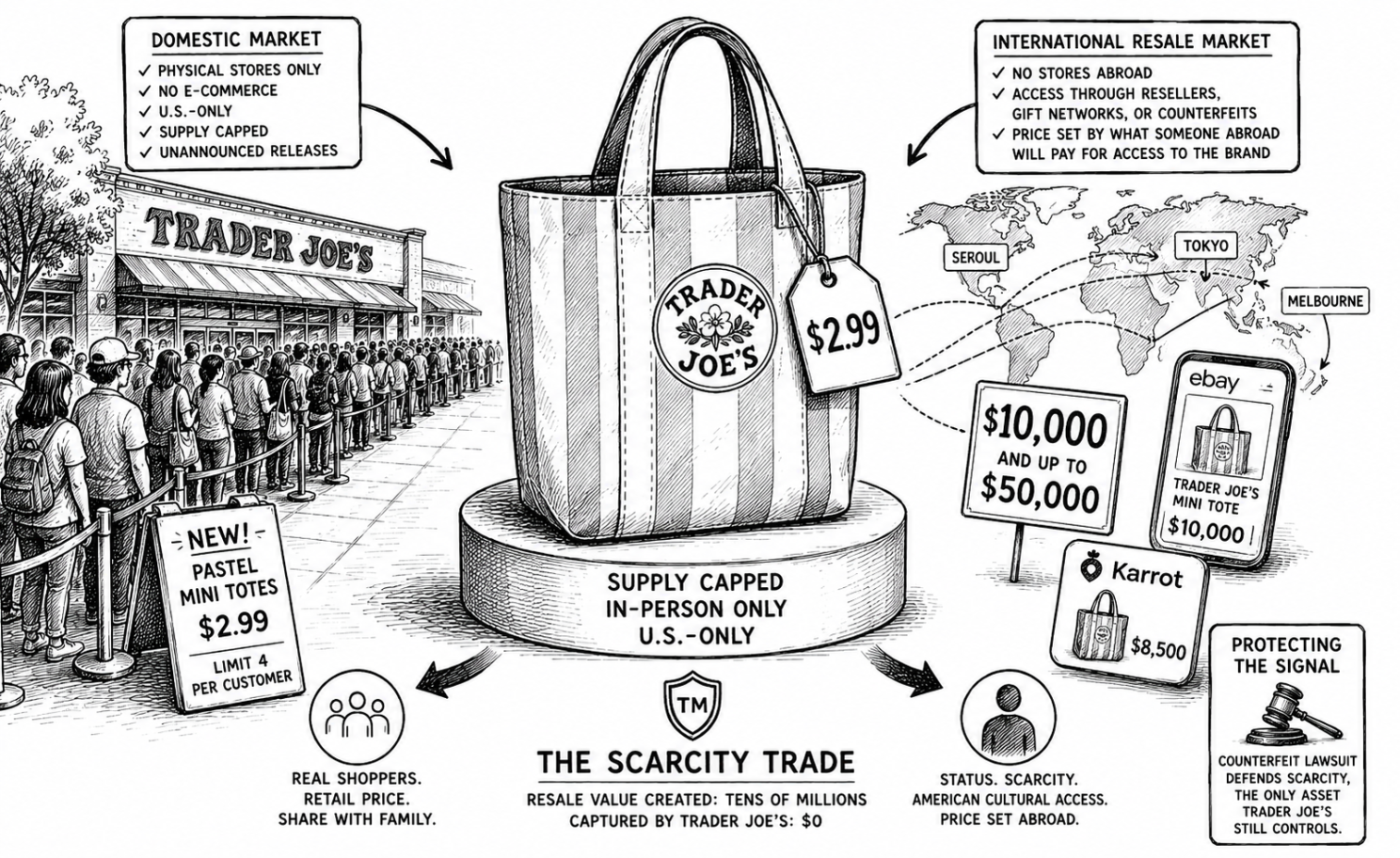
Trader Joe’s $2.99 Tote Is Reselling for $50,000 Overseas. None of That Money Is Reaching the Company: Trader Joe’s released a new striped pastel mini tote on June 17, and lines formed outside stores nationwide before opening, Newsweek reported, with shoppers in markets like South Korea buying dozens at a time to send overseas to friends and family. In tote-deprived cities like London, Melbourne, and Tokyo, resale listings for past editions have approached $50,000, according to the Wall Street Journal, cited by USA Today Network, and Trader Joe’s has responded by filing a lawsuit against sellers of counterfeit versions of the bag, with spokeswoman Nakia Rhode telling reporters the company wants to ensure “customers are getting what they’ve paid for.” That lawsuit protects the company’s trademark, but it does nothing to capture the actual value being created in that resale market — a $2.99 product generating five-figure markets the company never priced into its supply chain and doesn’t profit from in any direct way, because the scarcity driving those prices would simply disappear the moment Trader Joe’s tried to manufacture enough totes to meet the demand it created.
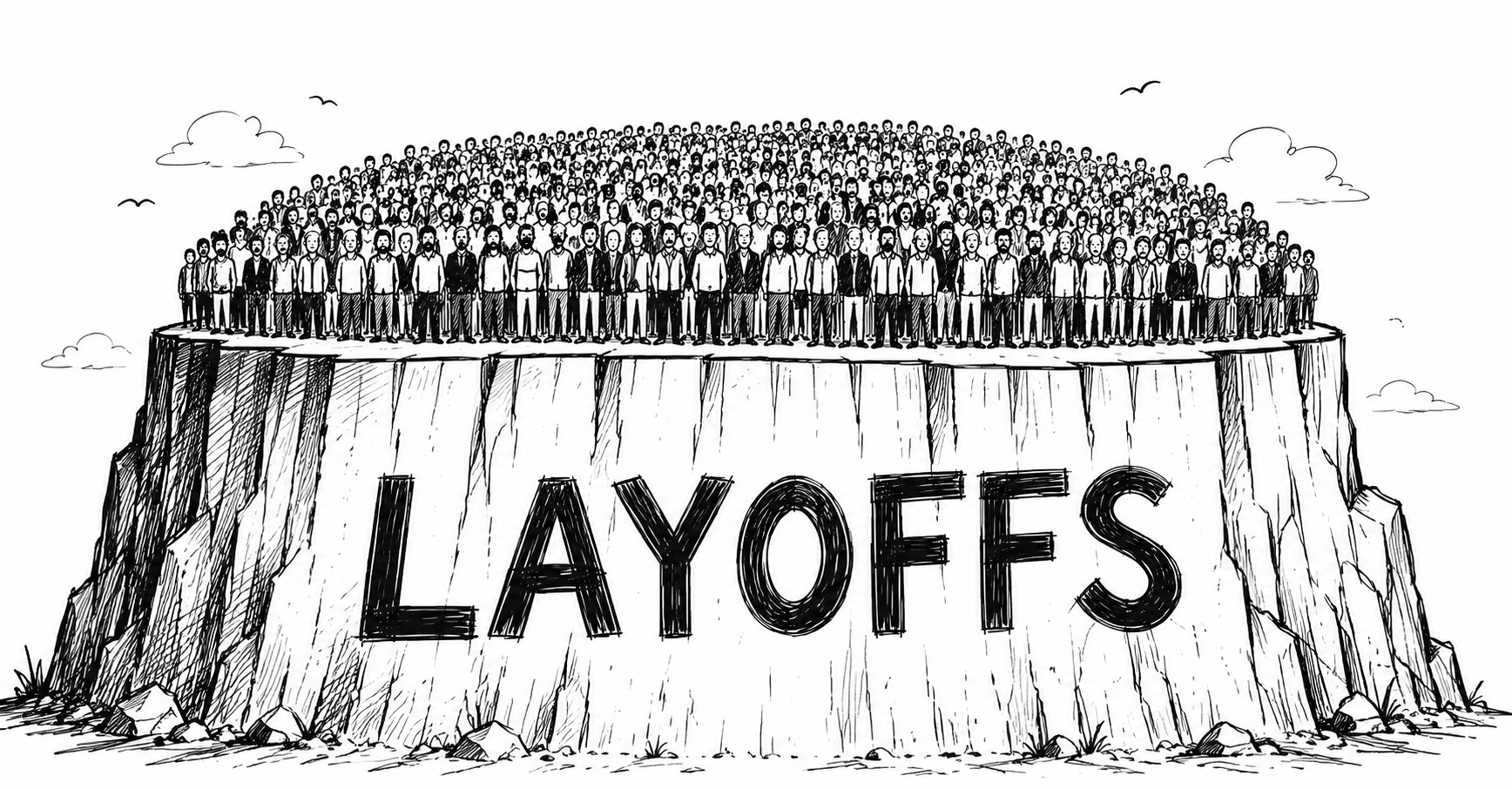
The AI Buildout Is Coinciding With Another Wave of Tech Layoffs: Tech-sector employers announced 123,653 job cuts through the first five months of 2026, a 66% increase over the same period last year, according to Challenger, Gray & Christmas data reported by Yahoo Finance, with artificial intelligence cited as the leading reason for job eliminations across industries for three consecutive months. Robinhood became the latest entry in that count this month, cutting roughly 290 positions — about 10% of its workforce — with CEO Vlad Tenev telling staff the move was necessary to flatten the company’s org structure in order to “achieve the massive scale of our mission.“ Coinbase moved earlier to shed about 700 positions, or 14% of its headcount, even as its first-quarter earnings report showed staff levels had climbed 22% year-over-year while annualized revenue per employee slid 8% — a gap CFO Shiv Verma’s regulatory filing framed as necessary to “maintain a high performance culture” and “remain lean and disciplined.” When LinkedIn laid off roughly 875 employees, 5% of its staff, a source close to the decision told Reuters the reorganization was about focusing resources on growth areas, “not for artificial intelligence to replace jobs” — a denial worth noting precisely because it’s becoming the standard line, regardless of whether the budget freed up by the cut ends up funding AI infrastructure anyway.
None of this means every layoff traces back to AI specifically. Companies cut jobs for plenty of reasons, including restructuring, flattening management layers, and adjusting to slower markets. But AI has become one more priority competing for the same pool of resources that used to fund hiring, which means companies are now making explicit choices about which capabilities to own internally and which costs they’re willing to absorb elsewhere. The deeper question isn’t whether artificial intelligence eventually eliminates work. It’s who pays for the transition while that question gets answered. So far, the answer is uneven: shareholders are funding the infrastructure, companies are funding the research, and workers are increasingly absorbing the organizational cost of getting there.
The BBC Is Cutting While the Trust Crisis Grows: The BBC will cut 550 jobs across its news and content divisions, Reuters reported, as part of new director-general Matt Brittin’s plan to save £500 million over the next three years — the first phase of a downsizing expected to eliminate 1,800 to 2,000 positions total. The cuts will close several long-running programs, merge production teams across Newsnight and Sunday with Laura Kuenssberg, and reduce senior leadership roles by at least 10%. Brittin, a former Google executive who took the role in May after his predecessor resigned over a Panorama documentary that spliced two of Trump’s January 6 remarks into what appeared to be a single statement, told staff the BBC is operating in “very uncertain times.”
Those cuts are landing the same week the Reuters Institute’s 2026 Digital News Report documents the steepest erosion of news trust the report has measured since 2015. Trust in news overall has fallen to 37% globally, and for the first time, social media and video platforms have overtaken television and news organizations’ own websites as the most widely used source of news, reaching 54% of audiences across 48 markets.
Trust in news on social media sits at 22%; trust in AI chatbot answers sits at 20% globally. The BBC’s own news services still reach 48% of UK audiences on television and radio, among the highest trust figures of any outlet measured — which makes Brittin’s task less about chasing a smaller audience and more about whether a public broadcaster can hold onto institutional trust while cutting the staff that produces it. A newsroom can be reduced in size and still produce good journalism for a while. What’s harder to reduce and rebuild later is the institutional capacity that high-trust journalism actually depends on — and that capacity is exactly what cost-cutting tends to target first.
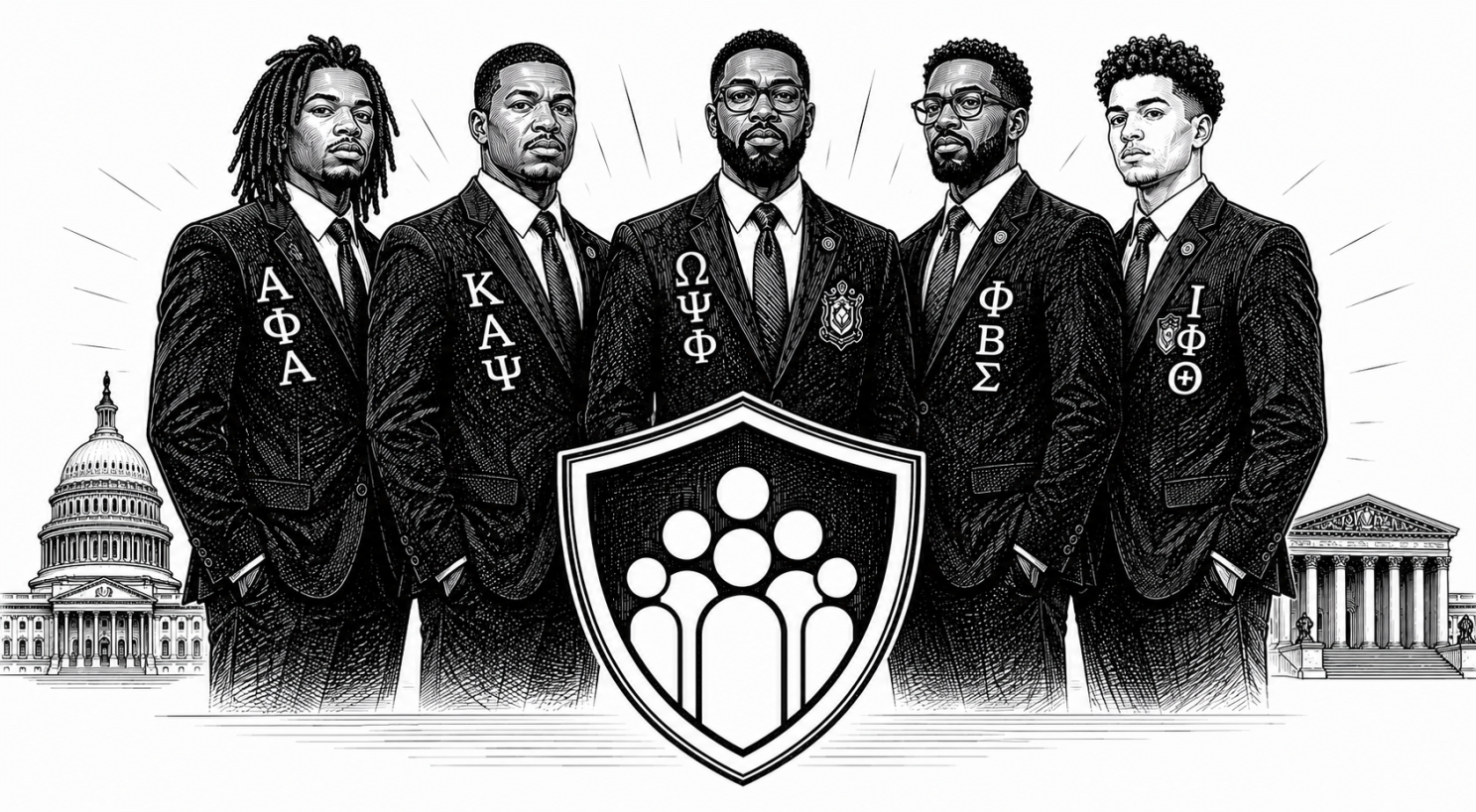
Divine Nine Fraternity Leaders Issue Joint Statement Condemning Attacks on Black Women: The presidents of five historically Black fraternities — Alpha Phi Alpha, Kappa Alpha Psi, Omega Psi Phi, Phi Beta Sigma, and Iota Phi Theta — issued a joint statement through the National Pan-Hellenic Council on June 20, condemning what they describe as a pattern of escalating attacks on Black women since January 2025, citing federal job cuts they say have disproportionately affected Black women alongside coordinated efforts to restrict educational opportunity and healthcare access.
The statement specifically referenced attacks aimed at former First Lady Michelle Obama and called on Trump to denounce them, but the more structurally interesting move is who’s making the statement and how: these five organizations represent nearly one million members combined, and joint statements from Divine Nine fraternity presidents are rare enough that the act of speaking collectively carries its own weight independent of the content.
The fraternities explicitly framed the statement as organizational obligation rather than political commentary, naming their working partnership with the presidents of the four Divine Nine sororities and closing with an unusually direct line — “ENOUGH. We will not allow this pattern to continue.”
What the statement actually represents is a shift in how Black Greek-letter organizations understand their own institutional role: not just as social and service organizations, as they’ve functioned for over a century, but as public institutions willing to take collective positions on representation and political culture, built on the argument that the health of those institutions is inseparable from the wellbeing of the Black women they were founded alongside.
The Follow Up: Earlier this week we published What the Obama Presidential Center Cost Before It Opened — and a reader pushed back. James Wildes, an architect who works on code-ready kitchen design, challenged our endowment figure directly, arguing the piece didn’t go far enough on what the numbers actually represent. He was right.
Our original reporting noted the Obama Foundation’s endowment carried a balance of approximately $1 million. What we hadn’t stated precisely: the foundation’s 2020 annual report committed $470 million of its fundraising goal to seed that same endowment, meant to sustain Obama Foundation activities and the center’s operations “for generations to come,” against estimated annual operating costs of roughly $40 million. The reported $1 million balance isn’t a vague shortfall against an undefined target. It’s roughly 0.2% of a specific commitment the foundation made to itself.
The foundation has stated it remains in compliance with its agreement with the city — which required the creation of an endowment but did not specify a dollar target — and says it is “fully funded with generous private contributions,” with “significant investments” in the endowment planned going forward. We added an addendum to the LinkedIn, website, and Substack versions of the piece the same day. This is how SSC wants to work. We get it right. When we don’t, we say so.
What We’re Reading
SAG-AFTRA members ratified a new TV/Theatrical Agreement on June 4, expanding the union’s AI and digital-replica protections so producers must now show “significant additional value” before using an AI replica over a live actor. LA Mag reported the contract passed in a landslide, 91.42% in favor — a useful companion to today’s Fashion Workers Act entry, since the gap between what a union can negotiate and what an individual model’s contract covers is exactly the terrain New York’s new law is trying to close.
The Electronic Frontier Foundation has been tracking ICE’s expansion of facial-recognition tools since at least last fall, when a coalition including EFF and the Project on Government Oversight demanded DHS halt Mobile Fortify, calling it “an affront to the rights and dignity of migrants and U.S. citizens alike.” Read alongside today’s breaking item, it suggests this expansion isn’t a single document — it’s a pattern advocates have been flagging for months.
Silk White, a former drug dealer turned self-taught filmmaker, now earns nearly $2 million a year from DIY movies and series released on free, ad-supported platforms like Tubi and The Roku Channel, the Wall Street Journal reported — without film school, an agent, or a Hollywood address. He’s grossed $1.9 million over the past 12 months, placing him in the top 5% of earners on Filmhub, while spending roughly $300,000 annually on production and watching streaming platforms keep slightly more than half the revenue. It’s worth reading alongside today’s stories on who captures value when an industry’s gatekeeping function erodes: White built a real studio business by operating entirely outside the system that used to be the only path to distribution, and the FAST platform model is doing for independent film something close to what TikTok did for music discovery a few years ago.
Daily Visual Signal
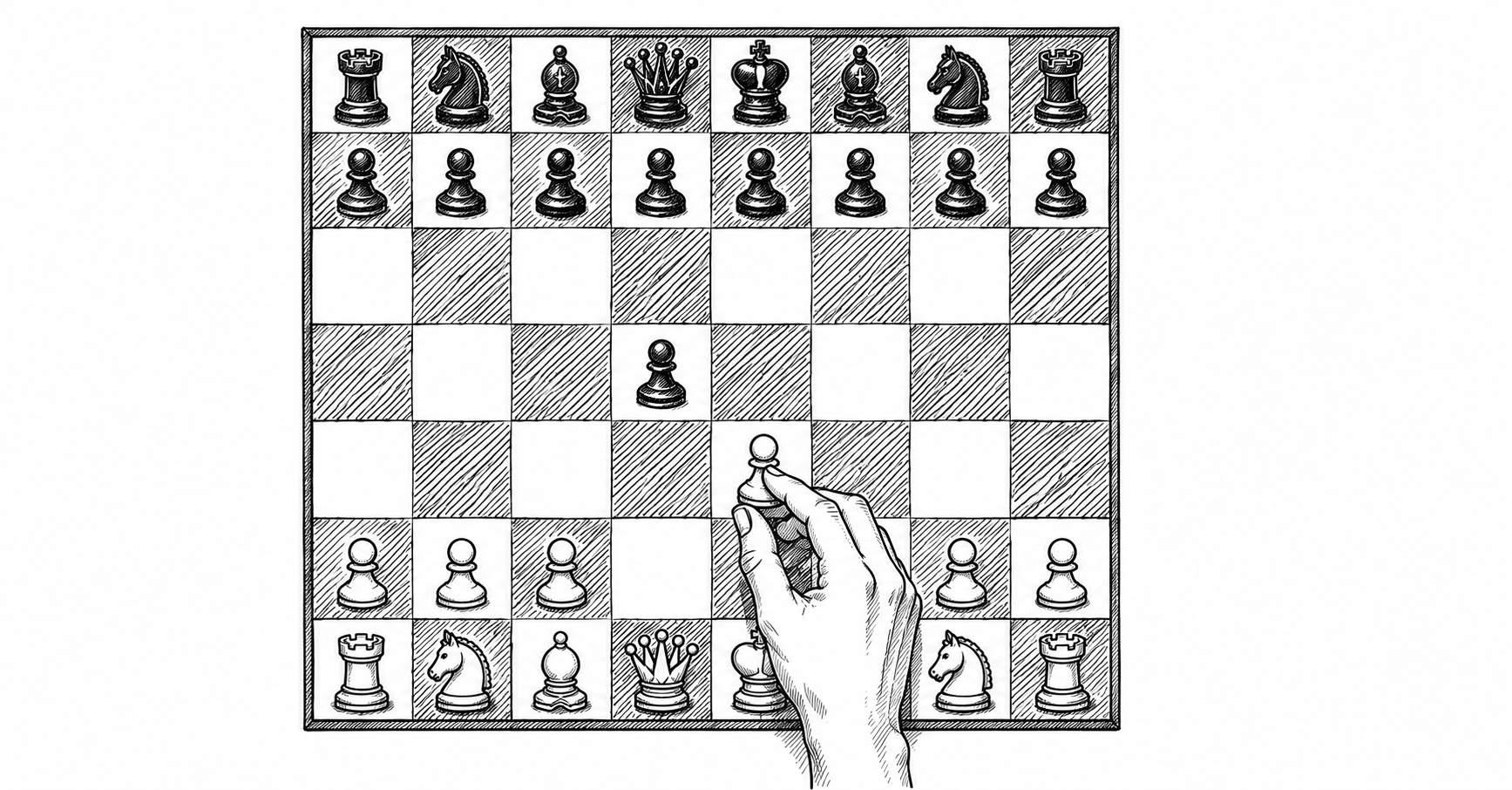
Who Moves First: A single chessboard, rendered in carbon black on pure white and viewed from directly overhead. One hand is already mid-move. The opposing pieces remain untouched in their starting positions.
The image represents the throughline running through tonight’s entire edition: a turn already taken before the other side even realizes the game has started. There’s no text, no realism, and only one focal point — a viewer should register that a move has already happened before they consciously process which story it belongs to. That’s the whole argument tonight, compressed into a single frame: speed is its own form of authority, and the people reacting second are always, structurally, a step behind.
What We’re Watching Next
The mechanism running under every story today — moving first and letting everyone else react — has a natural next phase worth tracking, because speed only stays an advantage until someone with real authority decides to test it. Watch whether Intel or Apple issues any formal confirmation of the chip partnership Trump announced via Truth Social, since the length of that silence is itself a measurement of how much control either company actually has over a decision that’s already being reported as settled fact.
A quick, detailed confirmation from both companies would suggest the deal is real and they’re simply catching up on the paperwork of an agreement already in motion; continued vagueness, or a confirmation from only one side, would suggest the announcement got ahead of the actual negotiation, and that Trump’s 10% equity stake in Intel gave him more leverage to announce the outcome he wanted than either company had to resist it publicly.
Watch the Pujols v. Rainbow Shops docket the same way — the complaint itself only tells you what Pujols is alleging. The next filing, whether it’s a motion to dismiss or a substantive response from Rainbow Shops, will be the first real signal of whether New York’s Fashion Workers Act consent requirement has teeth, or whether a budget retailer is willing to test it in court because the litigation risk is still cheaper than the cost of rebooking models for every reuse of their image.
The BBC and Anthropic stories test the same dynamic from the institutional side rather than the corporate-announcement side, and they’re worth watching together over a longer horizon. Anthropic’s published AI framework is now functioning as a de facto floor for the federal law Congress hasn’t finished writing, and the test isn’t whether lawmakers like the framework — it’s whether any member of Congress responds to it directly in the next several weeks.
Silence would be the more telling outcome, since it would mean the industry-set standard is already operating as the default rather than as one proposal among several still being negotiated. The BBC’s bet runs on a much longer clock: Brittin has to show that 550 job cuts this month don’t visibly degrade the journalism that gives the BBC its 48% UK trust rating, while simultaneously negotiating an entirely new funding settlement before the Royal Charter expires at the end of 2027.
Watch for the next round of cuts beyond this first £160 million phase, and watch whether any of the BBC’s flagship investigative or accountability journalism — the kind of reporting that’s genuinely expensive and slow to produce, and therefore the first kind of capacity any newsroom loses when it cuts — shows visible thinning over the next two to three months. If it does, that’s the signal the Reuters Institute’s trust data was already pointing toward: that institutions can manage the optics of a cost-cutting transition for a while, but the actual journalism underneath the optics erodes faster than anyone announces it.
Catch Up on the Week
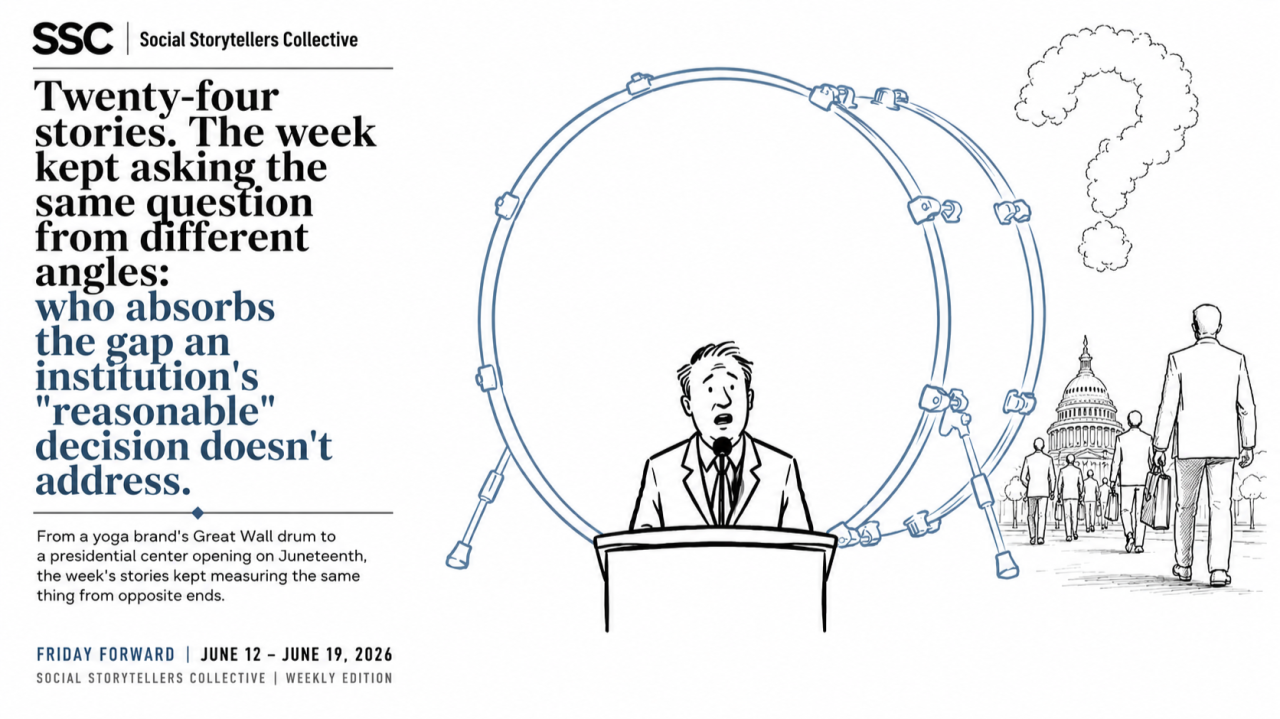
If you only have time for one SSC product this weekend, make it Friday Forward. This week’s edition pulled together 24 stories across labor, AI, policy, global affairs, and business from June 12 through June 19, including the Obama Presidential Center’s Juneteenth opening, the Fed’s new task-force structure under Chair Kevin Warsh, and the labor-market split between AI-driven layoffs and AI-driven hiring panic. Catch up here.
Eleven stories, and the throughline holds without needing restating: Rainbow Shops generated new ads without rebooking a model. DHS routed surveillance technology to local police through a document built for compliance review, not public debate. Trump announced a chip deal before Intel could confirm it. The BBC is cutting the staff that builds trust at the exact moment the data shows trust collapsing fastest. In each case, whoever moved first set the terms everyone else is now reacting to.
Get SSC analysis delivered to your inbox every day. Subscribe free: https://246481934.hs-sites-na2.com/newsletter