
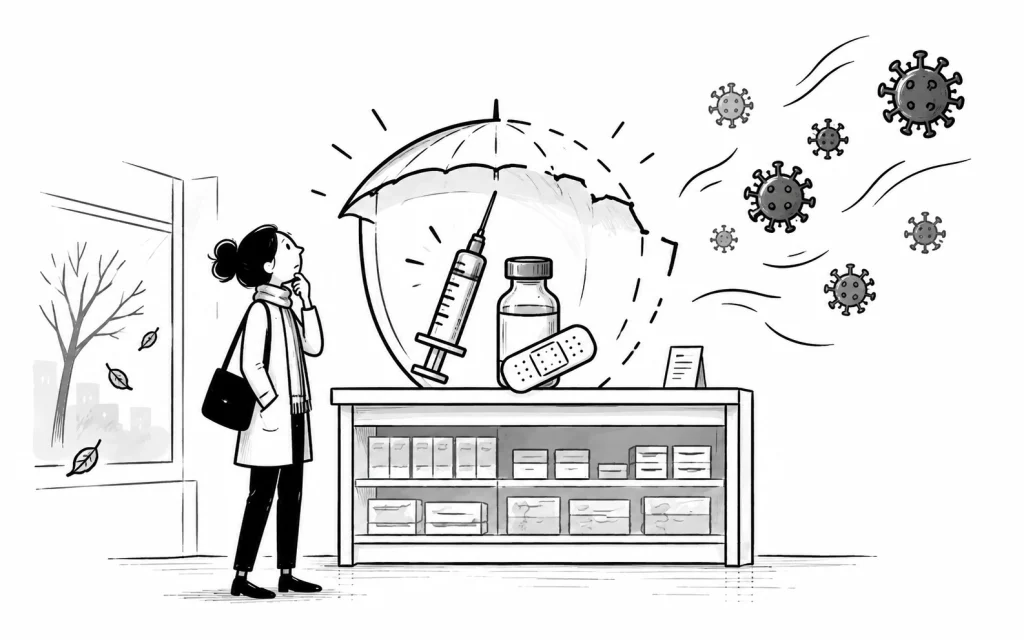
Flu vaccination remains below pre-pandemic levels, COVID booster uptake is much lower, and last season’s flu shot offered only moderate protection. The problem is not that vaccines stopped working — it is that fewer people are using them while viruses keep changing.
As flu season approaches, the United States is entering another fall with less vaccine protection than public-health officials would like. Final CDC data for the 2025–26 flu season shows that only 41.6% of adults received a flu vaccine, essentially unchanged from the previous year and still part of a longer decline that began after the pandemic. Among children, coverage improved slightly to 51.4%, the first increase since before COVID-19, but remained more than 12 percentage points below the 63.7% recorded in 2019–20. COVID vaccination is even lower: as of February 2026, only 17.5% of U.S. adults reported receiving the updated 2025–26 COVID vaccine. The numbers point to a respiratory-virus season in which the biggest protection gap may not be vaccine availability. It is how many people still choose to get vaccinated.
There is also a second issue that can easily get confused with declining vaccination rates: vaccine effectiveness itself changes over time. Last season’s flu vaccine still reduced illness and hospitalization, but protection was weaker than in some recent seasons. CDC estimated that among adults, the 2025–26 flu vaccine reduced the risk of an influenza-related outpatient visit by roughly 22% to 34% and hospitalization by about 30%. Among children and adolescents, effectiveness was stronger, reducing outpatient illness by about 38% to 41% and hospitalization by about 41%. CDC explicitly described those estimates as lower than in recent flu seasons but still protective. The explanation was not that flu vaccination had suddenly stopped working; one of the dominant H3N2 strains had drifted away from the strain included in the vaccine.
That mismatch is why this season’s flu shot has been changed. The FDA updated all three virus components in the 2026–27 flu vaccine, including the H3N2 component, after a new subclade spread widely during the previous season. Flu vaccines are rebuilt annually because influenza evolves quickly, and officials have to predict which strains will dominate months before the season peaks. That creates an unavoidable margin of uncertainty. Some years the match is stronger; other years circulating viruses change after the vaccine composition has already been selected. The CDC still recommends annual vaccination for everyone 6 months and older without a contraindication because even moderate effectiveness can translate into fewer hospitalizations and deaths across millions of infections.
COVID Protection Has a Different Problem: It Wanes
COVID vaccines face a related but different challenge. Protection against severe disease remains meaningful, but it declines with time after vaccination. CDC data from earlier updated vaccine seasons found protection against hospitalization was strongest in the first months after a dose and then weakened. For the 2023–24 vaccine, CDC estimated roughly 50% protection against hospitalization during the first two months, declining to about 30% across the following months. Protection against emergency or urgent-care visits fell more quickly, with little additional protection remaining by four to six months. The 2024–25 vaccine later showed about 45% to 46% effectiveness against hospitalization among immunocompetent adults 65 and older. That is why COVID vaccination has increasingly become an updated seasonal strategy rather than a one-time series expected to provide permanent protection.
For the 2026–27 season, CDC recommends an updated COVID vaccine for all adults 18 and older. Children with moderate or severe immunocompromise are also recommended to receive one, while vaccination for other children is handled through shared decision-making with a healthcare professional. CDC specifically notes that both vaccine protection and immunity following infection decline over time, while the vaccines themselves are updated to better match circulating variants. That means someone who was vaccinated several years ago or had COVID previously should not assume the protection is equivalent to receiving the current formulation.
Vaccination Has Not Recovered From the Pandemic
The more consequential trend may be behavioral rather than biological. Before COVID-19, flu vaccination had been slowly increasing. CDC says coverage among children began falling during the pandemic, while adult coverage declined steadily after the 2021–22 season. Even after last year’s modest improvement among children, overall flu coverage remains well below the federal Healthy People 2030 goal of 70%. The gaps are also uneven. Last season, adult flu coverage ranged from 29.3% in Idaho to 57.6% in Massachusetts, while coverage among Black adults fell by 2.9 percentage points and remained below White adult vaccination rates. Among pregnant women, only 28.9% reported receiving the 2025–26 COVID vaccine, compared with 49.5% who received a flu vaccine.
The decline is taking place as vaccine hesitancy increasingly extends beyond COVID. CDC cited research finding that 30.9% of U.S. children had a parent hesitant about the flu vaccine, compared with 12.2% for established childhood vaccines such as measles, polio and tetanus. Provider recommendation also appears to matter considerably: during the 2025–26 season, about 61% of adults whose healthcare provider recommended a flu vaccine received one, yet fewer than half of adults reported receiving such a recommendation. The protection problem therefore is partly medical and partly social. Vaccines need to be updated because viruses change and immunity wanes. But those improvements matter less if increasingly large portions of the population opt out of receiving them.
The question heading into this winter is therefore not whether flu and COVID vaccines still work. They do, particularly at reducing severe disease, but neither offers perfect or permanent protection. The more immediate concern is that moderate effectiveness is being layered on top of relatively low uptake. Last season, influenza caused at least 26 million illnesses, 340,000 hospitalizations and 21,000 deaths by the end of February, even while vaccination reduced the risk of serious outcomes for those who received it. As the next flu season begins, the public-health equation is straightforward: the vaccines are being updated to keep pace with changing viruses, but their population-level value depends on enough people deciding that partial protection is still worth having.