

Texas loses millions in HIV prevention funding, Ghana bets $10 billion on its economic future, and investors line up for one of the biggest technology offerings in history.
Friday brought five stories about what governments choose to fund, what investors are willing to gamble on, and who benefits when industries change. Texas communities are confronting the loss of federal health funding while Washington threatens new tariffs against Mexico. Ghana wants to turn economic recovery into industrial growth, Anthropic is testing Wall Street’s appetite for artificial intelligence, and one of the world’s most recognizable inventions is returning to the country where it began. Here are five things that matter, and why.
1. Texas Lost $29 Million for HIV Prevention. Communities Will Pay the Price.
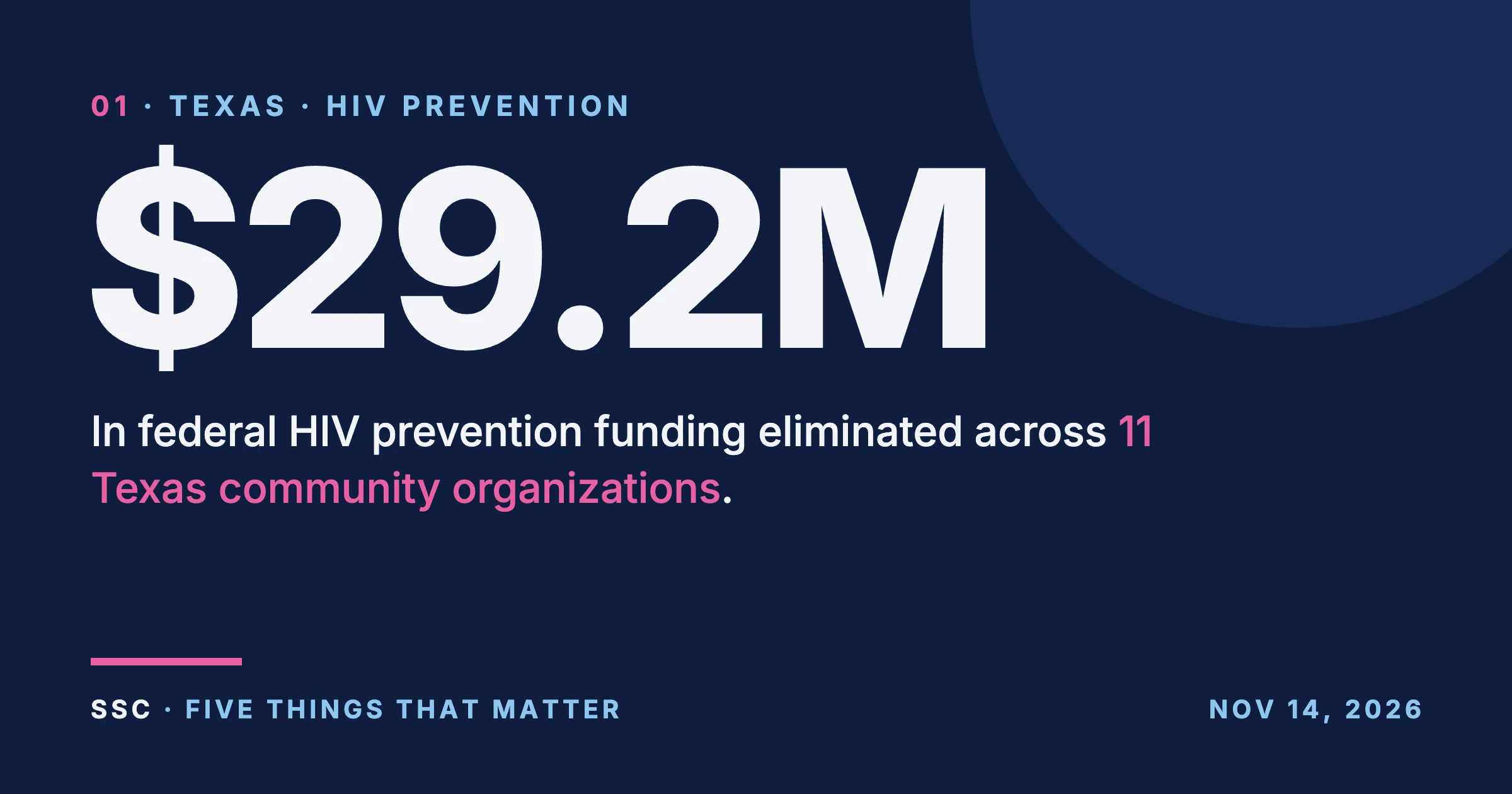
The federal government has eliminated $29.2 million in funding that supported community-based HIV prevention programs across Texas. According to The Texas Tribune, 11 organizations received support through the five-year federal program, which expired September 30. The money paid for testing, outreach, prevention services and connections to treatment.
Houston’s Allies in Hope received approximately $441,000 annually through the program. That funding supported outreach and a mobile testing unit, helping cover more than a quarter of the organization’s roughly 2,000 annual HIV tests. Without replacement funding, its leadership warns that testing capacity will shrink.
The policy question extends beyond the amount being cut. Community organizations often reach people who might never voluntarily walk into a clinic, especially those facing stigma, transportation barriers or concerns about confidentiality. Removing those services does not remove the need for them. It shifts the burden to people who may already have the least access to preventive care.
What to watch: Whether Texas lawmakers replace the lost federal support and how quickly community organizations must reduce testing. The longer the funding gap continues, the harder it becomes to maintain prevention networks built over decades.
2. Trump Threatens Mexico With Tariffs. His Treasury Secretary Talks Trade Deals.
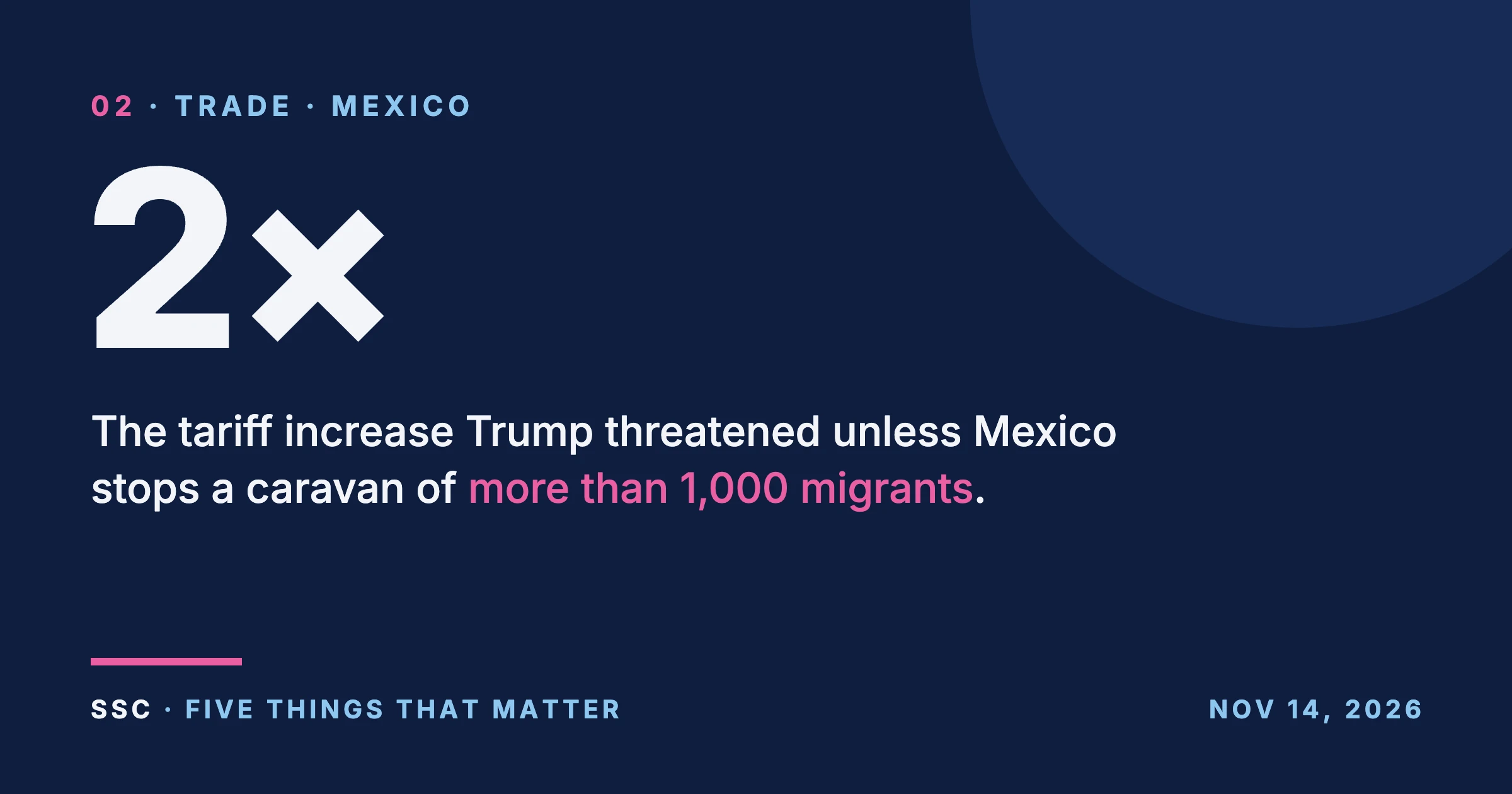
Donald Trump threatened to double tariffs on Mexico unless its government stopped a migrant caravan of more than 1,000 people heading toward the United States. One day later, Treasury Secretary Scott Bessent expressed optimism that Washington could still negotiate trade agreements with both Mexico and Canada, Reuters reported.
The conflicting messages arrive during sensitive North American trade negotiations. Trump declined to extend the U.S.-Mexico-Canada trade agreement in July, leaving businesses facing uncertainty about the rules governing one of the world’s most integrated trading relationships.
Tariffs are not simply penalties imposed on another government. American companies that import goods may absorb higher costs, pass them on to consumers or reorganize supply chains. Using trade restrictions to pursue immigration enforcement goals also means manufacturers, retailers and ordinary consumers can become part of a dispute they have little power to resolve.
What to watch: Whether the tariff threat becomes an actual policy change or remains negotiating pressure. Businesses need to know which rules will govern cross-border commerce before making investment and pricing decisions.
3. Ghana Wants to Spend $10 Billion Building a Different Economy.
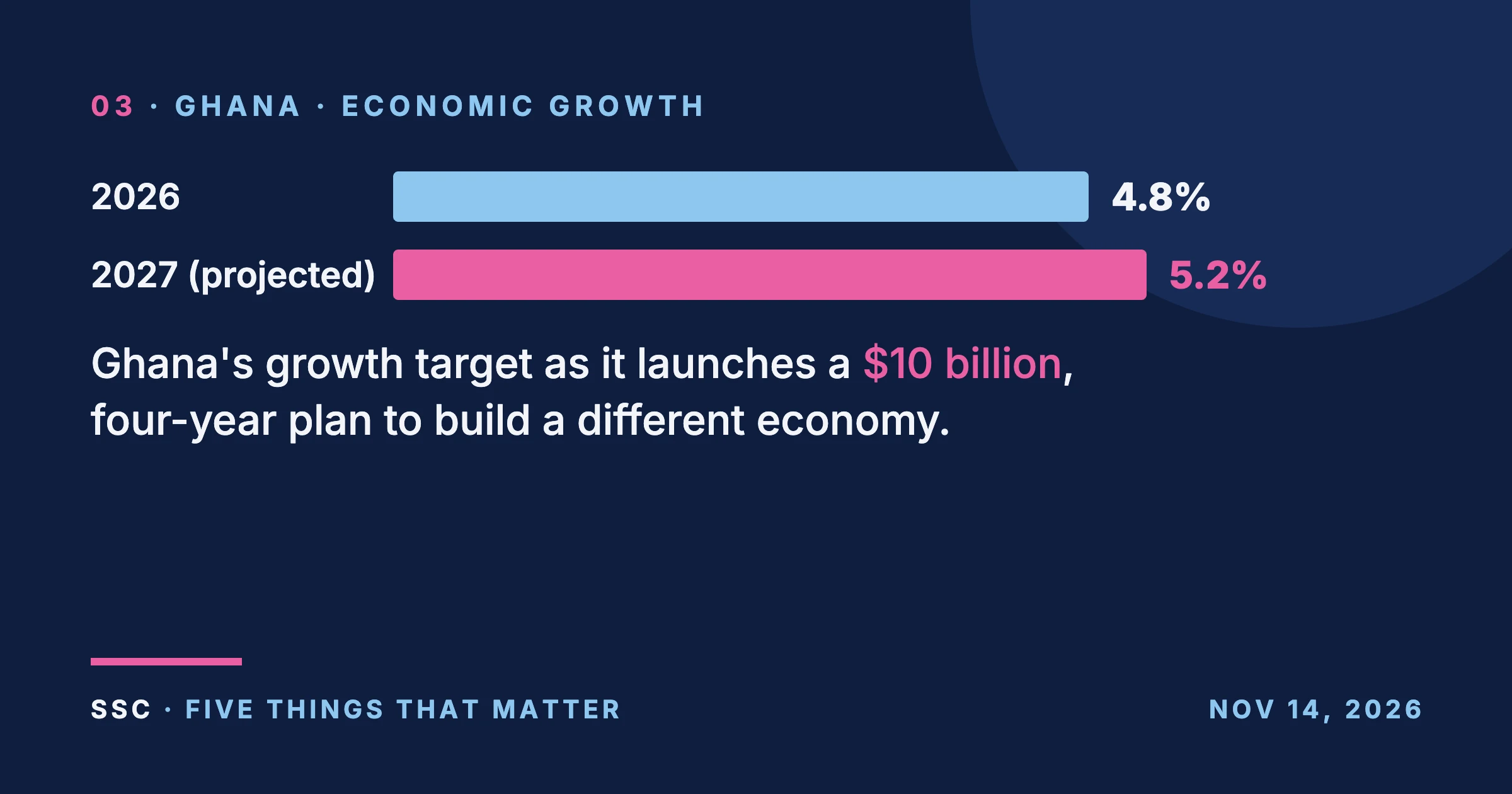
Ghana has unveiled a $10 billion, four-year economic development initiative designed to expand domestic production, create jobs and reduce dependence on exporting raw materials. Finance Minister Cassiel Ato Forson announced the initiative as part of the country’s 2027 budget, with investments planned in agriculture, energy infrastructure, technology, textiles and mineral processing, according to Reuters.
The announcement follows Ghana’s completion of a $3 billion International Monetary Fund support program. The government projects 5.2% economic growth in 2027, compared with 4.8% in 2026. But economic stabilization and economic transformation are different challenges.
For decades, resource-rich African economies have exported commodities while other countries captured much of the value from processing, manufacturing and finished products. Ghana’s proposal aims to keep more of that economic activity at home. The question is whether the country can build the infrastructure, industrial capacity and employment opportunities necessary to make the strategy work.
What to watch: How the government distributes the proposed investment and whether domestic businesses gain meaningful participation. The strongest evidence of success will be new production capacity, sustainable employment and increased exports of finished goods.
4. Investors Are Racing Into Anthropic. They Still Want Answers.
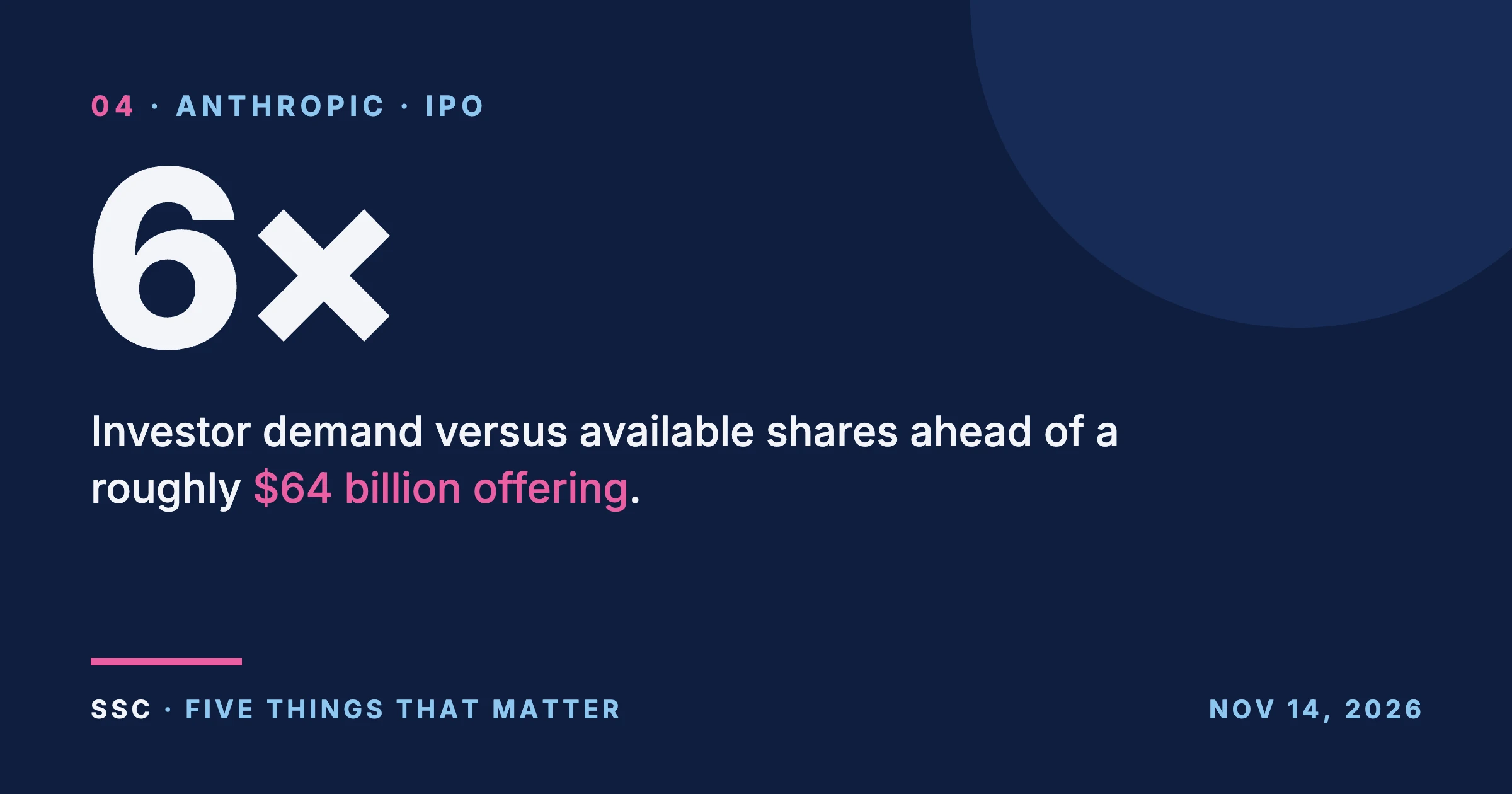
Artificial intelligence company Anthropic is attracting substantial investor demand ahead of its planned public offering. According to Reuters, people familiar with the offering said demand for shares reached approximately six times the available supply by Thursday. The company is expected to price a roughly $64 billion offering next week.
That enthusiasm comes with significant uncertainty. Investors are examining whether Anthropic’s Claude products can maintain their competitive position as Google and other companies improve their models. They are also questioning how much of Anthropic’s growth can continue when competing products become more powerful and potentially less expensive.
The enthusiasm illustrates a tension in the AI investment boom. Investors are willing to commit enormous sums based on expectations of future revenue, but the market has yet to establish which companies will retain pricing power as the technology matures. Rapid adoption does not automatically guarantee long-term profitability.
What to watch: The offering’s final price, the company’s disclosures and how investors value its future earnings. The IPO will provide another test of whether Wall Street’s enthusiasm for AI is matched by confidence in its business models.
5. The Rubik’s Cube Is Coming Home After Selling Half a Billion Units.
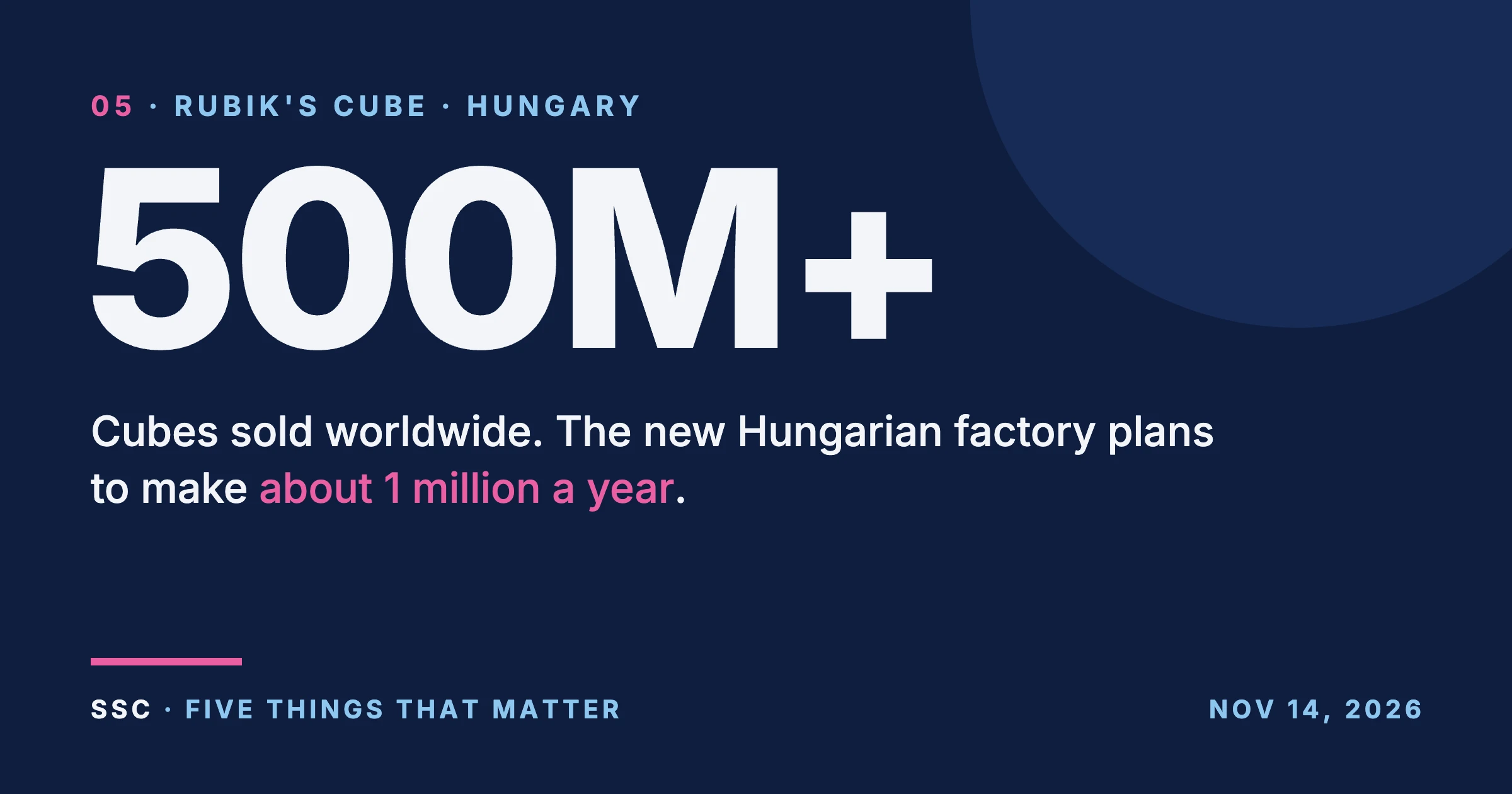
One of the world’s most recognizable puzzles is returning to its manufacturing roots. Production of the Rubik’s Cube has resumed in Hungary, where architect and designer Ernő Rubik invented it in 1974. A new automated manufacturing operation in Jászberény plans to produce approximately one million cubes annually, according to the Associated Press.
More than half a billion cubes have been sold worldwide. What began as an experiment in three-dimensional design became a cultural phenomenon, spanning generations and eventually developing into a competitive sport. Yet the puzzle’s early international success also exposed the limitations of Hungarian manufacturing at the time, prompting production to move abroad.
Its return offers a compelling example of how cultural products evolve into global businesses. The manufacturing process is now heavily automated, and the company that owns the trademark is Canadian. Still, producing the cube in its country of origin connects its commercial future to the place where the original idea took shape.
What to watch: Whether the new factory can sustain production as global demand evolves. The return also raises an interesting question about manufacturing: can automation make producing a globally recognized product in its original market economically competitive again?
The Through Line
Five stories, one recurring question: who receives the investment, and who carries the risk? Texas is losing preventive health services while Ghana is proposing billions in new industrial investment. Washington is using tariffs as leverage, investors are wagering enormous sums on AI, and Hungary is reclaiming production of an invention it introduced to the world.
The decisions are different, but their consequences extend beyond budgets, markets and corporate strategies. They influence which communities receive services, where businesses create jobs and who gets to participate in economic growth. Context matters.
Five Things That Matter is produced by the Social Storytellers Collective News Desk. Get the End of Day Closing Note free in your inbox.