
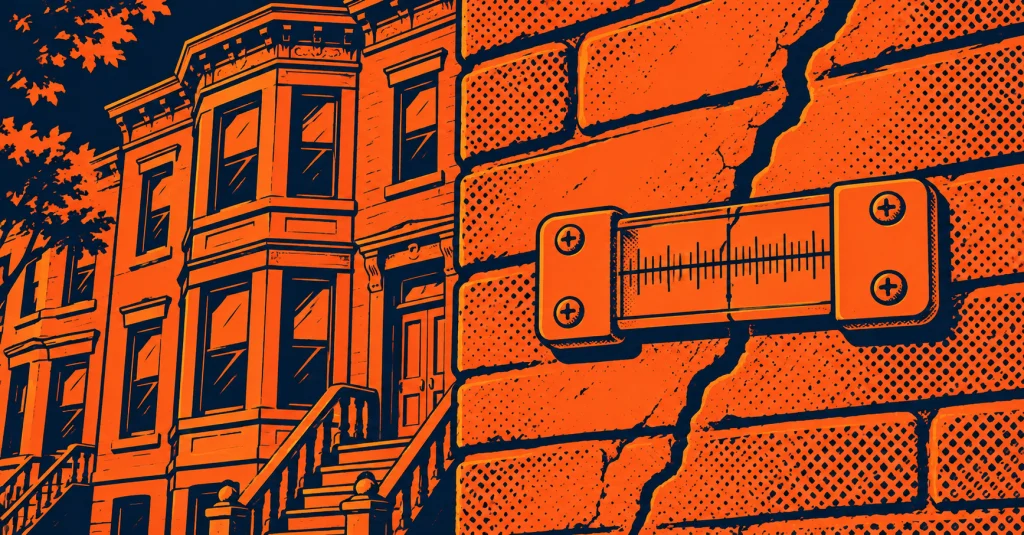
A 96-year-old building fell into the construction pit next door. Records show the problems had been building up for months, and that New York’s system for building safety only acts once neighbors complain.
By SSC News Desk | November 14, 2026
Just after 4 p.m. on Wednesday, the three-story apartment building at 1321 Flatbush Avenue in Brooklyn collapsed into an excavation site next door at 2625 Bedford Avenue. Eight people died, including two children, and 18 were injured, The Real Deal’s Ben Miller reported. Buildings Commissioner Ahmed Tigani said workers had been digging on the neighboring lot in the hours before the collapse. The city hasn’t confirmed the excavation caused it, and the investigation now includes the Brooklyn District Attorney. Mayor Zohran Mamdani said the five companies involved in the job are tied to about 100 other sites across the city, and building inspectors began sweeping them Thursday.
The paper trail came first
The city’s own records read like a countdown:
- March: the Buildings Department ordered demolition at the Bedford Avenue lot to stop. In April, inspectors found demolition had continued anyway, which brought a $10,000 penalty.
- May: the stop-work order was lifted after the violations were marked corrected, CBS New York reported.
- June: the developer mailed neighbors a letter promising that “all precautions” would protect their buildings, postmarked after demolition had already begun.
- Before the dig: an engineering inspection rated the north wall of the building next door, the one facing the pit, in “poor” condition, Newsweek reported from city records.
The collapsed building had its own long record of problems. It carried 98 open violations with the city’s housing agency, including a leaky roof, exposed wiring and bedbugs. A 2020 CUNY study counted 21 violations per unit there, against a comparison average of 0.7. Meanwhile, the lot next door had approval for a three-story building, while renderings in zoning records show developers planning nine stories.
Safety gets enforced after the fact
Building safety in New York runs on paperwork and penalties. Owners file engineering plans, contractors pull permits and promise shoring, and the city mostly shows up when someone complains or something breaks. A $10,000 fine is a line item for a developer on a lot bought for $4 million. For the families next door, it was the only deterrent standing between a crack in the wall and the pit. One construction lawyer told The Real Deal that the agency lacks the resources to examine situations like this, and that he has seen corners cut “left and right.”
That arrangement shifts risk from the people profiting from the dig to the tenants living beside it. It’s the same pattern SSC traced in Extreme Weather Is Outrunning the Systems Built to Warn Us: the warning systems exist, but they’re slower than the danger.
The 100-site sweep is the city’s second reactive sweep this year, after the partial collapse of the former Pfizer building in July prompted inspections of office-to-residential conversions. Expect the next fight in City Council to be over whether excavation next to aging buildings needs inspections before digging starts, not after neighbors complain. Until that changes, New York’s building code will keep getting enforced after people die.