POLICY | ACCESS | ANALYSIS
A federal judge ruled October 9 that the Justice Department’s policy of collecting state voter rolls, checking names against an immigration database and pressing states to remove suspected ineligible voters was unlawful. U.S. District Judge Sparkle Sooknanan’s 78-page decision addresses two connected questions: who controls election administration and what happens when government data systems are treated as reliable enough to determine a person’s right to vote. The case arrives less than a month before the November 3 midterm elections, when errors in eligibility screening could be difficult to correct quickly. Reuters reported the ruling and the court’s concern that eligible citizens could be wrongly flagged.
Two databases, different purposes
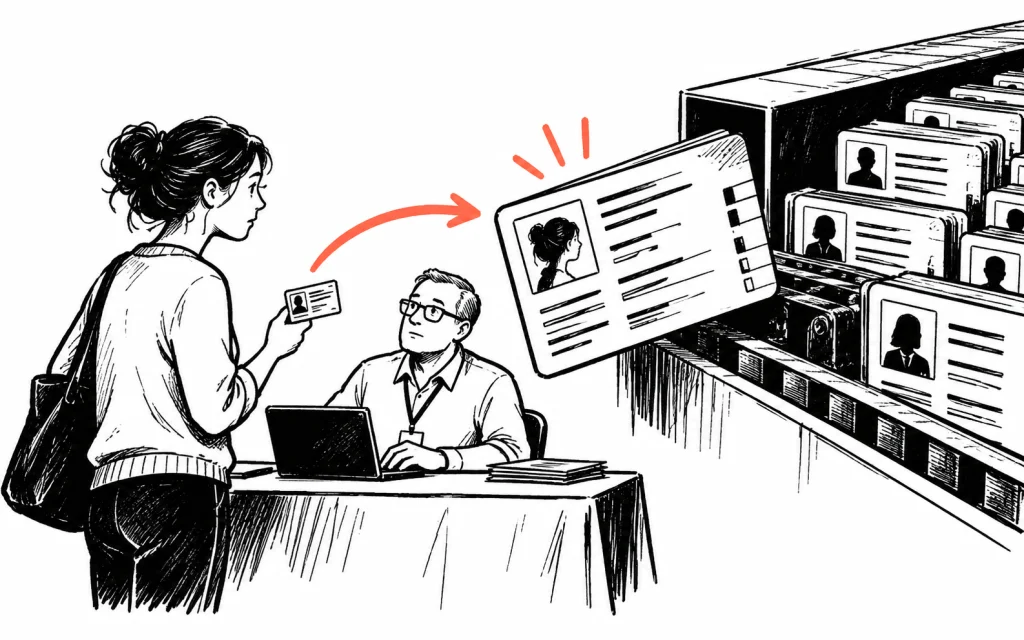
The Justice Department had sought detailed voter-registration records from states and planned to compare those records with the federal SAVE immigration-status system. Its stated purpose was to identify noncitizens who should not be on voter rolls and improve election integrity. But records designed for immigration verification are not necessarily current or complete measures of voting eligibility. Naturalized citizens may appear in older data under a previous status, and discrepancies in names or dates can trigger false matches. The court found that the policy exceeded federal authority and conflicted with privacy and procedural safeguards. The Washington Post’s account describes the information requested, including addresses, birth dates and identification numbers.
States have responsibility for administering elections, while federal law imposes requirements and provides oversight tools. The dispute is not whether voter lists should be accurate; both sides say they should. It concerns the federal government’s attempt to consolidate sensitive state data and translate immigration-system matches into instructions about who belongs on the rolls. The Justice Department has defended its requests as necessary to enforce federal election laws. Earlier in 2026, it announced lawsuits against 29 states and the District of Columbia seeking voter-list information, illustrating the national scope of the effort. Its February announcement sets out the department’s legal rationale and enforcement position. A court’s rejection of this policy does not eliminate every lawful method for states to verify eligibility.
Data quality becomes an access question
Voting-rights organization Common Cause challenged the practice, arguing that large-scale transfers and cross-checks threatened privacy and could lead to mistaken removals. The group welcomed Friday’s decision as a protection for voters and state election authority. Reporting indicates that 18 states had complied with the federal request, though the status and handling of any data already transmitted require separate scrutiny. A mismatch in a database can look like an administrative problem until it becomes a notice that a person must prove citizenship again. The burden then shifts to an eligible voter, who may have limited time, transportation or access to documentation. Common Cause’s response outlines the plaintiffs’ concerns.
The ruling also exposes the limits of treating an algorithmic match as a neutral fact. Data systems reflect collection rules, update cycles and administrative decisions that may not be visible to the people being evaluated. Even when a tool helps officials detect errors, it needs a verification process that distinguishes a warning from a final judgment. That principle applies beyond elections, including immigration, public benefits and employment screening. SSC has examined the consequences of expanding access to sensitive personal data in another setting. Here, the issue is more consequential: an inaccurate record could influence whether a citizen remains able to cast a ballot.
Appeals or narrower government efforts may follow, so the decision should not be treated as the final word on every voter-data dispute. The immediate questions are what happens to information already gathered, how states respond to federal requests, and whether affected voters receive meaningful notice and correction opportunities. Election integrity requires accurate records, but accuracy cannot be declared merely because two databases produce a match. The ruling forces a closer look at authority, privacy and the human process required before a government system can restrict participation in a democratic institution.