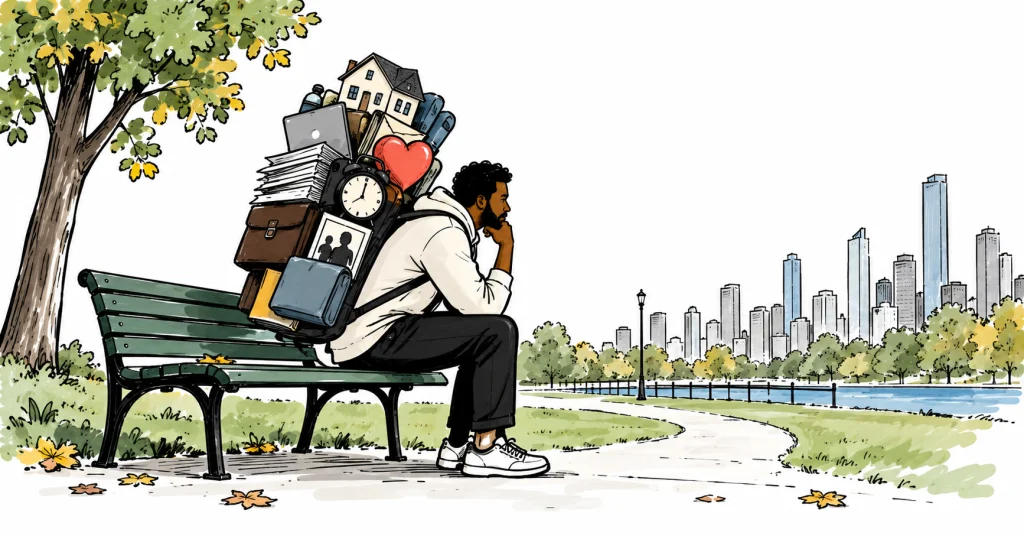
More than one billion people worldwide live with mental health disorders, according to findings released by the World Health Organization in September 2025. The scale should challenge the idea that emotional difficulty is an unusual interruption in otherwise orderly lives. Saturday, October 10, is World Mental Health Day, and this year’s theme, “Lived experiences heard: real voices, real change,” asks us to take seriously the knowledge of people living with mental health conditions. I find myself thinking about how often we praise someone for holding everything together without asking what the effort is costing them. We recognize the performance of strength more readily than the person performing it.
The person who keeps showing up
There is a particular kind of loneliness that can accompany being dependable. You answer the messages, meet the deadline, remember the appointment and make sure someone else has what they need. Because the work gets done, people assume the person doing it is fine. Sometimes we make that assumption about ourselves. We point to the completed task as evidence that we are managing, even when getting through it has taken everything available. Functioning can become the language through which we explain away our own exhaustion. We postpone an honest conversation because there is still another obligation waiting.
For Black men, I think about the expectations attached to being composed, useful and difficult to shake. That is a reflection on the scripts many of us encounter, rather than a claim that we share one experience. There can be pride in being the person a family trusts, and real meaning in showing up for others. But the role becomes harder when admitting fear, sadness or uncertainty feels like surrendering credibility. We should be able to say that something hurts without having to prove we remain capable. Being respected should leave room for being cared for, including on days when we have little to give back.
Ordinary sadness, grief and exhaustion are not automatically mental health disorders, and we should be careful about collapsing them into a diagnosis. They still deserve attention. A loss does not become easier because the calendar says enough time has passed. Financial worry does not stop at the office door. The uncertainty surrounding work, family and the future can follow a person through an otherwise ordinary day. I want us to make more room for those realities without demanding a dramatic disclosure. Sometimes an honest answer to “How are you?” is complicated, unfinished and inconvenient to hear.
Listening has to lead somewhere
The public response needs the same honesty. WHO’s Mental Health Atlas 2024 found that median government spending on mental health remained just 2% of total health budgets, unchanged since 2017, according to its September 2025 report announcement. That is a global median, not a figure for every country or a measure of every individual’s access. Still, it gives us a concrete way to examine the distance between public recognition and public investment. Encouraging people to seek support carries an obligation to make support reachable. A campaign can invite someone to speak; a service needs the capacity to answer.
In our own relationships, answering can be less polished than the language of awareness campaigns suggests. It may mean listening without immediately offering a lesson, asking what would help, or following up after the difficult conversation has ended. In a workplace, it can mean examining the demands being placed on people rather than treating every struggle as a private failure to manage stress. Professional care should have a place in that conversation, without making someone feel that seeking it diminishes their judgment or worth. We do not need to become each other’s clinicians to become more attentive to each other’s lives.
This World Mental Health Day, I want to reconsider what I ask of myself and what I quietly expect from other people. There is value in persistence, but there should also be permission to pause, speak honestly and accept help. Nobody should have to turn their pain into an impressive recovery story before we decide it deserves our attention. The next step can be modest: make the appointment, tell someone the fuller truth, or return to the person whose answer you rushed past. Carrying responsibility is part of life. Making room for support should be part of how we live it.