TECH
The deal gives Apple access to talent and technology behind personalized AI audio as Spotify and other platforms push podcasting beyond shows made for mass audiences.
BY SOCIAL STORYTELLERS COLLECTIVE NEWS DESK
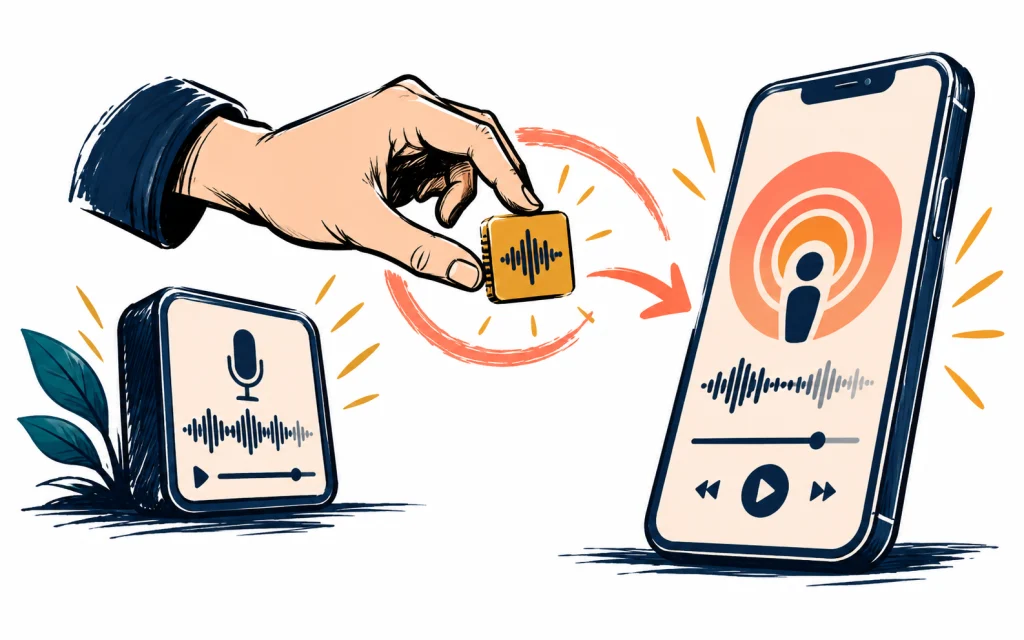
Apple has reached a deal that allows it to recruit employees from Huxe and license technology from the personalized audio startup without purchasing the company itself. Under a filing disclosed to the European Commission, Apple can make employment offers to certain Huxe AI employees while receiving a non-exclusive license to Huxe’s intellectual property. Apple notified European regulators of the arrangement on June 9, less than three weeks after Huxe announced it was shutting down. TechCrunch reported the agreement Saturday, while MacRumors first surfaced the regulatory disclosure.
The structure is important. This is not a conventional acquisition where Apple buys Huxe, assumes ownership of the company and folds the business into its operation. Instead, it resembles what has become known as a reverse acqui-hire: a larger company recruits selected employees and secures rights to technology while leaving the corporate entity behind. The filing does not identify which Huxe employees received offers, whether they accepted them or what Apple intends to build with the technology. The arrangement nevertheless gives Apple access to people who were working on one of generative AI’s increasingly competitive consumer applications: turning information into personalized audio.
Huxe was founded by former Google employees Raiza Martin, Jason Spielman and Stephen Hughes, who had worked on NotebookLM, the Google product that helped popularize AI-generated podcast-style conversations. Huxe pushed the concept further. Instead of simply transforming documents into audio, the service could create individualized briefings around a user’s interests, emails and calendar, generate podcasts about requested subjects and allow listeners to interrupt an AI conversation to ask for clarification. The startup had raised $4.6 million, but announced May 21 that it would wind down. Service ended May 28 and user data was scheduled for deletion the following day. Huxe’s remaining website documents that shutdown.
Its disappearance did not mean the idea disappeared. In fact, Huxe shut down just as much larger technology companies were moving aggressively into the same category. Spotify announced Personal Podcasts this year, allowing users to generate private audio around prompts, documents and personal information. The company has also developed Studio by Spotify Labs, which can connect with calendars, inboxes and notes to create individualized briefings. Spotify says users can now create Personal Podcasts directly inside its app, including recurring briefings generated around their lives. Spotify describes the format as audio created “just for you” rather than another program selected from a conventional podcast catalog.
That creates a possible strategic opening for Apple. The company already owns one of the world’s major podcast applications, controls an enormous installed base of phones, watches, computers and headphones, and has been expanding the role of AI across its software ecosystem. Huxe’s technology points toward a different version of podcasting: instead of opening Apple Podcasts and choosing among programs created for thousands or millions of listeners, a person could eventually ask for an audio briefing assembled around a commute, calendar, reading list or subject they want explained. Apple has not announced such a product, and the Huxe filing does not establish that Apple Podcasts is where the technology will be used. But Spotify’s parallel investment demonstrates that personalized generated audio is already moving from experiment to platform strategy.
There is a second story here for startups. Huxe built a product around a capability that increasingly became available inside much larger ecosystems. TechCrunch noted when the company closed that Adobe, Amazon, ElevenLabs, Meta, Google and Spotify had all moved into AI-generated audio in various forms. That creates a difficult market for startups whose defining feature can quickly become one button inside a platform with hundreds of millions of users. Huxe did not become the next major podcast company. Its technology and talent may instead help an incumbent build the functionality directly into an existing ecosystem.
The podcast business has spent years competing over creators, exclusive shows, video and advertising. Generative AI introduces another possibility: audio that is not produced for an audience at all. Spotify executives have described this as “individual media” — programming generated around the interests and circumstances of a single listener. Apple’s Huxe arrangement does not tell us what Apple will release next. It does show the company acquiring some of the people and technology built around that idea. The next fight in podcasting may therefore be less about which platform has the best shows and more about which one can generate the most useful show for an audience of one.