
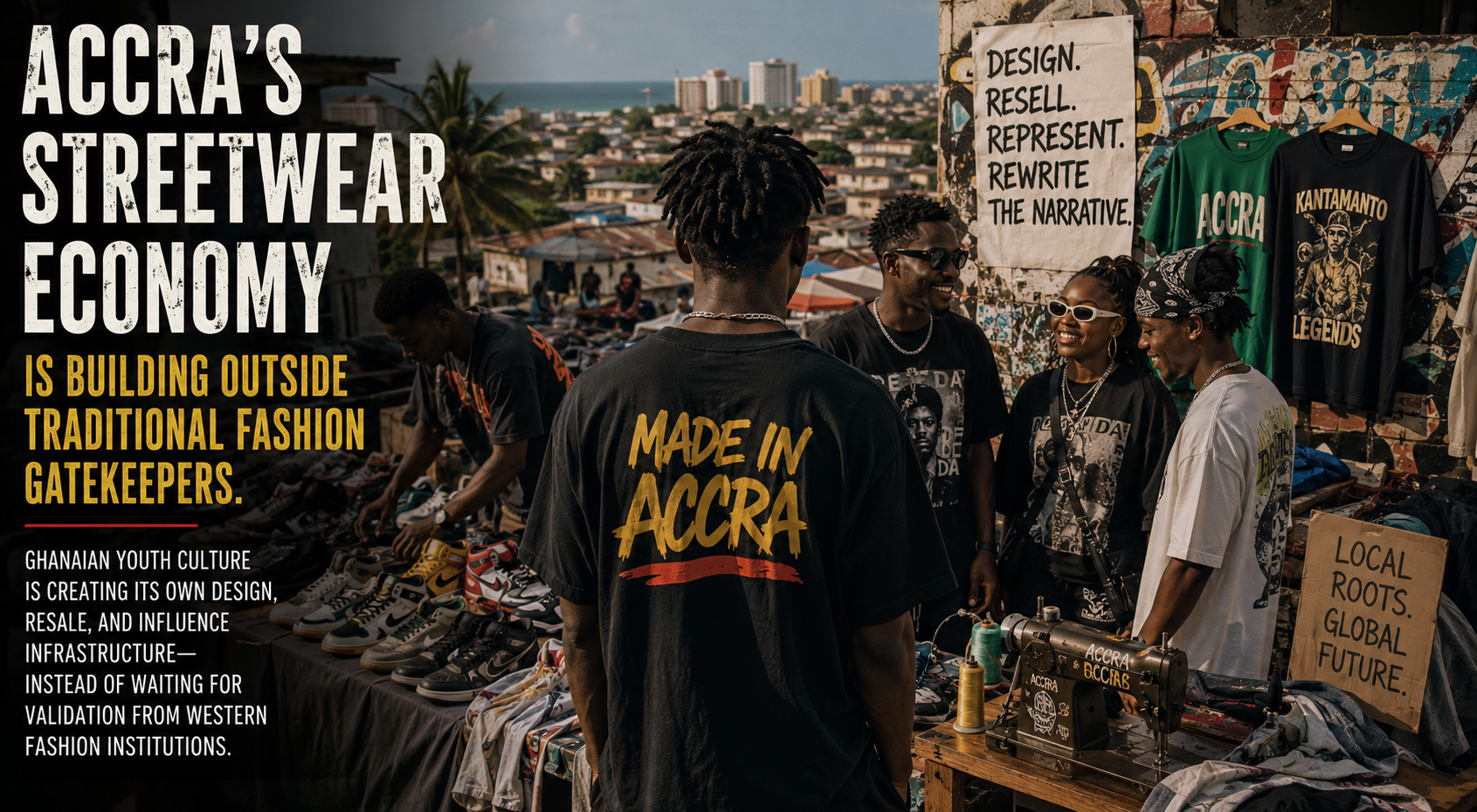
In Accra, streetwear has moved far beyond imitation. Across neighborhoods including Osu, East Legon, and Jamestown, young creatives are building fashion ecosystems through local tailoring networks, sneaker resale markets, pop-up events, photography collectives, and music-driven style communities that increasingly operate independently from traditional luxury pipelines. Recent reporting on Ghana’s emerging streetwear scene captured how youth culture in the city is turning fashion into a localized economic and identity system rather than simply a consumer trend. What makes the shift significant is not that Accra has developed a recognizable aesthetic. It is that the city is building cultural infrastructure without waiting for Western institutions to formally recognize it first.
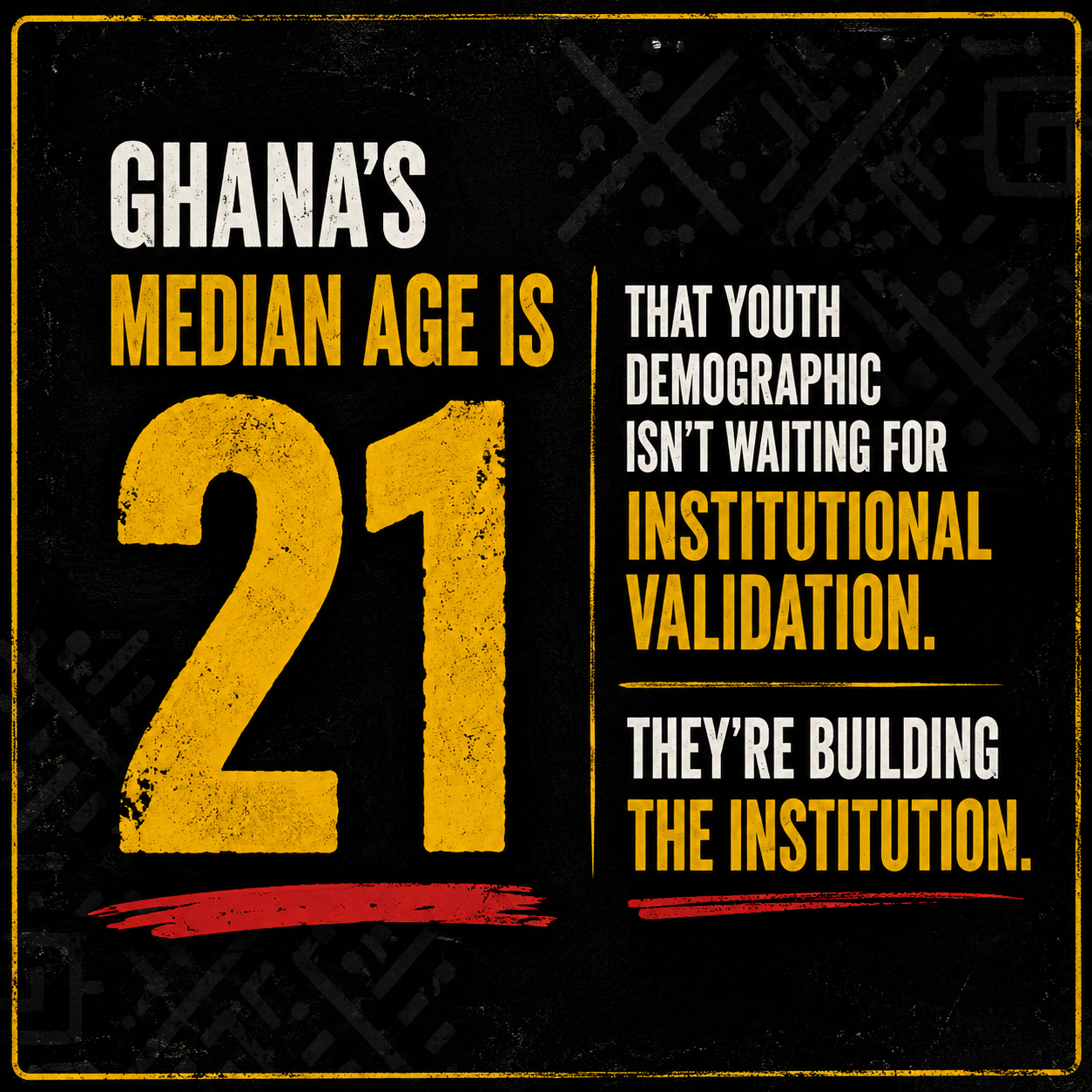
That distinction matters because African fashion has historically been filtered through external validation systems before being treated as globally relevant. Designers often needed Paris Fashion Week placements, European stockists, celebrity endorsements, or diaspora co-signs to reach broader visibility. Social platforms disrupted that dependency. Instagram, TikTok, WhatsApp, and digital marketplaces now allow photographers, stylists, designers, and musicians to circulate aesthetics directly to audiences without passing through the same editorial bottlenecks that once controlled recognition. Ghana’s median age is approximately 21 years old, one of the youngest populations in the world, and that youth demographic is increasingly shaping culture through mobile-first participation rather than institutional affiliation.
The emergence of localized streetwear economies also reflects larger changes in how fashion production itself operates. Young Ghanaian creatives are blending imported references with local realities, using tailoring traditions, secondhand markets, bootleg culture, football influence, and music aesthetics to produce something distinct from the polished luxury minimalism dominating much of Western fashion media. The result feels less corporate and more adaptive. Mainstream fashion coverage often frames African style through “emerging market” language that subtly positions the continent as developmental rather than innovative. What is actually happening in Accra resembles ecosystem-building: communities creating production, distribution, and identity systems calibrated to their own cultural logic.
The economics behind the scene reinforce that interpretation. Ghana imported more than $214 million worth of secondhand clothing in 2023 according to UN trade data, while Kantamanto Market remains one of the largest secondhand clothing hubs in the world. Young designers and stylists increasingly repurpose those garments into original pieces, effectively transforming global fashion surplus into localized creative capital. That recycling dynamic mirrors broader platform-era behavior where creators build visibility through remixing, customization, and reinterpretation rather than starting from institutional access. Fashion in Accra increasingly behaves like music scenes historically behaved: decentralized, collaborative, improvisational, and community-dependent.
There is also a deeper political dimension underneath the aesthetic momentum. African youth populations continue facing high unemployment rates, inconsistent economic infrastructure, and limited formal creative-industry support despite rapid cultural influence globally. In Ghana, youth unemployment remains a persistent national concern even as music, fashion, and digital creativity expand internationally. Streetwear becomes more than style under those conditions. It becomes economic participation, identity construction, and social visibility simultaneously. A photoshoot posted online can function as networking tool, portfolio, brand launch, and community signal all at once. The clothing matters, but the ecosystem surrounding the clothing matters more.
The larger shift extends beyond Ghana itself. Similar patterns are emerging across Lagos, Nairobi, Johannesburg, and Dakar as young creatives build cultural economies that operate parallel to traditional Western fashion systems rather than beneath them. The mainstream industry often notices these scenes only after international celebrities or luxury houses absorb their aesthetics. By that stage, the underlying infrastructure has usually already been developing for years locally. Accra’s streetwear movement is not important because it may eventually influence global fashion. It is important because it demonstrates how cultural authority increasingly forms through networked youth ecosystems before institutional fashion centers fully recognize where influence is actually coming from.