Nidal Hasan deserves no sympathy. On Nov. 5, 2009, the former Army psychiatrist opened fire inside a medical building at Fort Hood, Texas, where soldiers were waiting for vaccinations and deployment clearance. He killed 13 people and wounded 32. A military jury sentenced him to death in 2013. Nothing in this column is an argument that his life is worth more than the lives he took.
This column is about us.
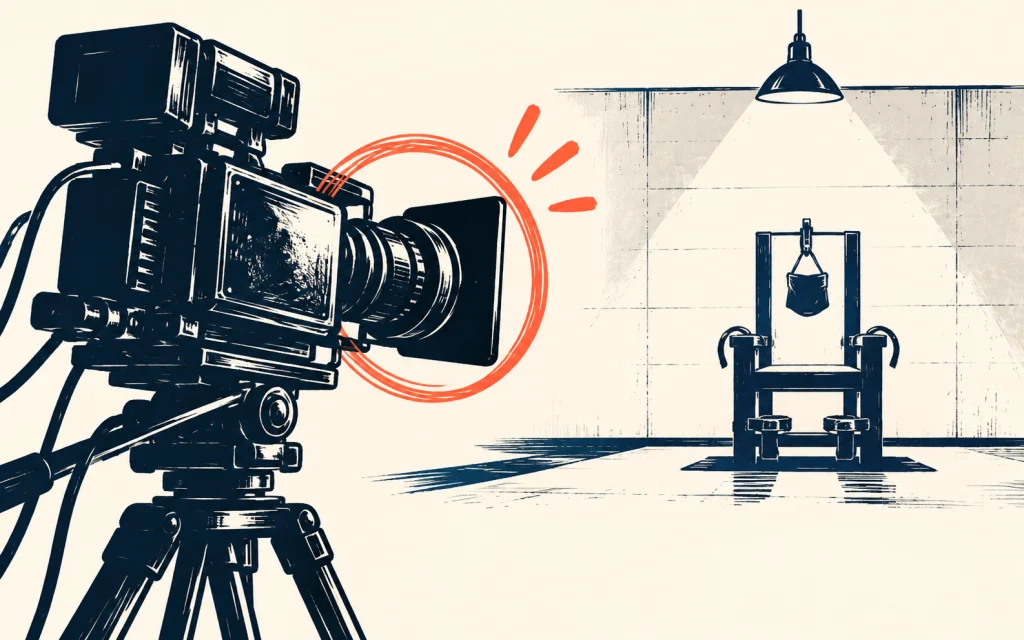
This week, Defense Secretary Pete Hegseth said the Army will execute Hasan by firing squad at Fort Hood on Dec. 3, and that Americans will be able to watch. “We’ll make sure that people are able to watch it, that it’s public,” he told Real America’s Voice. Asked whether Hasan had made any final requests, he said: “Don’t care. We’ll see him on December 3rd.” On Thursday, the Pentagon confirmed the execution would be livestreamed. On Friday, asked whether he had approved the plan, Donald Trump answered, “Did I approve? Absolutely I did,” even as he said in the same appearance that he would “make a determination” about the broadcast.
If it goes forward, it would be the first U.S. military execution since 1961 and the first military firing-squad execution since World War II. It would also be something this country has not done in 90 years: kill a person as public entertainment.
We have been here before, and we walked away
On Aug. 14, 1936, an estimated 15,000 to 20,000 people packed into Owensboro, Kentucky, to watch the hanging of Rainey Bethea, a 22-year-old Black man. It became a national media circus. It was the last public execution in the United States, and the spectacle was so shameful that Kentucky changed its law two years later.
The country made a deliberate choice then, and it made it again in 2001. When Timothy McVeigh was executed for the Oklahoma City bombing, which killed 168 people, the government did not put it on television. It sent an encrypted closed-circuit feed to 232 survivors and relatives of victims in Oklahoma City. The people with a direct claim to witness justice were allowed to see it. Everyone else was not invited to watch.
That distinction matters. Witnessing an execution as a victim’s family member is an act of closure. Streaming one to anyone with a phone is an act of performance.
The company we would be keeping
Amnesty International counted at least 17 public executions worldwide in 2025: 11 in Iran and six in Afghanistan. Those are the governments that kill people in front of crowds. The United States has spent years condemning them for it, and so has Donald Trump, who boasted in his State of the Union address that the threat of U.S. force “stopped them from hanging a lot of them” in Iran.
Sen. Thom Tillis, a North Carolina Republican, made the comparison plainly: “Public executions are what oppressive dictatorships like Iran and Afghanistan do.” Rep. Austin Scott, a Georgia Republican, went further: “Live-streaming executions is what jihadists do. America is better than that.” Sen. Jack Reed of Rhode Island, the top Democrat on the Armed Services Committee, called it “a barbaric spectacle” and a “gift to anti-American terrorist recruiters.”
Reed’s point should worry anyone who cares about the troops. Hasan has already written that he could “still be a martyr” if he is executed. A government-produced video of his death would be the most valuable piece of propaganda he could ever hand to the movements that inspired him. The footage would not stay on a Pentagon server. It would be clipped, captioned and recirculated for years.
The United Nations human rights office said a broadcast would be “tantamount to a public execution” and “would breach the absolute prohibition of torture.” Archbishop Paul Coakley, president of the U.S. Conference of Catholic Bishops, called it “a barbaric promotion of a culture of death.”
The transparency argument, and why it falls short
There is a serious case for more openness around the death penalty. Fordham law professor Deborah Denno, one of the country’s leading experts on execution methods, told the Associated Press that a livestream could make the process “much more transparent.” States have hidden botched lethal injections behind closed curtains, secret drug suppliers and limited witness access. The public has a right to know what is being done in its name.
But transparency is a policy, not a camera angle. It means independent witnesses, journalists in the room, full records, open review of methods and honest accounting when something goes wrong. None of that requires turning a man’s death into content. And nothing about this plan suggests transparency is the goal. The officials announcing it have framed it as punishment and payback, not accountability. “This is a president who’s about spectacle,” said Elisabeth Semel, co-director of the death penalty clinic at UC Berkeley’s law school.
What a livestream does to the audience
Executions carried out by the state are supposed to be the most solemn act a government performs. Moving them out of the public square was a recognition that crowds do not make justice more just. They make cruelty more contagious.
A livestream invites millions of people, including children, to watch a man be shot to death as they scroll past sports scores and shopping ads. It turns the families of the 13 people Hasan killed into supporting characters in someone else’s show. Rep. Rob Bresnahan, a Pennsylvania Republican, put it simply: “Their pain deserves respect, not a public show.”
You can support the death penalty and still find this repugnant. Some of the sharpest objections this week came from Republicans, not longtime death penalty opponents. The objection is not about the sentence. It is about what kind of country carries it out.
What happens next
The execution may not happen on Dec. 3 at all. Military law experts say Hasan can still file a habeas petition in civilian court, which could delay the case for years. Vice President JD Vance said Friday, “I don’t know that that’s actually going to happen.” Trump says he will decide.
He should decide against it. Justice for the people Hasan killed was delivered in a courtroom in 2013. Whatever happens to him now, it does not need an audience. A nation that has spent decades telling the world it is better than regimes that kill people in public should not need a livestream to prove otherwise.