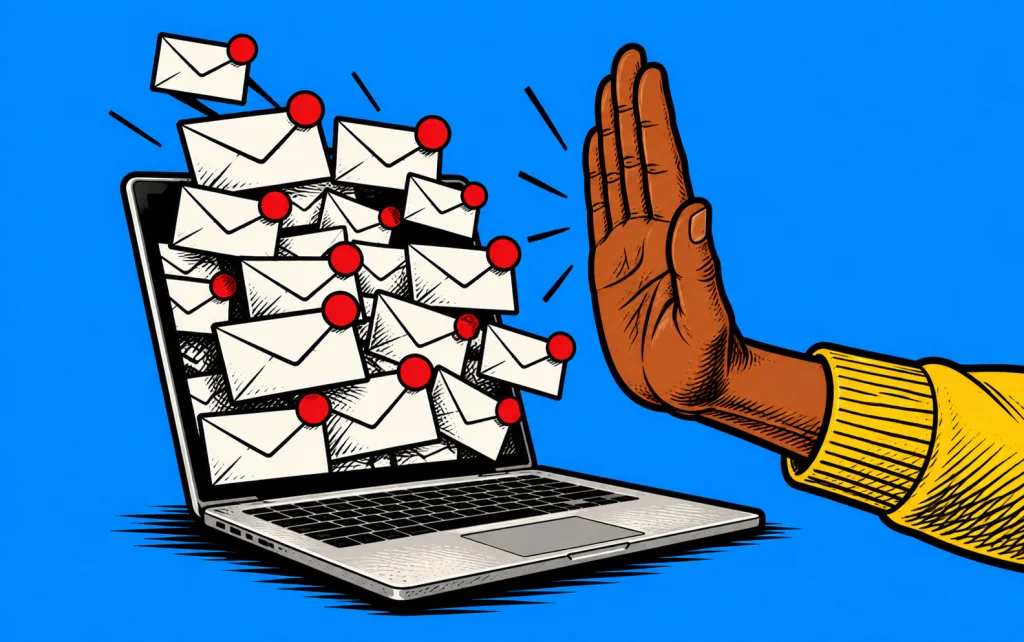
One in four consumers say they mark holiday promotional emails as spam. Companies chasing seasonal sales may be damaging something harder to replace: customer trust.
By Social Storytellers Collective News Desk
October 30, 2026 | Business & Technology
You bought a pair of sneakers six months ago. Now the company emails you every morning about a sale you didn’t ask about, another sale that’s supposedly ending tonight, and a special offer that somehow keeps getting extended.
Eventually, you stop opening the messages. Then you unsubscribe. Or, if you’re particularly annoyed, you hit the spam button.
Retailers might want to pay attention to that last decision.
A new Validity survey of 1,000 U.S. adults found that 25% mark promotional holiday emails as spam, while 26% unsubscribe and 28% delete messages without reading them. The biggest complaint isn’t necessarily the discounts or products being advertised. It’s the sheer number of emails.
One-third of respondents said excessive email frequency was enough to make them unsubscribe, while another 16% pointed to misleading subject lines and manufactured urgency.
That’s a problem for businesses preparing for the busiest shopping season of the year.
A customer marking an email as spam does more than remove one unwanted promotion. Gmail and other email providers use complaints to assess senders, meaning repeated spam reports can make it harder for a company’s future messages to reach other customers.
In other words, a brand can send more emails and end up reaching fewer people.
The damage may extend beyond the inbox. Validity found that nearly one-quarter of consumers, including almost half of Gen Z respondents, said brands’ holiday email practices had reduced their trust or willingness to buy from them.
And consumers aren’t necessarily asking companies to disappear. Some 22% said they’d prefer the option to temporarily pause promotions or receive fewer messages instead of unsubscribing entirely.
That should tell marketers something. Customers may still want discounts, product recommendations and useful information. They just don’t want every interaction with a company to become another sales pitch.
Email marketing remains attractive because businesses can communicate directly with customers without paying for every impression on a social platform. But that access is conditional. The subscriber can withdraw attention at any moment.
The irony is that companies spend considerable money acquiring customers, collecting email addresses and building relationships, only to risk losing those relationships by sending too many messages.
During the holidays, when practically every retailer is competing for the same inbox, sending another promotion may feel like the easiest way to increase sales.
It may also be the quickest way to make sure customers never see the next one.