
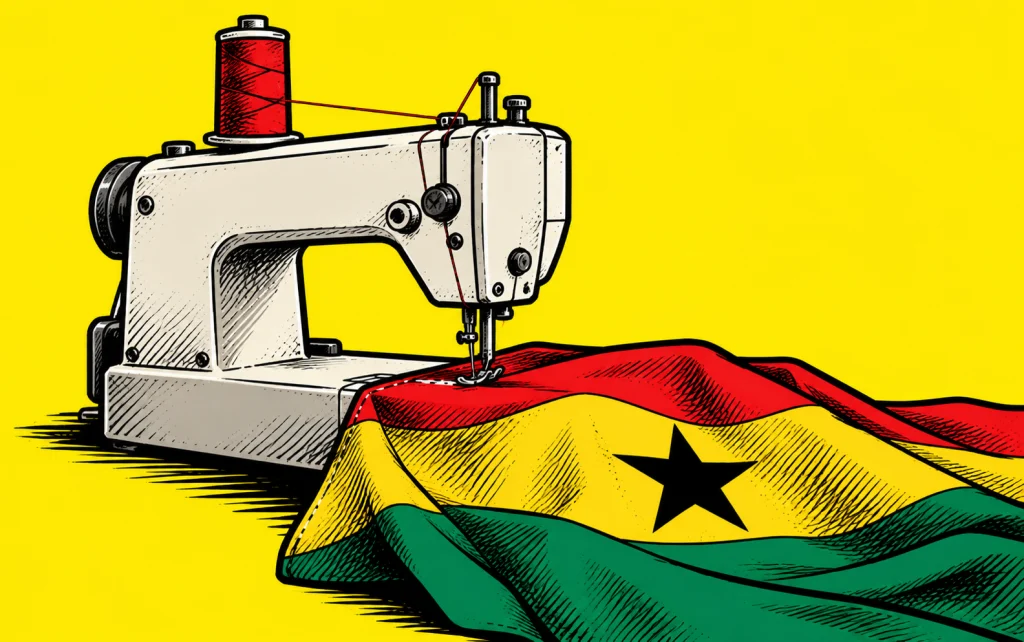
Ghana has approved a plan to attract $1.2 billion in investment and revive its textile industry. But more factories won’t automatically mean better wages or greater economic security.
Ghana wants to turn its textile industry into a $2 billion business. The government is promising an ambitious expansion that could create 150,000 jobs over the next decade, revive domestic cotton production and attract investors looking for new manufacturing opportunities.
Those numbers sound impressive. But for the workers expected to fill those jobs, there’s a more immediate question: What will they actually earn?
Under a newly approved textile and garment policy, Ghana hopes to attract approximately $1.2 billion in investment and expand an industry currently valued at roughly $400 million. The plan also calls for restoring cotton production across 50,000 hectares, potentially giving manufacturers a stronger domestic supply of raw materials.
There’s an important economic opportunity here. Rather than relying heavily on imported garments and materials, Ghana wants to produce more of what it sells, creating employment across farming, textile production, manufacturing and distribution.
But building a larger industry and building a better labor market aren’t necessarily the same accomplishment.
A Factory Job Isn’t Automatically a Good Job
Garment manufacturing has helped industrialize economies around the world, particularly by creating employment opportunities for women. It has also attracted criticism in some markets over low wages, demanding production targets and poor working conditions.
Ghana’s government appears aware of that tension.
At the launch of a new phase of the International Labour Organization’s productivity initiative, Trade Ministry official George Amoah emphasized that factory equipment alone would not deliver the country’s ambitions. Skilled employees, efficient production and acceptable workplace standards would also be necessary.
The ILO is working with Ghana to improve productivity and employment conditions, including helping workers move into more secure jobs.
There’s already a potentially useful example. Ghana’s shea industry recently established employer and worker organizations that signed a collective bargaining agreement, creating a framework for negotiating workplace concerns. The textile sector could benefit from similar attention to wages and worker representation.
And then there’s the question of who benefits from the investment itself. If Ghana grows more cotton but still relies heavily on imported materials or sends much of its production abroad for processing, the country could miss opportunities to retain more economic value locally.
The goal should extend beyond attracting factories. A stronger domestic supply chain would allow Ghanaian farmers, manufacturers and workers to participate in more stages of production.
For now, the $1.2 billion investment figure and 150,000 jobs remain government targets, not secured funding or employment already created. The policy’s success will depend on what companies invest, how many positions materialize and whether those jobs offer sustainable incomes.
Ghana has set an ambitious goal for the size of its textile industry. The more revealing measure will be whether the people working in it experience the growth themselves.