
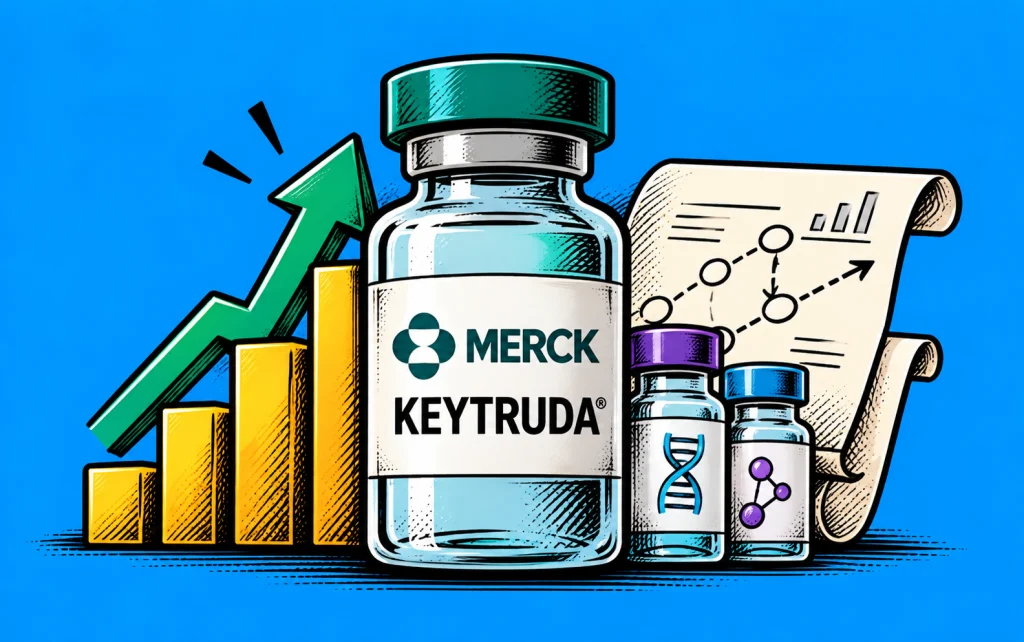
Keytruda is responsible for nearly half of Merck’s quarterly sales. With patent protection approaching expiration, the company needs another blockbuster.
Imagine building a business so successful that one product brings in nearly half your revenue. Now imagine knowing that, in a few years, competitors could begin selling cheaper versions of that product.
That’s the position Merck finds itself in.
The pharmaceutical company reported $18.1 billion in third-quarter sales, a 5% increase from last year. Keytruda, its widely used cancer immunotherapy, generated $8.6 billion of that total. For every dollar Merck collected in sales, nearly 48 cents came from one medicine.
It’s an impressive business until you consider what happens next.
Keytruda’s principal U.S. patent protections begin expiring in 2028, opening the door to biosimilar competition. The drug won’t disappear overnight, and Merck may retain some market share, but the company cannot assume today’s extraordinary revenue will continue indefinitely.
Merck has been preparing. Its newer pulmonary hypertension treatment, Winrevair, brought in $694 million during the quarter, nearly doubling its sales from a year earlier. The company is also investing in experimental cancer treatments and acquiring smaller pharmaceutical developers to expand its pipeline.
But consider the scale. Winrevair’s $694 million is meaningful growth, yet Keytruda generates more than twelve times that amount. Finding one successful replacement may not be enough.
Merck already knows how quickly a pharmaceutical franchise can change. Sales of its diabetes medications Januvia and Janumet declined 39% as generic competition intensified following the loss of U.S. exclusivity.
The irony is that Merck’s biggest problem exists because it created one of the world’s most commercially successful cancer treatments. Keytruda continues helping patients and generating billions, but the clock on its market dominance is running.
For Merck, the question isn’t whether it can keep selling Keytruda. It’s whether the next generation of medicines can grow quickly enough to prevent its greatest success from becoming its biggest financial vulnerability.
Sources: Merck Third-Quarter 2026 Earnings | Reuters, October 29, 2026