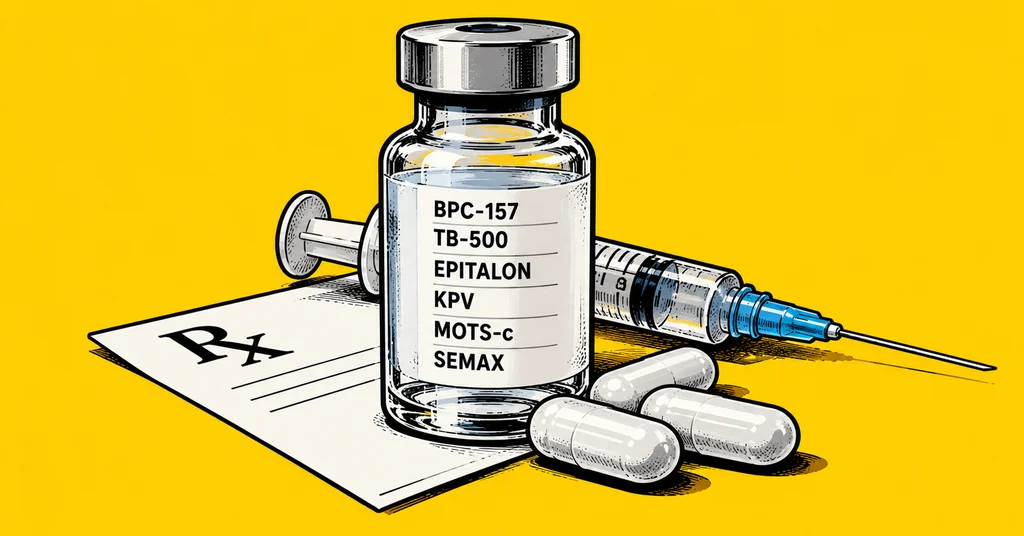
The federal government is easing restrictions on popular experimental peptides, betting that regulated pharmacy access can reduce risks from an already thriving underground market.
The Department of Health and Human Services is opening a new pathway for six experimental peptides to reach patients, even though none has received FDA approval for safety and effectiveness.
Under an interim policy announced October 28, qualifying licensed pharmacies and physicians can compound BPC-157, TB-500, Epitalon, KPV, MOTS-c and Semax without facing federal enforcement action when they meet specified requirements. The substances have gained popularity through wellness influencers and biohacking communities for claims involving injury recovery, inflammation, weight management and longevity.
Access is expanding. The scientific questions remain.
HHS argues that allowing regulated compounding could steer consumers away from questionable online suppliers. The policy requires patient-specific prescriptions, ingredient-quality documentation and reporting of serious adverse events. It does not grant FDA approval or establish that the peptides work for their advertised uses.
The American Medical Association has raised concerns about expanding access without sufficient clinical evidence. FDA scientific staff also recommended against allowing several of the substances through traditional compounding pathways, citing unresolved safety and quality questions.
SSC previously examined the administration’s push to loosen peptide restrictions. The new policy moves that debate from a regulatory proposal toward a practical pathway for pharmacies and patients.
The bigger picture: The peptide market has grown faster than the clinical evidence supporting many of its claims. Federal officials now face a difficult question: Is it safer to create a controlled route to experimental substances, or does easier access risk making unproven treatments appear medically established?
For consumers, the essential distinction remains unchanged. A substance becoming easier to obtain does not mean regulators have determined that it is safe or effective.