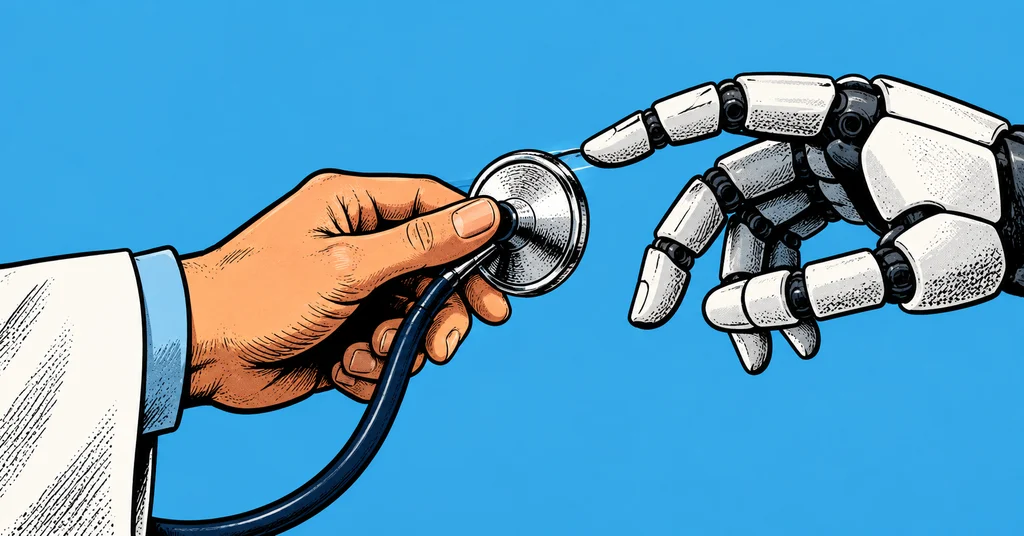
A new Pew Research Center survey finds that patients are open to technology that makes healthcare easier, but remain wary of handing medical decisions to automated systems.
Americans are increasingly willing to accept artificial intelligence in healthcare, provided a human remains responsible for consequential decisions. A new Pew Research Center survey of 3,488 U.S. adults, conducted June 22–28, 2026, found that 78% are open to AI translating for patients, either independently or with human review. Respondents also expressed support for AI assisting with appointment scheduling, prescription refills and interpreting medical information. That willingness declines when the technology moves from assisting healthcare professionals to making decisions that directly affect patients. Sixty percent said they would feel uncomfortable with their doctor using AI for diagnoses and treatments, compared with 30% who would feel comfortable. Nearly half, 46%, said they do not want AI involved in health insurance claim decisions at all, while only 5% would accept AI making those decisions independently. The findings suggest that Americans are not rejecting technological innovation in medicine. They are drawing boundaries around who should exercise authority when a diagnosis, treatment or insurance determination could affect their health and finances.
Those boundaries become especially important as hospitals, insurers and technology companies expand AI’s role in healthcare operations. The survey found that 51% of Americans believe AI will worsen the security of personal health information, while 47% expect it to damage relationships between patients and doctors. Respondents were also divided over whether AI would improve health outcomes, with 37% anticipating improvements and 36% expecting worse results. Economic circumstances shaped those expectations: 55% of upper-income adults believed AI would improve patient outcomes, compared with just 25% of lower-income adults. The survey does not establish why those differences exist, but they raise important questions about who expects to benefit from new medical technologies and who anticipates additional risks. AI may help providers process information faster, reduce administrative workloads and expand access to services, yet efficiency alone does not establish that a medical or insurance decision is appropriate. Patients still need understandable explanations, meaningful opportunities to challenge errors and identifiable professionals responsible for decisions affecting their care. As healthcare organizations adopt more automated systems, public confidence may depend less on how sophisticated those systems become than on whether patients retain access to human judgment, transparency and accountability when decisions carry serious consequences.