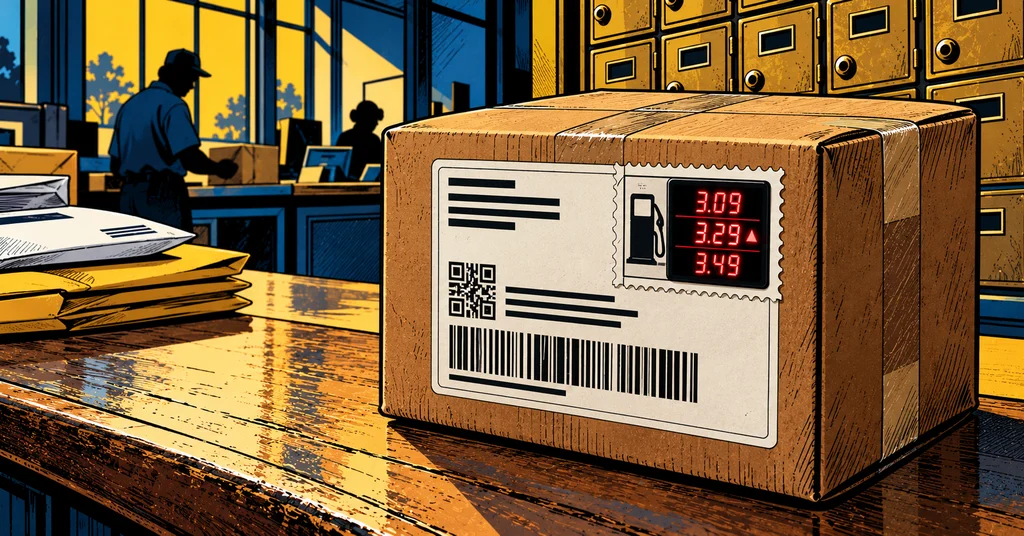
Starting in January 2027, USPS will add weekly fuel surcharges like those used by FedEx and UPS, making shipping costs harder to predict for small businesses and shoppers.
For years, the U.S. Postal Service offered something rare in shipping: predictable package prices. Small businesses could calculate what an order would cost to send, online sellers could build shipping into their prices, and consumers generally knew what they’d pay at the counter.
That’s about to change. Beginning in January 2027, USPS will add weekly fuel surcharges to several major domestic package services, a practice long familiar to FedEx and UPS customers. According to Supply Chain Dive, the fees will rise and fall with diesel and jet fuel prices.
The move may help shore up USPS finances, but it shifts more fuel-price risk onto the businesses and consumers who use the service.
How the New Charges Will Work
The surcharge will apply to four services. Ground Advantage and Parcel Select fees will track diesel prices, while Priority Mail and Priority Mail Express fees will track jet fuel prices.
Rates will be calculated as a percentage of base postage and adjusted weekly using U.S. Energy Information Administration fuel data. USPS plans to publish each week’s percentage several days in advance so shippers and software providers can update their systems. Customers with negotiated service agreements may have different terms.
First-Class letter postage isn’t included. However, USPS hasn’t yet announced the surcharge percentages or a specific start date. That makes it too early to say how its prices will compare with FedEx or UPS.
Small Businesses Take the Biggest Hit
For an independent clothing brand or handmade-goods seller, shipping is a core cost alongside materials, labor and payment fees. Weekly surcharges add another moving part. Merchants may need to update shipping estimates more often, absorb higher costs or pass them on to customers.
How much it hurts will depend on the surcharge size, shipping volume and margins. A few extra cents per package may be easy for a large retailer to absorb, but repeated increases are harder on a small seller. Big companies can also negotiate custom contracts or spread orders across carriers. Smaller merchants usually rely on standard rates and third-party shipping platforms.
USPS may still be the cheapest option for many shipments. But merchants will have more reason to compare carriers regularly instead of assuming the Postal Service is the most predictable choice.
Shoppers May Pay Without Visiting the Post Office
“Free shipping” isn’t free for the business sending the order. When delivery costs rise, retailers can accept thinner margins, raise prices, add shipping fees or raise free-shipping minimums.
That reaches beyond splurge purchases. Many households order necessities online, and for people who rely on delivery because of disability, limited transportation or distance, higher shipping costs hit harder. The surcharge won’t automatically raise every price, but it gives energy-market swings one more path into household budgets.
Rural Communities Have More at Stake
USPS must serve every address in the country, including rural areas where delivery is expensive and alternatives are few. Private carriers sometimes even hand packages to USPS for the final leg.
The new policy doesn’t include a separate rural surcharge, and it’s too soon to know whether rural households will see larger increases. But price isn’t the only concern. The Government Accountability Office reported in September that USPS cost-cutting efforts and other factors have contributed to declining service performance.
A Postal Service Under Financial Pressure
According to the Postal Regulatory Commission, USPS lost about $9 billion in fiscal year 2025. Annual mail volume fell from 213 billion pieces in 2006 to about 109 billion in 2025, even as the number of addresses it serves keeps growing. Packages have become essential to its business, but that means competing with private carriers that use flexible pricing.
In March, USPS added a temporary 8% increase on several package services to cover rising transportation costs, describing it as a bridge to a more permanent pricing mechanism. That increase expires January 17, 2027, the same day as a seasonal price increase that began October 4. USPS hasn’t fully explained how the new surcharge will interact with those expiring increases. Until it publishes the percentages, the real effect on prices is unclear.
USPS Is Becoming More Like Its Competitors
FedEx and UPS have long used fuel surcharges to recover costs without constantly resetting base rates. For customers, though, that can make the true price harder to see. A rate that looks competitive can lose its edge once fees are added, so businesses have to compare total costs, not advertised base rates.
USPS’s move erases one of its long-standing differences from private carriers. Its surcharge percentages could still be lower, and its overall prices may stay the lowest for many shipments. But the shift highlights a tension at the core of the Postal Service: it has to compete for package revenue while serving routes no private carrier would choose.
Holiday surcharges follow a published schedule that businesses can plan around. A weekly fuel fee is different, because a merchant may know how much it will ship next month without knowing what it will cost. Some retailers may build bigger cushions into their prices, while others may lean more on real-time checkout rates.
Who Ultimately Pays?
The Postal Service’s financial problems are real. Fuel, labor and infrastructure have to be paid for, and continued losses threaten nationwide service. But weekly surcharges change who absorbs fuel-price swings. Instead of building those costs into stable rates, USPS will pass them more directly to customers.
Large retailers can manage that through volume and negotiated rates. Small businesses will face more frequent pricing decisions. Consumers may feel it through higher shipping fees or prices. Surcharges could also fall when fuel gets cheaper, depending on the formula USPS uses.
As USPS adopts the pricing playbook of FedEx and UPS, the question isn’t just what it costs to send a package. It’s how much uncertainty businesses and consumers will be asked to absorb to keep those packages moving.