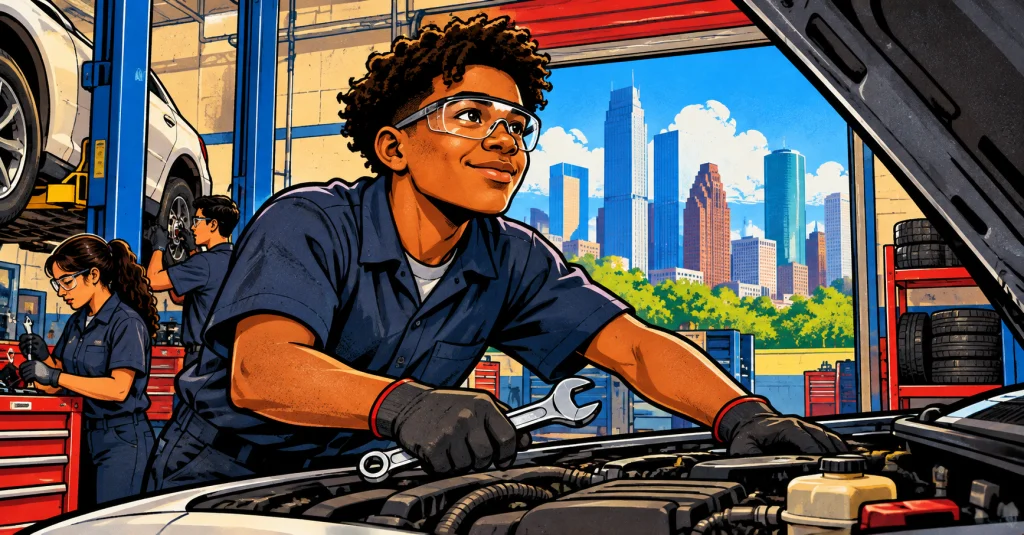
Houston ISD has opened a student-run automotive shop where teenagers work on customers’ vehicles. The program is part of a broader effort to make high school career training lead to economic opportunity.
Houston drivers can now get basic vehicle maintenance performed by high school students, but the new automotive shop at Barbara Jordan Career Center is designed to accomplish something beyond inexpensive repairs. Students enrolled in Houston ISD’s automotive technology program are servicing customers’ vehicles under instructor supervision, gaining experience with equipment, customer service and workplace expectations before graduation. According to the Houston Chronicle’s October 27 reporting, the shop offers Friday appointments for oil changes, tire rotations and inspections, with services costing approximately $20 to $35. Customers supply the necessary parts and fluids, while proceeds support student opportunities. The business gives teenagers a chance to practice their skills on actual vehicles instead of relying exclusively on classroom exercises.
The program addresses a difficult employment problem for Houston ISD. District officials say fewer than 20% of former students earn a living wage six years after graduation, a figure that has helped drive investment in career and technical education. HISD plans to expand Barbara Jordan Career Center from roughly 900 students to 4,000 by the 2028–29 school year, offering pathways in automotive technology, construction, health sciences, electrical work, culinary arts and other fields. Students from multiple high schools will gain access to specialized facilities that individual campuses may not be able to maintain. The district is also developing another career center in Sunnyside. These investments reflect growing recognition that students need access to employment skills and industry credentials whether they pursue college immediately or enter the workforce after graduation.
Career training can reduce the distance between education and employment, but practical experience alone does not guarantee a good job. Students need recognized certifications, connections to employers and access to positions that offer wages sufficient to support independent living. The automotive shop introduces another useful element: customers expect work to be completed correctly, safely and on schedule. That experience can help students understand professional standards before entering a commercial garage. Yet the benefits will depend on whether employers recognize the training and whether students can move from supervised school assignments into paid apprenticeships or entry-level positions with opportunities for advancement.
HISD’s expansion could give more students a direct route into occupations that do not require a four-year degree. It could also expose differences between schools if transportation, scheduling or limited program capacity prevent some students from participating. The district will need to measure outcomes beyond enrollment and certificates, including job placement, wages and employment retention after graduation. If Houston can connect classroom training to employers offering sustainable wages, career education could become a meaningful route to economic mobility. Without those connections, students may graduate with practical skills but still struggle to earn enough to support themselves.