The $189 million World Trade Centre road project promises dramatically shorter delays. But Dubai’s continuing growth will test how long those improvements last.
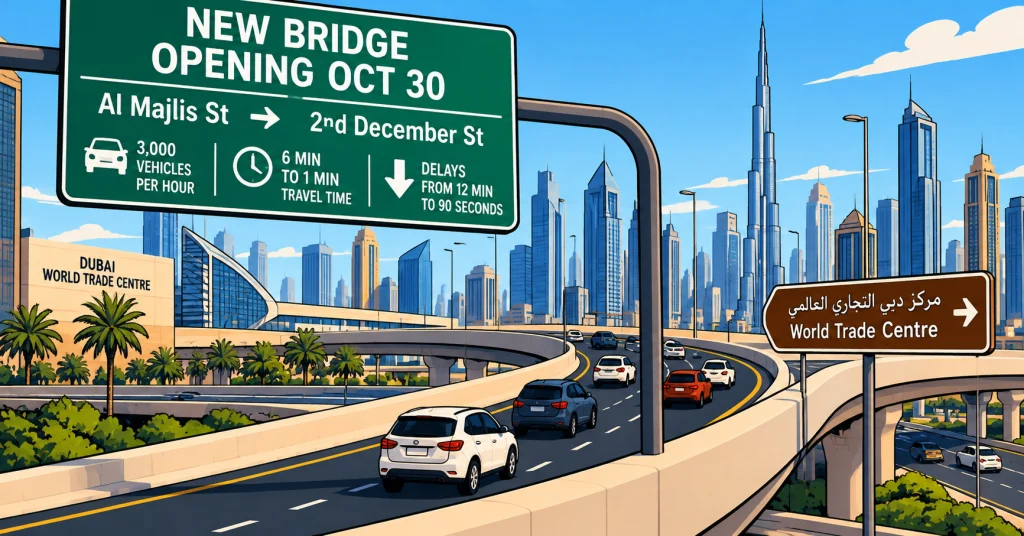
Dubai is preparing to open the final bridge in a major road project designed to relieve congestion around one of the city’s busiest intersections. The 1,000-meter, two-lane bridge is scheduled to open October 30, connecting Al Majlis Street toward 2nd December Street and accommodating approximately 3,000 vehicles per hour. According to Nandini Sircar’s October 25 reporting for Khaleej Times, the new connection is expected to reduce travel time between those streets from six minutes to one. The bridge completes a five-bridge development costing more than $189 million (AED 696 million). Dubai’s Roads and Transport Authority says the improvements will benefit more than 500,000 residents and visitors by making travel through the World Trade Centre area faster and more predictable.
The project replaces the former roundabout with an intersection supported by elevated roads that separate traffic moving in different directions. The goal is to prevent vehicles from competing for the same road space, particularly around major commercial destinations such as the Dubai International Financial Centre. Officials estimate that average delays at the intersection will fall from 12 minutes to 90 seconds. For commuters, delivery companies and businesses, time spent waiting in traffic carries a cost. Reducing those delays can improve access to jobs, shorten delivery schedules and make commercial districts easier to reach. Dubai is investing in road capacity partly because its expanding economy continues to generate demand for movement between residential and business areas.
But road expansion has limits. New bridges can remove specific bottlenecks, particularly where outdated intersections force traffic into repeated stops. Over time, however, faster roads can also attract additional driving as people change routes or travel habits. That means improvements at one intersection do not guarantee a lasting reduction in congestion across the wider network. Dubai’s continuing investment in roads reflects the demands of a growing city, but it also raises a planning challenge: transportation capacity must keep pace with development without making every additional journey dependent on a car. Public transportation, pedestrian access and the location of housing relative to jobs all influence how much pressure eventually returns to the road system.
The World Trade Centre project offers a measurable test because officials have published specific expectations for travel times and intersection delays. Those claims can be evaluated once the bridge opens and traffic patterns settle. Dubai is already planning additional improvements along Al Mustaqbal Street, including expanded lanes, bridges and tunnels scheduled for completion in 2027. The next phase will add more capacity, but it will also reveal whether infrastructure investment is reducing the burden of growth or continually responding to it. If traffic volumes rise as quickly as road capacity expands, Dubai may keep building faster connections without substantially reducing the amount of time residents spend traveling.