One month of unemployment data is volatile, but the way job cuts reach the people concentrated in the affected sectors is not.
In an October 21 Word In Black opinion piece, Dr. David J. Johns, CEO of the National Black Justice Collective and editor-in-chief of The Black Papers: A Policy Agenda for Black Liberation in the 21st Century, argues that the pressures on Black women show up in paychecks, hospitals and classrooms. His lead number is that unemployment among Black women rose from 5.9% to 7.3% in September, according to analysis of Bureau of Labor Statistics data by the Joint Center for Political and Economic Studies, reported by CNN. Over the same month, the BLS shows rates for white, Hispanic and Asian workers overall edging down while the Black rate rose from 6.0% to 7.0%.
Unemployment follows where people are employed, so cuts reach those concentrated in the shrinking sectors first. CNN noted that a large drop in education jobs in September may have played a role in the jump, and that Black unemployment is a volatile figure drawn from a small sample. The same jobs report showed payrolls up by only 29,000. The National Women’s Law Center found that women lost 11,000 of the 17,000 government jobs lost in September, and women make up 58.6% of the government workforce. One month moves a rate, but the concentration of workers behind it moves slowly.
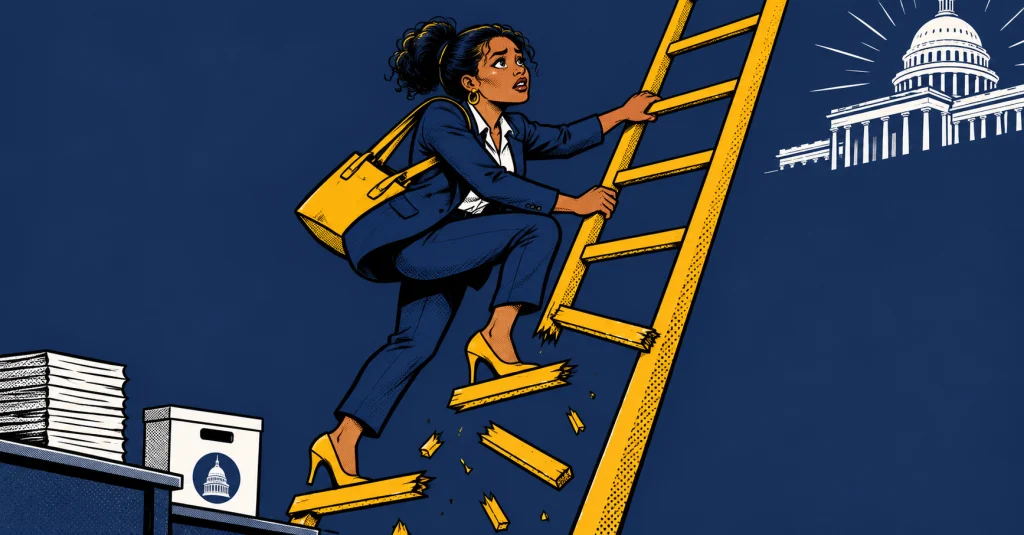
Johns says that concentration is deliberate in effect, if not in design. He writes that Black women lost more than 30% of their federal jobs in 2025, compared with 11.6% for non-Black women, and that they lost professional and service jobs at three times the rate of all women. He calls public service a ladder into the middle class for Black families and says the private sector is now following the government’s lead. When a sector that offered stable work to a group shrinks, the group loses both the jobs and the rung on the ladder.
The debt mechanism makes the loss harder to recover from. Johns writes that Black women carry the highest average student loan balances of any group while earning less than white women, white men and Black men with the same education, at 65 cents for every dollar a white man earns, a gap he puts above $1 million over a career. A degree costs more when family wealth is thinner and pays less when employers discount it, so the same credential produces more debt and slower repayment. Employers set the discount, and the borrower carries the loan.
He draws the same line through childbirth and school discipline. In 2024, Black women were more than three times as likely as white women to die during childbirth, and Black girls are suspended at five times the rate of white girls, starting in preschool, Johns writes. His agenda includes the Momnibus maternal health bill, the PRO Act to strengthen unions, 12 months of postpartum Medicaid coverage, healthcare companies paying for birth doulas, an end to zero-tolerance school discipline and philanthropic funding for organizations led by Black women. Opponents of those measures, notably on the PRO Act and Medicaid costs, argue they raise costs for employers and states. Johns writes that the remedies exist and that what is missing is the will to fund them.
That will gets tested sooner than the data does. The next jobs report arrives November 6, three days after the midterms, so voters will decide before anyone knows whether September’s jump was noise or the start of a trend. If it holds, the argument stops being about sentiment and becomes a measurement of whether cuts to public employment turn into a lasting employment gap. Whoever controls Congress in January will decide whether that gap is treated as a finding to act on or an outlier to wait out.