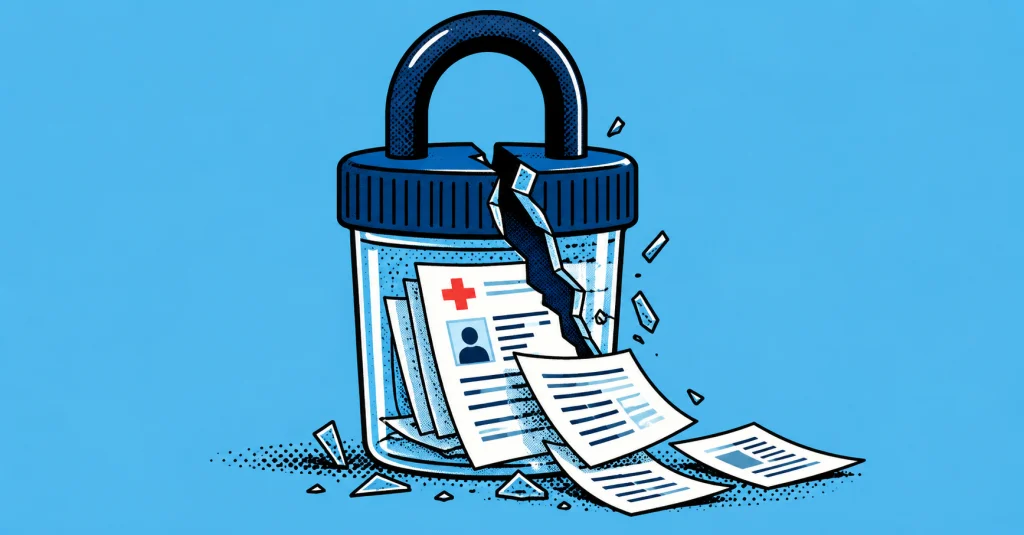
The laboratory giant says unauthorized access to a system used for ordering tests and retrieving results exposed personal information and patient records. The company is investigating what was accessed and preparing to notify affected patients.
Quest Diagnostics has confirmed that personal information and patient records were affected by a cybersecurity breach involving one of its laboratory management systems, raising new concerns about the security of sensitive medical information. The company discovered unauthorized access on October 21 and disclosed the incident to federal regulators the following day. As of Saturday, the number of affected patients, the specific information exposed and the identity of the attacker remained publicly unknown.
The breach involved Quest’s Quanum Lab Services Manager, an online platform that healthcare providers use to order laboratory tests, retrieve results and manage diagnostic services. Unlike a general consumer website, the system operates within the process of delivering medical care, where information can include details patients expect to remain confidential. Quest said it believes an unauthorized party accessed patient records, although its investigation is still determining the extent of the exposure.
In its October 22 filing with the Securities and Exchange Commission, Quest said it activated cybersecurity response procedures, notified federal law enforcement and hired outside security experts. The company reported that the incident had not materially disrupted its overall operations or ability to serve patients.
What Quest Knows—and What It Doesn’t
In an update issued October 23, Quest acknowledged that its investigation indicated personal information and patient records had been affected. That acknowledgment went beyond the initial disclosure, which stated that certain patient records were believed to have been accessed.
But crucial details remain unresolved. The company has not publicly established how many patients were affected, which categories of personal or medical information were involved, or whether the unauthorized party retained copies of the records. There has also been no confirmed public identification of the attacker or the method used to enter the system.
Quest says it will notify affected patients and healthcare providers as required by applicable law once it has determined the scope of the incident. According to its published guidance, notifications may include information about credit and identity-monitoring resources.
The uncertainty is significant because laboratory information can be unusually sensitive. Depending on the tests ordered and the records maintained, medical data may concern chronic conditions, infectious diseases, reproductive health, genetic testing or other private matters. Quest has not confirmed which, if any, of those specific categories were accessed in this breach.
A patient whose financial account information is compromised may be able to replace a card or change a password. A medical diagnosis or historical test result cannot be changed in the same way. That difference makes the handling of healthcare information particularly consequential.
Some Laboratory Systems Were Temporarily Taken Offline
Quest suspended access to Quanum Lab Services Manager while investigating the incident. Healthcare providers that normally rely on the platform were directed toward alternative methods for placing orders and receiving results, including Quanum eLabs and paper requisitions.
The company also temporarily restricted access to Essential Insights and LabHQ as a precaution. Quest said it had not identified unauthorized access to data within those additional systems.
Providers using direct laboratory information system connections or electronic medical record interfaces could continue operating through those channels, according to the company’s guidance. Quest maintained that its core business operations remained functional.
The temporary disruption illustrates how healthcare organizations rely on interconnected software to coordinate routine medical services. A laboratory system that helps physicians order tests and retrieve results may be largely invisible to patients, but interruptions can require providers to adjust workflows even when diagnostic testing continues.
For patients, the immediate question is whether their information was among the records accessed. Quest has not yet supplied enough public information for individuals to make that determination solely from the company’s announcement.
This Is Not Quest’s First Major Data Security Incident
Quest Diagnostics has faced previous breaches involving patient information.
In 2019, a security incident involving the American Medical Collection Agency, a third-party billing collections provider, affected approximately 11.9 million Quest patients. The compromised information potentially included financial and personal information maintained by that vendor. The incident resulted in lawsuits and scrutiny of how healthcare organizations oversee companies that handle patient data on their behalf.
Quest also disclosed a separate breach in 2016 affecting approximately 34,000 people, involving contact information and laboratory test results.
The latest breach involves a different system, and there is no basis for concluding that the incidents share the same cause or attacker. But the history underscores a recurring vulnerability within healthcare: personal information can pass through numerous systems, vendors and applications as patients receive services.
Healthcare organizations have increasingly digitized test ordering, medical records, billing and communications. Those systems can improve coordination and give physicians faster access to critical information, but they also require extensive security controls and ongoing oversight.
The challenge is particularly acute for large organizations whose technology must accommodate thousands of healthcare providers and large volumes of sensitive records.
Patients Have Little Choice About Where Their Data Goes
The breach also raises a broader issue about patient control over medical information.
When someone visits a physician for laboratory testing, they generally do not choose which software platform the provider uses to transmit the order or retrieve the result. Patients provide information to receive medical care and rely on healthcare organizations to manage that information appropriately.
The relationship is fundamentally different from voluntarily joining a social media platform or signing up for a shopping application. Patients may need laboratory testing to diagnose medical conditions, manage ongoing treatment or satisfy medical requirements. Avoiding the digital infrastructure behind those services is rarely a practical option.
That creates an obligation for healthcare organizations to protect information throughout the systems and partnerships involved in delivering care.
The latest Quest incident also illustrates why cybersecurity disclosures need to address more than whether a company’s business operations are functioning. A laboratory may continue processing tests while patients face uncertainty about whether information from their medical histories has been exposed.
Operational continuity and patient privacy are separate measures of how an organization responds to a breach. Both matter.
The Digital Trust Problem Extends Beyond Healthcare
The Quest incident is also part of a larger conversation about how Americans entrust personal information to technology systems that operate largely outside public view.
Social Storytellers Collective previously examined that dependence in Our Lives Are in the Cloud. The Risk Comes Home., which explored the privacy consequences of storing personal information across cloud platforms and third-party systems.
The challenge is not that digital technology is inherently unsafe or that every organization handles information irresponsibly. Electronic medical records, online laboratory systems and cloud infrastructure provide essential services that would be difficult to reproduce through paper records alone.
But each additional system creates another responsibility: determining who can access information, how it is protected, when it should be deleted and what happens when unauthorized access occurs.
For patients, those decisions are usually invisible until something goes wrong.
What Patients Should Know Now
Quest has not announced a final number of affected patients, and using its laboratory services does not automatically mean someone’s information was compromised.
Patients concerned about the incident should follow updates through Quest Diagnostics’ official website and watch for direct communications from the company. Anyone receiving an unexpected email, text message or phone call claiming to concern the breach should verify its legitimacy before opening links or providing personal information.
Quest separately warns that scammers impersonate the company through fraudulent websites, emails and telephone calls. It advises customers to navigate directly to its official website rather than relying on questionable links.
Quest Corporate
For individuals ultimately notified that their information was involved, the appropriate response will depend on the specific data exposed. Financial-account monitoring, password changes and identity-protection services may be useful in some circumstances, but the company has not yet disclosed enough detail to prescribe a single response for every patient.
The next major development will come when investigators determine the scope of the incident and Quest begins identifying the patients and healthcare providers affected.
For now, the breach leaves a significant question unanswered: how much sensitive information was accessible through the compromised system, and what could an unauthorized party do with it?
Quest says its laboratories continue serving patients. The investigation will determine how many of those patients must now confront a separate concern about the privacy of their medical records.