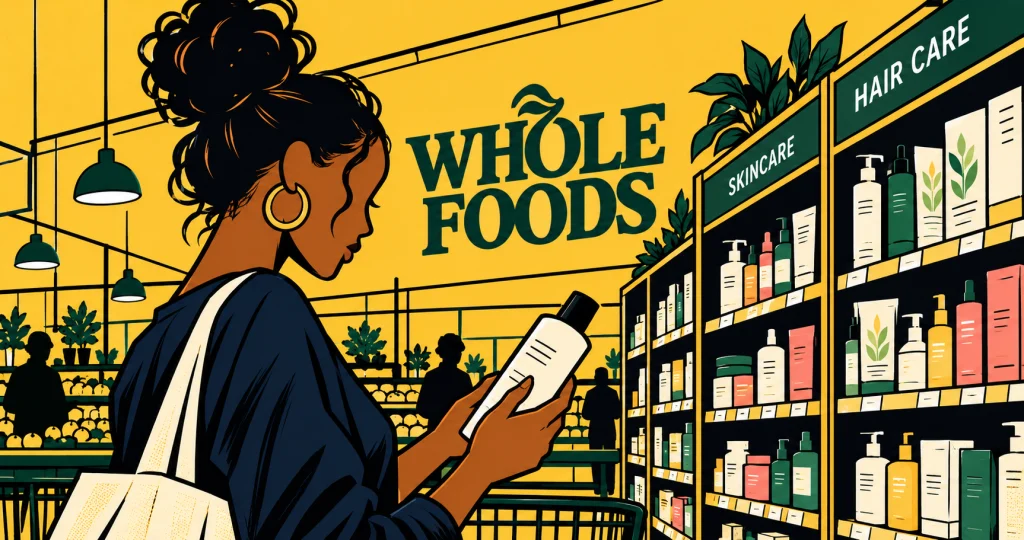
Analysis | The grocer bans hundreds of ingredients as it builds out its beauty aisle. As the category grows, who sets the standard matters more.
When a beauty brand wants shelf space at Whole Foods, it has to meet a standard the company wrote itself.
According to Fast Company, emerging brands are courting Whole Foods merchants with exclusive lines and reformulating products to avoid ingredients the grocer bans, as the Amazon-owned chain expands its beauty aisle. The retailer’s own site puts the count of banned beauty and body care ingredients at more than 240. Fast Company reported about 200.
A Standard the Retailer Wrote
Whole Foods says its approach goes beyond typical clean beauty claims. It notes there are no mandatory government standards for organic claims on beauty and body care products, so it requires third-party certification to either the USDA organic standard or an NSF/ANSI standard for any product that makes one. The company also says that making a product without banned ingredients doesn’t guarantee Whole Foods will sell it.
This isn’t new. In 2009, Whole Foods said it was reformulating its own 365 Everyday Value shampoo, conditioner and body care line to meet its Premium Body Care Standards, with no price increase. What has changed is the size of the prize. Walmart and Target are both pushing into beauty, each adding dozens of new brands. A brand that meets Whole Foods’ bar reaches a shopper who already trusts the store on ingredients.
Why the Rulebook Matters
A private standard can serve shoppers who don’t want to read every label. It can also make the retailer a gatekeeper. When a company controls both the shelf and the rules for earning a spot on it, its ingredient list becomes a condition of entry, and brands change what they make to meet it.
Whole Foods says its experts review the latest research on factors including environmental and human health impacts. The reasoning behind each banned ingredient isn’t laid out in the material we reviewed, and the difference between the 240+ figure on the company’s site and the roughly 200 Fast Company reported suggests a list that is still moving.
What We Don’t Know
Whole Foods hasn’t said how it decides what to ban, how often the list changes, or how it handles a brand that disagrees with a listing. We don’t know how many brands have reformulated, how many have been turned away, or what compliance costs a small company.
Those answers decide whether this standard protects shoppers, burdens brands, or both. For now, what’s clear is simple: the Whole Foods beauty aisle is growing, and the company that stocks it also decides what can go on it.