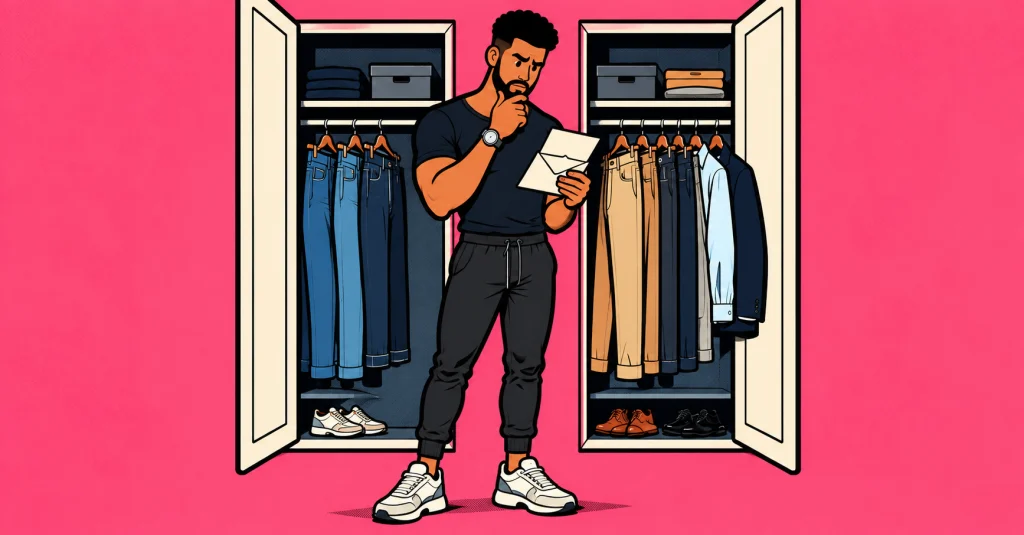
Americans have spent generations dressing more casually. Now joggers, performance tees and trainers have become the everyday uniform for men like me, and my closet has changed so much that I sometimes pick where to go out based on whether I can wear them.
I can stand in front of a full closet and still struggle to find something to wear. I own more nice T-shirts, long-sleeve tees, hoodies, joggers and trainers than I probably need, so quantity isn’t the problem. Almost everything I want to wear now falls into one category, athletic leisurewear, and when an occasion calls for something else, I suddenly feel like I have nothing to put on.
It’s gotten to the point where I check a venue’s dress code before deciding whether I want to go. If friends suggest a dinner spot where stylish joggers, a good tee and clean trainers will do, I’m in. If the place expects jeans, trousers or something dressier, my enthusiasm drops. I still care about looking good, and I put real thought into what I wear, but my definition of dressing well has changed. I’ve started to wonder whether my closet says something about how American men approach clothes now.
America Has Always Had a Casual Streak
The United States has a long international reputation for dressing casually, and it often comes up when Americans are compared with Europeans. That casual streak is also one of America’s most influential exports. Jeans, T-shirts, sneakers and sportswear traveled around the world and became everyday staples far from the country that popularized them.
Fashion historian Deirdre Clemente traced that history in a 2015 essay for Time, following America’s embrace of sportswear back to the early 20th century. As leisure activities and ready-to-wear clothing spread and comfort gained new value, garments made for specific activities slowly became acceptable everywhere. Clothing became less about matching a prescribed occasion and more about practicality, identity and freedom of movement. Designers like Claire McCardell and Bonnie Cashin pushed that further, especially for women, with versatile pieces that moved from one part of the day to the next without a wardrobe change, as the Metropolitan Museum of Art’s costume collections document.
The irony is that jeans and khakis, which earlier generations embraced as relaxed alternatives to suits, now feel formal to me. In my closet, the jogger has replaced the jean as the default casual pant.
Houston Sped Things Up
My preference for athleisure got stronger after I moved to Houston. The heat had a lot to do with it, since lightweight performance fabric beats heavy denim when the temperature sits in the 90s for months. The city’s fitness culture did the rest. Houston has a highly visible community that builds its routines around gyms, run clubs and studios, and in the places I go, men in fitted joggers, performance shirts and trainers are running errands, meeting friends and grabbing dinner. Over time, that became my normal too, even as the gym itself has turned into something bigger than fitness.
Houston isn’t unusual. Across the country, athletic apparel has moved off the gym floor and into everyday fashion, and brands like Nike, Lululemon, Vuori and Alo Yoga now sell clothes built to look right in places that have nothing to do with exercise. I’ve embraced that almost completely. My jeans and khakis haven’t disappeared, but I reach for them reluctantly instead of instinctively.
The Market Is Following the Wardrobe
The sales numbers show how hard it has become to separate athleisure from everyday clothing. U.S. activewear sales were up 2% year over year while non-active apparel fell 2%, according to Circana data reported by Retail Dive. Denim sales rose 4% over the same period, so Americans aren’t abandoning jeans. The lines between casualwear and athletic wear are simply blurring, with activewear brands moving into denim and everyday styles while traditional apparel brands add stretch fabrics, elastic waistbands and performance materials.
I see it in my own shopping. I gravitate to another quality tee, another hoodie, another pair of joggers or trainers, and I rarely feel any pull toward a new pair of chinos. Dressing this way isn’t cheap, since premium athleisure can cost as much as traditional menswear. The difference is that I actually wear it, and a good pair of joggers gets far more use than khakis that hang untouched for months.
Our Rules About What’s Appropriate Are Changing Too
Casual clothes have also moved into places that once had firmer expectations. A 2024 YouGov survey found that 26% of employed Americans wear leisure or athletic clothing to work at least sometimes. A September 2026 YouGov survey found that 27% of adults under 45 consider sweatpants acceptable office wear for men, compared with 11% of adults 45 and older. Those numbers don’t tell us how often men wear joggers to dinner, but they do show how much the idea of “appropriate” depends on who you ask and how old they are.
Some places and occasions still call for traditional dress, and I appreciate a well-tailored outfit. There’s a difference between dressing casually and dressing carelessly, though. Fit, fabric, color and presentation still matter, and a well-put-together athleisure look says as much about personal style as any conventional outfit. I haven’t stopped going to places with a stricter dress code, but I’ve become more selective. If I can enjoy a good meal with friends and feel comfortable in what I’m wearing, that beats an evening spent in clothes I’d rather leave in the closet.
Maybe This Is the Next American Uniform
American fashion has repeatedly challenged the idea that certain occasions require certain clothes. Sportswear entered everyday wardrobes, jeans left the workplace for everywhere else, and sneakers moved from the court to offices, restaurants and luxury runways. Joggers and performance tees are on the same path, and as the next generation of workers and diners treats them as normal, more restaurants and offices will quietly loosen their dress codes to keep them coming through the door.
I can’t say whether athleisure will dominate my wardrobe forever, because tastes change. My guess is that my reluctance to go back to jeans and khakis has less to do with a trend than with finding a style that fits how I actually live. I still care about being well dressed, and I spend more time than I’d like to admit choosing the right tee, joggers and trainers. What’s changed is my willingness to give up comfort because an older dress code says I should.
Maybe the gym clothes never make it to the gym because somewhere along the way they stopped being gym clothes and became my clothes. So if we’re making dinner reservations, just tell me the dress code first.