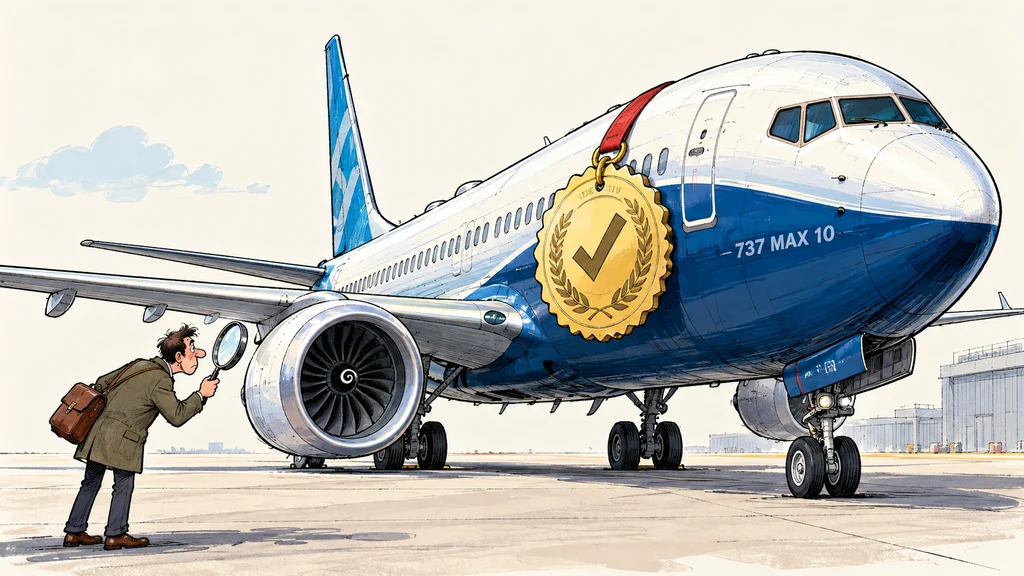
On Tuesday, Transportation Secretary Sean Duffy stood in Boeing’s Everett factory and helped celebrate the certification of the 737 MAX 10, the largest and last member of the MAX family. “To think that it took us almost 10 years to get here,” he said, according to The Herald in Everett. Boeing introduced the plane in 2017 and expected it to carry passengers by 2023. Now it can start delivering on an order book of more than 1,500 jets to airlines including American, United and Delta.
I understand why Boeing’s people are proud. Engineers and test crews put in more than 2,000 flight hours, and the MAX 10 is the first commercial airplane certified under the full weight of the 2020 law Congress passed to fix how the FAA approves new aircraft. But a certificate settles whether a plane meets the rules. It does not settle whether the public believes the company that built it, and that second question is the one Boeing still has to answer.
The Record Boeing Is Carrying
The MAX name comes with history that no press release can edit. Lion Air Flight 610 crashed on Oct. 29, 2018, and Ethiopian Airlines Flight 302 went down on March 10, 2019, killing 346 people in all after a flawed flight-control system called MCAS repeatedly pushed the planes’ noses down, investigations found. Regulators grounded the MAX worldwide, and it did not return to U.S. skies until November 2020, after about 20 months.
Then came January 2024, when a door plug blew out of an Alaska Airlines 737 MAX 9 shortly after takeoff. The National Transportation Safety Board concluded last year that four bolts meant to hold the plug in place were missing when the plane left Boeing’s factory, and it blamed the company’s failure to follow its own manufacturing procedures, with weak FAA oversight contributing. No one died, but the image of an open hole in the side of a passenger jet did something the crash reports never did: it showed ordinary travelers that the problem lived on the factory floor.
The legal reckoning ended quietly. After prosecutors found Boeing had broken a 2021 deferred-prosecution deal, the Justice Department negotiated a non-prosecution agreement in 2025 that had the company pay about $1.1 billion and commit to reforms, and a federal court dismissed the fraud charge that November. In March, a federal appeals court rejected the victims’ families’ challenge to that deal. For many of those families, the case closed without the accountability they asked for.
Passengers Do Not Get to Choose the Plane
Consumer confidence works differently in aviation than it does at the grocery store. If a cereal brand loses my trust, I buy another box. Most of us book flights by price, time and loyalty points, and the aircraft type is a line of fine print we rarely read, if the airline shows it at all. That means Boeing’s real customers are airlines and regulators, while the people who carry the fear are passengers who never signed the contract.
That gap cuts both ways. It protected Boeing’s sales through the worst of its crises, because airlines kept ordering planes the public worried about. It also means the company cannot win back trust with advertising, because passengers are not choosing it in the first place. They can only be reassured by what they experience, flight after flight, year after year, and by whether the next headline about Boeing is a boring one.
Confidence Is Rebuilt in Production, Not at a Podium
So can a company regain public confidence after documented failures and real deaths? I believe it can, but only on terms set by the public rather than by the company. Boeing has to prove that the culture which let bolts leave the factory missing has changed, and it has to prove it while it speeds up. The FAA capped 737 MAX production at 38 a month after the door plug blowout, raised the limit to 42 last October, and Boeing now says it is building 47 a month on the way to 52.
That pace is where the test lives. Every new plane added to the line is another chance for the old habits to return, and the MAX 10 will roll out while Boeing is pushing its output higher every few months. FAA Administrator Bryan Bedford promised on Tuesday that the agency will “continue to hold Boeing to the highest safety standards.” I hope that holds when Wall Street is asking about delivery targets instead of door plugs.
What Earning It Back Would Look Like
If I were advising Boeing, I would tell it that the most persuasive thing it can do is make its progress checkable. Publish quality and safety data that outsiders can track over time, keep independent inspectors close to the line and treat whistleblowers inside the company as early warnings rather than threats. When something goes wrong, and in an operation this large something will, say so first and fully instead of waiting for investigators to say it.
Boeing should also remember who is still watching. The families of the 346 people killed in the two crashes never got a trial, and the people they lost should be more than a line in a corporate history. A company that wants forgiveness has to keep acknowledging the cost of what it did long after the lawyers say it no longer has to.
Certification gives Boeing permission to fly the MAX 10. Trust is a different license, and the public issues it slowly. Boeing will know it has earned that one back when travelers stop checking which plane they are on.