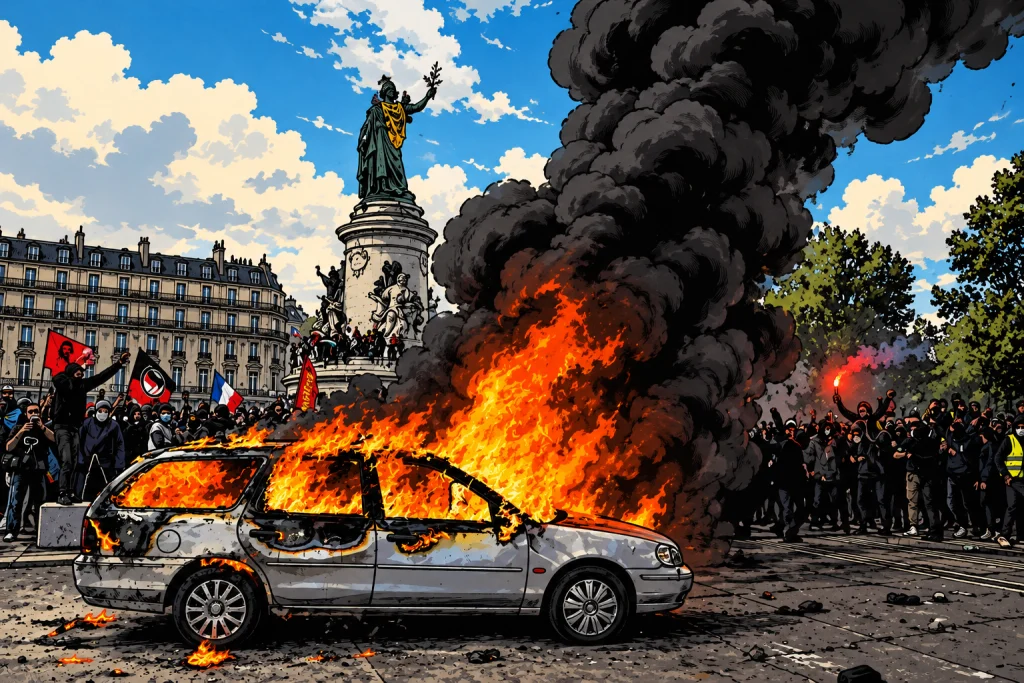
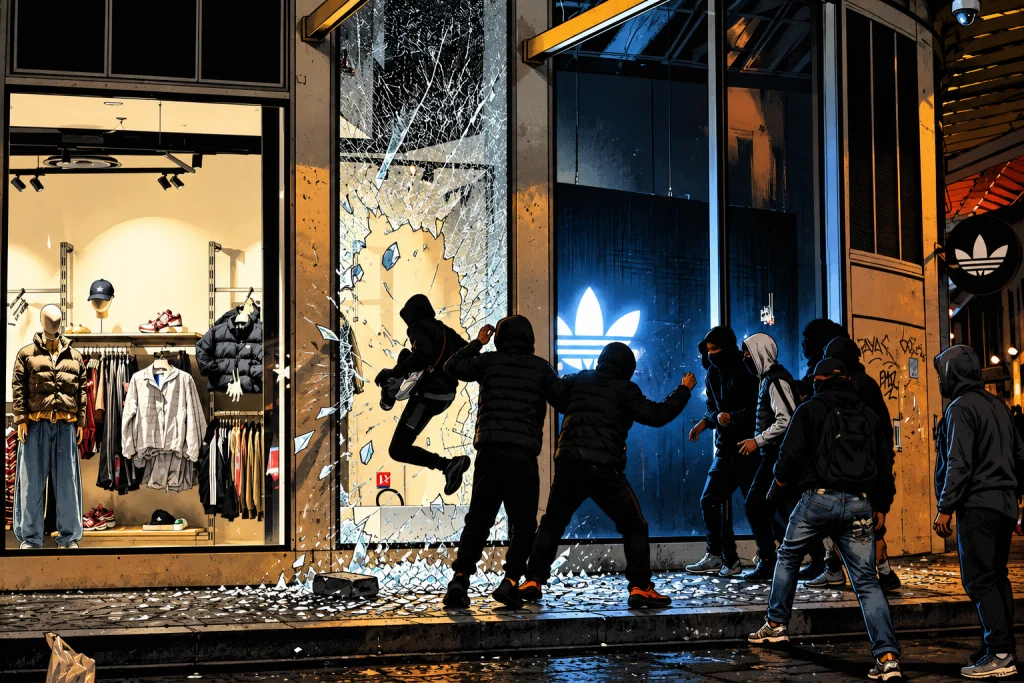
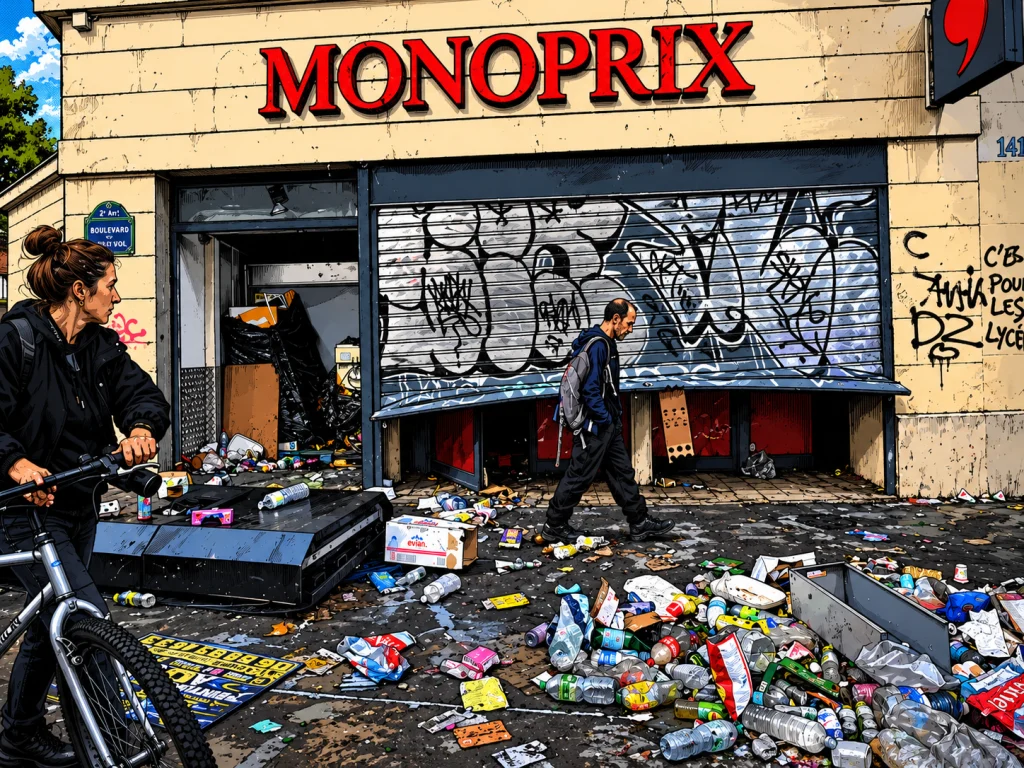
A 19th-century city hall burned in the French city of Limoges over the weekend, its roof collapsing as firefighters fought to contain the blaze. In Paris, burned-out cars lined streets where demonstrators had gathered to protest rising living costs. Businesses were looted, police clashed with masked rioters, and thousands of people were arrested. The images are alarming, but they tell only part of the story. Behind the destruction is a much larger movement of students, workers and ordinary citizens angry about the cost of daily life and the condition of public institutions.
France saw some of its worst civil unrest in years over the weekend of Oct. 17–18, with about 2,400 people arrested and thousands of businesses reportedly damaged or looted. According to the Associated Press, hundreds of thousands of people joined demonstrations against rising costs and underfunded schools, most of them peacefully. The violence has dominated the headlines, though, putting President Emmanuel Macron’s government under pressure to restore order while also answering the grievances that brought people into the streets.
It Started With Everyday Pressures
The demonstrations didn’t begin as a campaign of destruction. High school students had been protesting conditions in their schools since late September, pointing to teacher shortages and overcrowded classrooms. Their protests soon merged with wider anger over wages, living costs and the government’s economic policies. By Oct. 17, the movement had gone nationwide, with the Financial Times reporting estimates of 550,000 to 800,000 participants. Most had nothing to do with the violence that followed.
These grievances are familiar far beyond France. Households are struggling to stretch wages over the cost of necessities, public institutions are being asked to do more with less, and students worry that the opportunities promised to them won’t materialize. France’s fiscal problems sharpen the conflict. The government is under pressure to cut public spending just as demonstrators demand more investment in schools, public services and economic relief, leaving a widening gap between what citizens expect the state to provide and what their leaders say it can afford.
The Violence Became Its Own Crisis
The scale of the destruction has increasingly drowned out the movement’s original demands. In Limoges, rioters set fire to the historic town hall, outraging residents, including many who support the right to protest. In Paris, Lyon, Marseille and other cities, rioters damaged businesses, burned vehicles and fought with police. For business owners and their employees, the damage means lost income, lost shifts and months of uncertainty, and taxpayers will cover the cost of repairing public buildings. Those costs can’t be written off as a side effect of protest. But the violent acts of some groups also shouldn’t become a substitute for examining the concerns of hundreds of thousands of peaceful demonstrators.
Macron blamed the violence on radical far-left activists and criminals, and Prime Minister Sébastien Lecornu also pointed to organized groups. Sebastian Roché, a political scientist who studies policing at Sciences Po Grenoble, offered a more complicated view in interviews with the AP. He noted that France’s radical-left networks are small and loosely organized, which makes it hard to pin destruction on this scale on them alone. He also described different motives among those involved: ideological activists may target banks and multinational companies as symbols of economic power, while opportunistic looters simply exploit the chaos. Treating everyone involved as one political movement obscures how the violence actually unfolded and who was responsible for what.
France Has Been Here Before
The unrest has revived memories of the yellow vest movement, which began in 2018 over proposed fuel tax increases and grew into months of protests against economic inequality and Macron’s policies. Demonstrators argued that government decisions were putting an unfair burden on working- and middle-class households, especially people outside major cities who depend on their cars. It became one of the defining challenges of his presidency. France also saw major unrest in 2005 and again in 2023, after police killed 17-year-old Nahel Merzouk during a traffic stop near Paris, episodes driven by tensions over policing, discrimination and social exclusion. The participants and demands differ each time. The common thread is a recurring break between what the public expects, how institutions use their authority and whether government seems to be listening. With the 2027 presidential election approaching, every faction now has a reason to claim this anger as its own.
When Policing Becomes Part of the Story
Macron has promised an uncompromising response to rioters. Authorities have imposed local curfews and restricted some gatherings, and the government has ordered an investigation into failures in intelligence gathering and police planning. There are legitimate reasons to ask why officers couldn’t prevent widespread attacks on public buildings and businesses. But police tactics are also under scrutiny. According to the AP, Roché reported that six people, including minors, suffered devastating injuries during three weeks of protests, losing hands or eyes in incidents involving police weapons. He called injuries that severe exceptional in recent French history and raised concerns about the use of grenades and other riot-control weapons. That doesn’t mean every use of force was unlawful, and each case deserves independent review. It does show the bind governments face. Excessive force can deepen the anger behind a protest, while too little protection leaves communities exposed to violence, and getting that balance right matters most when public trust is already fragile.
Restoring Order Is Only Part of the Answer
France now faces two problems that need different solutions. The first is immediate: investigate the violence, hold those responsible accountable, protect residents and businesses and examine the allegations of excessive force. The second is structural. Rising living costs, struggling schools and frustration with government priorities won’t disappear when the streets are cleared. A security response can contain disorder, but it can’t repair confidence in public schools, raise household purchasing power or convince people their concerns are shaping government decisions. Acknowledging those grievances doesn’t mean excusing arson, looting or attacks on police. Both can be taken seriously at the same time.
For now, the images of burning buildings define the crisis. The more important measure may be what happens after the fires are out. Students will still return to their classrooms, families will still face their bills and businesses will still need customers, workers and security. The French government will still have to show citizens that their concerns have been heard. Restoring order may be the most urgent task, but restoring trust will take far longer.
Editor’s note: The illustrations in this story were created by Social Storytellers Collective and reimagine real news photographs from the unrest in France. They depict actual scenes but are not photographs.