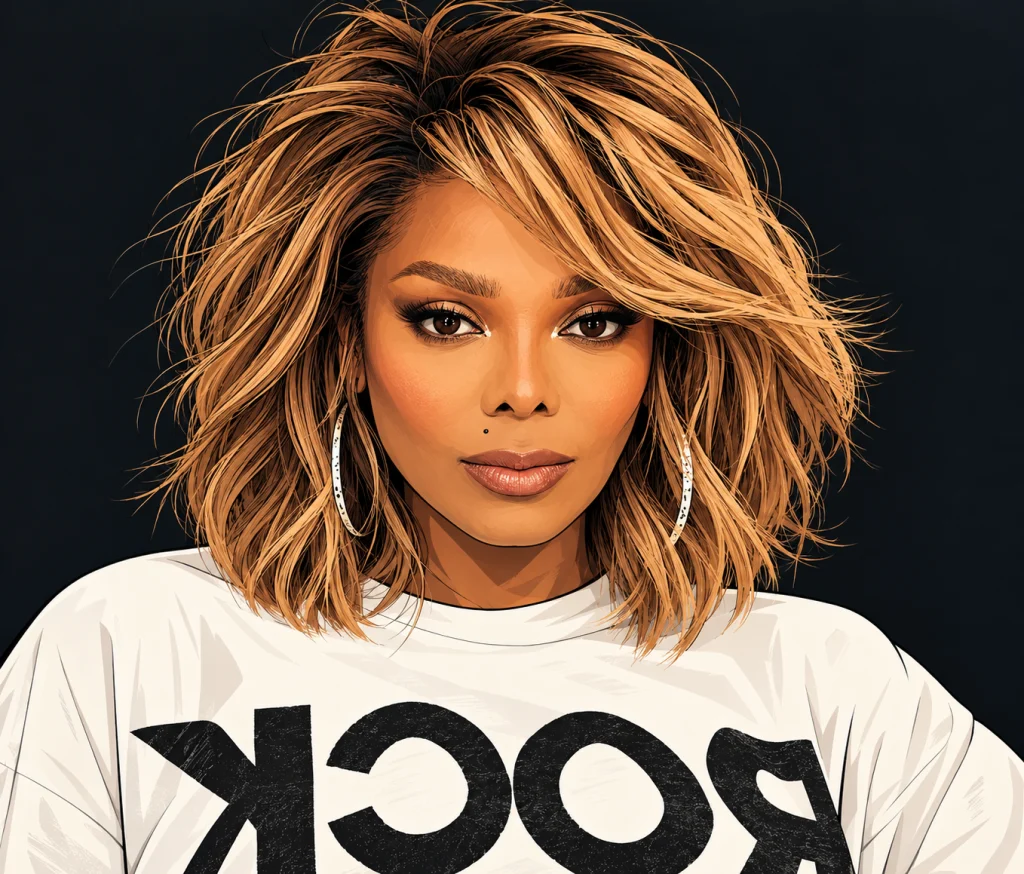
At 60, Janet Jackson continues to draw admiration for her style and presence. But renewed attention to her appearance reveals how Black women in entertainment are still judged by their looks, even when their cultural achievements have reshaped entire industries.
A photograph circulating on social media showing Janet Jackson in a white T-shirt and hoop earrings has prompted another wave of admiration for the singer. Fans have praised her appearance at 60, with some revisiting performances, music videos and career milestones that helped establish her place in popular culture. What began as a celebration of her looks has become an opportunity to revisit the influence of an artist whose work helped establish the visual and creative standards of modern pop music.
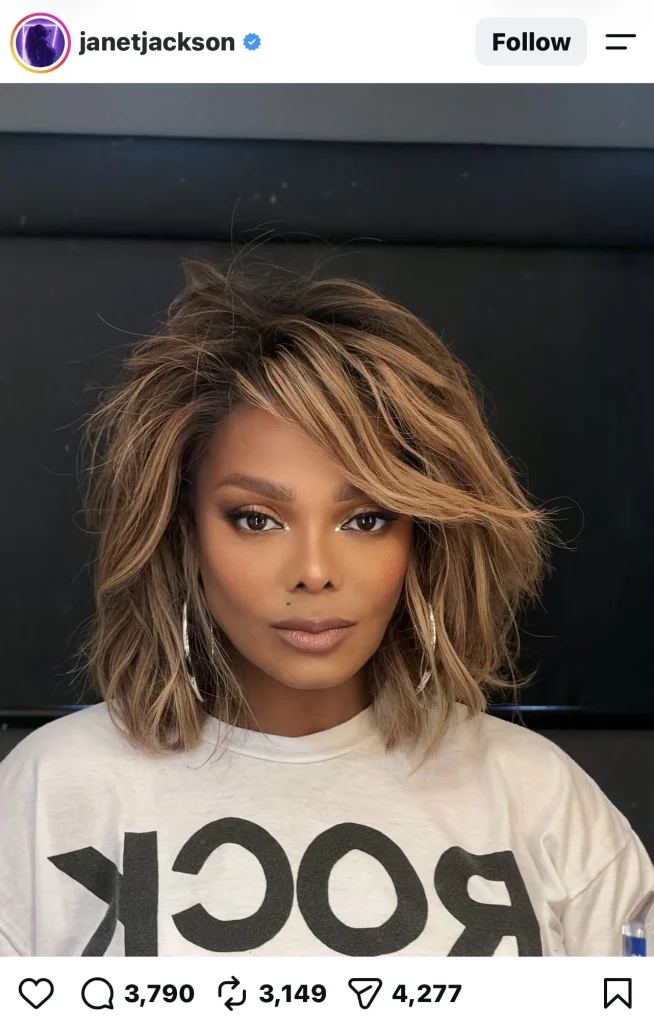
The conversation on X has included footage of Jackson performing “I Want You” in 2004 and references to Billboard’s 2020 ranking of the greatest music video artists. Jackson placed fourth, behind Madonna, Michael Jackson and Beyoncé with Destiny’s Child. Her ranking recognized a career in which choreography, storytelling, fashion and musical production became inseparable elements of an artist’s identity.
The Independence That Changed Her Career
Jackson’s transformation into a defining pop performer began with her 1986 album Control. Working with producers Jimmy Jam and Terry Lewis, she developed a sound combining R&B, funk, dance music and electronic production. Songs including “Nasty,” “What Have You Done for Me Lately” and “Control” introduced a young woman asserting authority over her relationships, career and public image.
That independence mattered for a performer raised inside one of entertainment’s most recognizable families. Jackson had already released two albums, but Control established an artistic identity separate from the Jackson name. Her success demonstrated that a young Black woman could direct her creative development while achieving mainstream commercial success.
The visual presentation reinforced that autonomy. Her music videos turned choreography into storytelling, with movement conveying confidence, confrontation and emotion. “The Pleasure Principle” demonstrated how a single performer could command attention through demanding choreography, while “Rhythm Nation” used synchronized movement and military-inspired imagery to connect performance with social responsibility.
The Blueprint for Modern Pop Performance
Jackson’s influence is visible in generations of performers who followed. Artists including Beyoncé, Britney Spears, Ciara and Rihanna developed careers in an industry where elaborate choreography, ambitious music videos and carefully constructed visual identities had become central to commercial success.
Jackson helped establish that model while challenging expectations surrounding women’s sexuality and artistic expression. Albums including janet. and The Velvet Rope explored intimacy, desire and emotional vulnerability, expanding the subjects Black women could address in mainstream pop without surrendering creative authority.
Her work also demonstrated how ownership of an artistic identity creates influence beyond record sales. Performers who establish recognizable sounds, movements and visual styles can shape the expectations audiences bring to future generations. Jackson’s choreography and creative direction became part of the vocabulary of popular music.
Why Black Women Are Still Judged by Their Appearance
The reaction to Jackson’s photograph belongs to a familiar pattern in entertainment. Women who have spent decades building careers continue to attract attention for how well they appear to be aging, sometimes receiving more immediate discussion about their faces than their professional accomplishments.
SSC recently examined that pressure in “Kenya Moore’s Appearance Is Being Scrutinized Again. The Beauty Standard Gives Women No Way to Win.” The coverage explored how public scrutiny creates conflicting expectations for women whose appearances have long been central to their visibility. Aging naturally can invite criticism, while efforts to maintain a youthful appearance can produce another round of judgment.
A related tension emerged in SSC’s “Melyssa Ford Built Her Career on Her Terms. She’s Aging the Same Way.”Ford, whose career began during the height of hip-hop’s music video era, has navigated an industry that often treats a woman’s age as a professional limitation. Her continued public presence challenges the assumption that women must disappear or reinvent themselves when they no longer fit entertainment’s preferred definition of youth.
Jackson, Moore and Ford have different careers and experiences, but their stories expose a common imbalance. Entertainment industries profit from women’s beauty, visibility and cultural influence while allowing audiences and commercial gatekeepers to continually reassess their value through appearance.
Jackson’s latest reception has been overwhelmingly celebratory in the circulating posts. Even positive attention, however, can reinforce the expectation that women must continue looking remarkably youthful to receive admiration. Her accomplishments deserve recognition independent of how successfully she appears to resist aging.
A Legacy That Outlasts the Industry’s Expectations
Jackson’s career has also demonstrated how vulnerable artists can become when institutions control public visibility. The fallout from the 2004 Super Bowl halftime show damaged her commercial standing and raised enduring concerns about how differently women and men face consequences after public controversies.
Yet her influence continued through the performers who adopted and expanded the musical and visual techniques she pioneered. Four decades after Control, choreography, creative branding and artistic independence remain central to how major pop performers build their careers.
Social media now gives younger audiences opportunities to discover Jackson’s work outside the promotional systems that once determined which artists received sustained attention. Archived performances and videos can circulate alongside contemporary photographs, introducing her artistic contributions to people who may know her primarily as an established celebrity.
As more women from Jackson’s generation remain visible in entertainment, the industry will face increasing pressure to recognize longevity as an artistic achievement rather than a test of physical appearance. Jackson’s influence is already embedded in the music and performances of artists who followed her. That legacy will continue shaping pop culture long after the conversation surrounding any single photograph has faded.