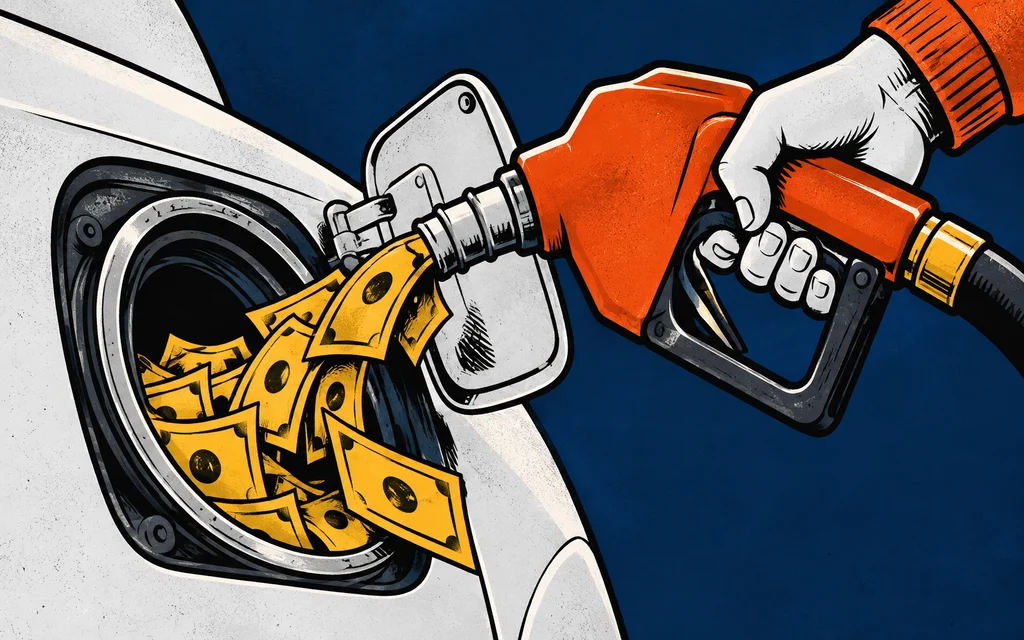
Retail sales rose 0.8% in September, but gasoline accounted for an unusually large share of the increase. For commuters already reorganizing their lives around fuel costs, higher spending is increasingly a measure of what it costs to maintain the same routine.
American consumers spent more in September, but much of the increase came from paying higher prices at the pump. Associated Press retail reporter Anne D’Innocenzio reported Thursday that retail sales increased 0.8% from August, well above economists’ expectations, while sales at gasoline stations jumped 6.4%. Remove gasoline stations from the calculation and retail sales rose just 0.2%.
The Commerce Department figures measure dollars spent rather than the amount of merchandise consumers actually received for those dollars. The Census Bureau adjusts retail sales for seasonal patterns but not inflation, meaning someone who buys the same number of gallons at a higher price registers as increased consumer spending. September made that effect unusually visible: the Bureau of Labor Statistics reported that gasoline prices rose 9.1% during the month and accounted for more than half of the overall monthly increase in consumer prices.
For Social Storytellers Collective reporter Bryson Davis, those numbers show up twice a week. Davis drives 44 miles for work and says filling his tank now costs about $65, with the commute requiring roughly two fill-ups each week. At that pace, transportation is costing him about $130 a week, or roughly $560 during an average month, before accounting for maintenance, insurance or other costs associated with commuting.
“I’m definitely feeling the pinch,” Davis said. “I’m filling up twice a week just to make the commute.” Higher fuel costs have also changed what happens after the workweek ends. Davis said he now evaluates weekend trips based on how much else he can accomplish once the car leaves the driveway. “Every excursion turns into, ‘What other errands can I accomplish while I’m out?’” he said. “If I’m already burning the gas, I’m trying to maximize the trip.”
That calculation is becoming part of the household economics behind the national spending numbers. Gasoline is difficult for many workers to reduce quickly because the distance between home and work does not change when fuel prices rise. A household can delay buying furniture, skip a restaurant meal or postpone replacing a television. A worker who has to report in person still has to get there.
At Davis’ current rate, two $65 fill-ups each week would approach $6,800 over a full year. Every additional dollar required for transportation competes with groceries, restaurants, clothing, entertainment, savings and other expenses. The spending still appears in economic data, but the household has less discretion over where that money goes.
September’s report did contain signs that consumers were still buying beyond necessities. Furniture and home furnishings sales increased 1.3%, electronics and appliance stores rose 0.6%, online retail sales increased 0.3%, and restaurants and bars posted a 1.1% gain. D’Innocenzio reported that Oxford Economics chief U.S. economist Michael Pearce expects consumer spending to lose momentum, however, as higher prices place more pressure on households approaching the holiday shopping season.
Inflation is increasing that pressure across more than gasoline. Consumer prices were 3.7% higher in September than a year earlier, according to the Labor Department, accelerating from 3.4% in August. When prices rise alongside retail sales, stronger dollar spending can coexist with households becoming more selective about what they buy and where they go.
Davis’ weekend routine shows how that adjustment begins before a purchase is ever made. One trip has to perform the work of several because every additional drive carries a cost. As gasoline consumes a larger share of household income, retailers that depend on discretionary trips and purchases will increasingly compete with an expense consumers cannot easily eliminate: getting to work.