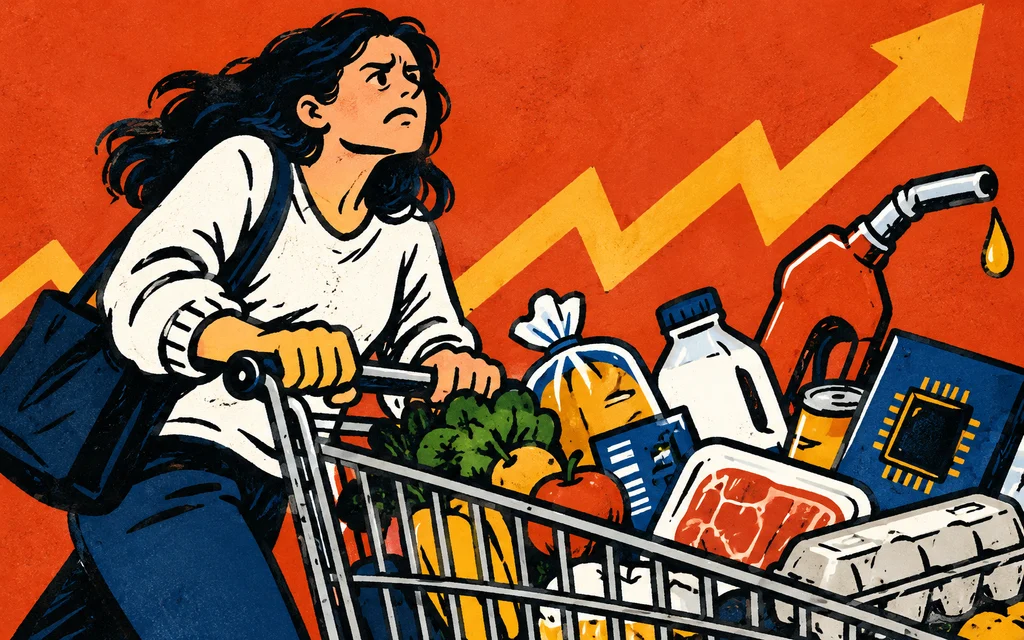
Prices accelerated again in September, with higher energy costs adding to broader increases across the economy just weeks before the midterm elections.
U.S. inflation rose to 3.7% in September from a year earlier, up from 3.4% in August, The Associated Press reported Wednesday, citing new Labor Department data. Prices increased 0.6% from August to September, the largest monthly increase in five months.
Gasoline prices remain one of the biggest drivers. AP reported that the war with Iran has contributed to higher energy costs since fighting began in late February. But the latest report also shows that inflation is not being driven by energy alone. Investment in artificial intelligence and data centers has increased demand for computer chips and electronics, adding price pressure elsewhere in the economy.
The underlying numbers moved higher as well. Core inflation, which excludes food and energy, rose 2.6% from a year earlier, compared with 2.4% in August, according to AP. Core prices increased 0.3% in September alone, suggesting price increases are becoming more broadly distributed rather than remaining concentrated in a handful of volatile categories.
The report also complicates the Federal Reserve’s next decision. Inflation remains above the Fed’s 2% target, and AP reported that economists expect the latest numbers to increase pressure on policymakers to raise interest rates when they meet October 27-28. Higher rates can help slow inflation, but they also make borrowing more expensive for households and businesses.
The timing is politically significant. Affordability has become a major issue heading into the midterm elections, and a renewed rise in inflation gives voters another concrete measure of whether their household finances are improving. Even when wages rise, persistent increases in food, fuel, housing and other everyday costs can make broader economic growth feel much less visible at the household level.
The quick read: Inflation did not simply remain elevated in September; it accelerated. Gas prices are part of the story, but the increase in core inflation shows that price pressure is spreading more broadly across the economy. That makes the next Federal Reserve decision more difficult and keeps affordability at the center of the economic conversation heading into the midterms.