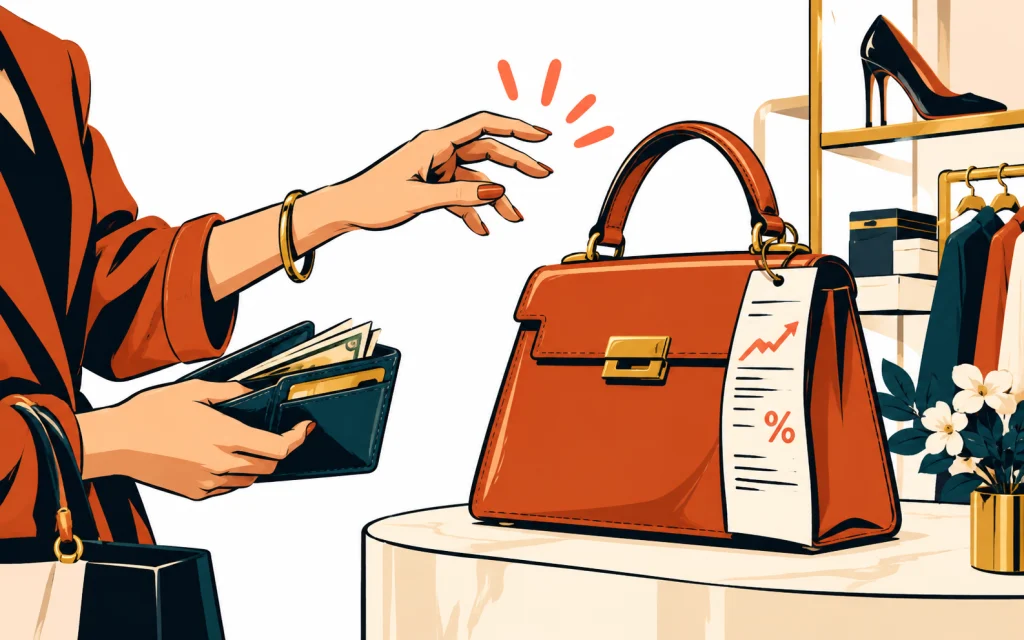
Softening American demand and China’s tax crackdown are exposing the vulnerability of a market built on the assumption that affluent consumers will keep spending.
BY SOCIAL STORYTELLERS COLLECTIVE NEWS DESK
OCTOBER 12, 2026
The luxury industry has long sold an image of insulation from ordinary economic pressure. A handbag costing thousands of dollars is supposed to occupy a different market from a household shopping for groceries. But the world’s biggest luxury groups are encountering a problem that looks increasingly familiar: customers are becoming cautious. Reuters reported October 9 that shares of LVMH and Hermès had each fallen roughly 40% this year, while Gucci parent Kering was down 29%. The approximately $350 billion luxury sector is now confronting weaker American spending and a new Chinese tax enforcement push at the same time. Even businesses selling exclusivity cannot ignore the conditions shaping consumer confidence.
Two markets, one pressure point
China has been central to luxury growth, and the latest concern extends beyond shoppers deciding whether to purchase a watch or a bag. Under rules described by Reuters, wealthy Chinese residents who held assets through offshore trusts face an October 22 deadline to declare and pay back taxes. The policy introduces another source of uncertainty for a customer group that luxury brands have relied upon. It does not mean every wealthy shopper will stop buying expensive goods. It does mean that tax enforcement, asset planning and perceptions of financial security can influence spending decisions even among households with substantial resources.
In the United States, the signal is more direct. Citi data cited by Reuters showed credit-card spending on luxury goods declined for a third consecutive month in September. This is a narrower indicator than total industry sales, but it undermines the idea that affluent American consumers are uniformly immune to hesitation. Luxury companies face a difficult balancing act: preserve exclusivity, protect pricing and persuade customers that a purchase still feels worthwhile. Deep discounting can move inventory but risks weakening the scarcity and prestige on which the brands depend.
The difference between expensive and valuable
Not every category is suffering equally. Reuters identified high-end jewelry, including brands associated with Richemont’s Cartier, as relatively resilient, with some shoppers drawn to gold and materials perceived as retaining value. That contrast is revealing. When confidence weakens, the appeal of a conspicuous purchase may shift toward objects that feel more enduring. A luxury purchase can still be emotional, but buyers may ask a harder question about what they are receiving beyond a recognizable logo.
The industry is also entering a critical reporting period. Reuters said analysts expected LVMH to report quarterly sales of approximately €18.5 billion, around 1% higher than a year earlier, when it reports on Monday. Those are analyst expectations, not reported results. Kering and Hermès are expected to report later in October. Investors will be watching whether sales stabilize, whether margins remain under pressure and whether management teams can describe a credible path back to growth without relying solely on another surge in Chinese demand.
Luxury’s current difficulties are not evidence that wealthy consumers have become financially insecure in the same way as lower-income households. They show that spending behavior depends on confidence, regulation and perceived value across income levels, even when the stakes differ dramatically. A sector that built its identity on being above the economic cycle is discovering how exposed it remains to the world outside the boutique. The next test is whether prestige alone can restore demand, or whether luxury brands will have to make a stronger case for why their products deserve the price.