ONLY ON SSC | SOCIETY & ECONOMY
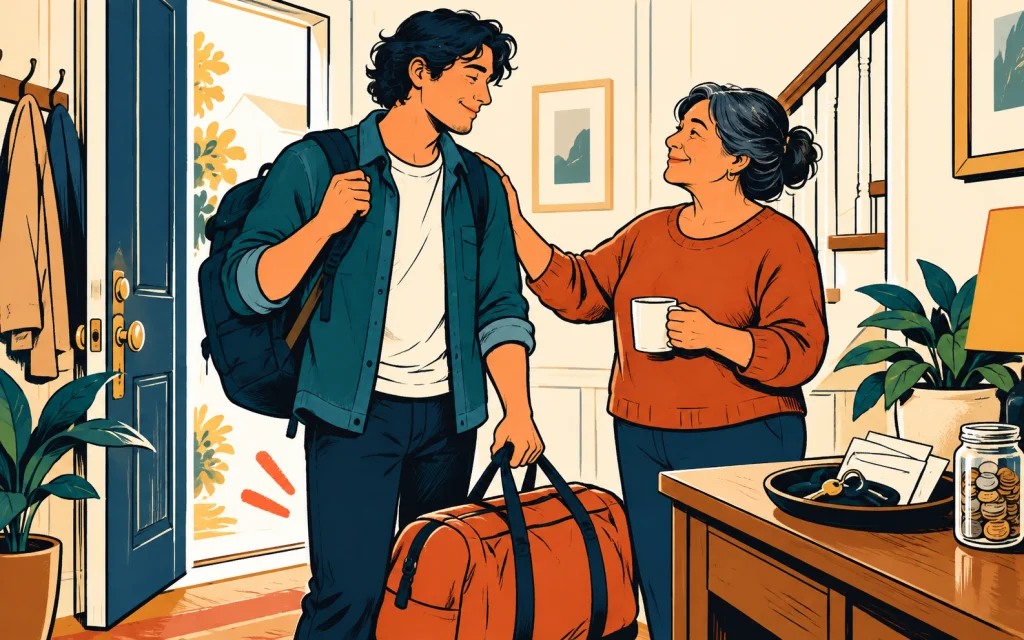
For a growing number of adults, returning to the family home is less about failing to launch than creating enough financial room to try again.
BY SOCIAL STORYTELLERS COLLECTIVE NEWS DESK
Nearly half of Americans under 30 now live with a parent. In 2025, 49% of adults younger than 30 were living with at least one parent, according to the Federal Reserve, up six percentage points from 2022 and 12 percentage points from 2019. The number is striking because moving out has long been treated as one of the clearest markers of American adulthood. Yet the economics surrounding that milestone have changed faster than the cultural expectations attached to it.
For some adults, moving home happens after a layoff. For others, it follows a breakup, an unaffordable lease renewal, graduate school, medical expenses or the realization that saving for a down payment while paying market-rate rent has become nearly impossible. The Federal Reserve found that 23% of renters fell behind on rent at some point during 2025, up six percentage points from 2021. Meanwhile, 47% of 18- to 29-year-olds received financial help from someone outside their household during the previous year, including help with housing, utilities and everyday expenses. The family home increasingly sits inside that financial safety net.
But returning home changes more than a budget. Adults who once controlled their own kitchens, schedules and guest lists may suddenly be negotiating household rules with parents again. Parents can find themselves supporting children they assumed would be financially independent by this stage of life. Bathrooms, groceries, parking spaces and privacy become practical negotiations layered over a much harder emotional one: whether living together represents dependence, cooperation or something in between.
American households have already been moving toward a more multigenerational structure. Twenty-two percent of the U.S. population lived in a multigenerational household in 2024, according to Pew Research Center, compared with 13% in 1970. The Federal Reserve found that by 2025, one-third of adults lived in households containing at least two adult generations. That includes parents living with adult children as well as adults living with their own parents. What can look like an individual decision from the outside is increasingly part of a broader restructuring of how families share housing and expenses.
The flow of support does not always run from parent to child, either. An adult returning home may contribute rent, cover groceries, handle repairs, help an aging parent navigate technology or provide transportation and caregiving. Earlier Federal Reserve research found that among adults ages 30 to 44 who lived with parents, 57% said providing financial help was one reason for the arrangement. Multigenerational living can function as an informal household economy, allowing money, labor and care to move in whichever direction a family needs.
There is also an enormous amount of parental support happening outside the home. Census Bureau research released in September found that roughly 2.6 million parents provided $26.6 billion to 3.7 million adult children age 21 or older who lived elsewhere. That figure does not include money spent supporting adult children already living at home. Families are already absorbing costs that once might have been handled through wages, cheaper housing or easier access to financial independence. Moving back home simply makes that arrangement more visible.
The old adulthood script was relatively straightforward: get a job, move out, establish your own household and keep moving forward. The newer version can include leaving, returning, regrouping and leaving again. For adults navigating high housing costs and an uncertain labor market, the family home is becoming something it has long been in many cultures but American individualism often resisted acknowledging: economic infrastructure. The address may look like a move backward. For some families, it is the thing making the next move possible.