
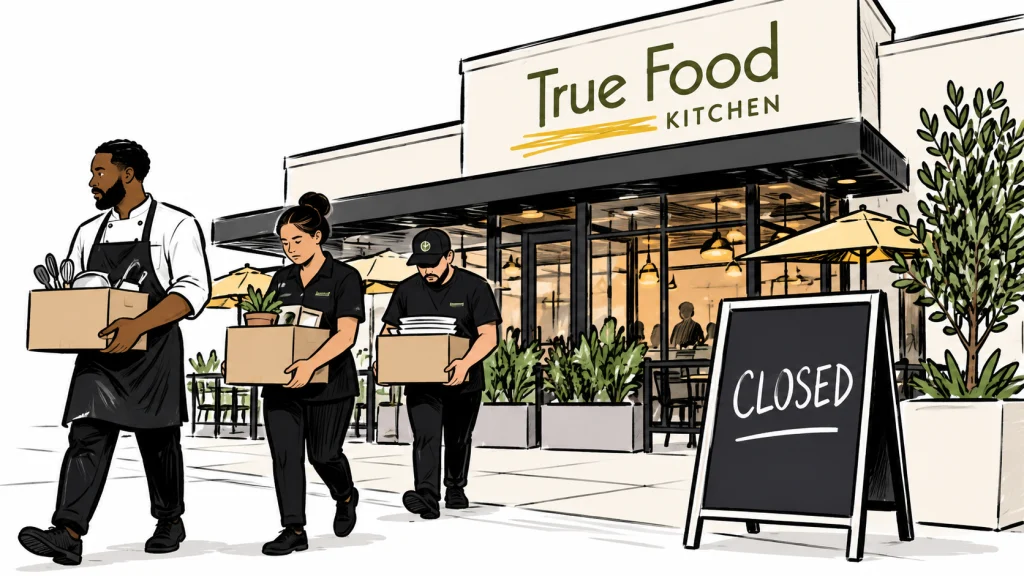
The wellness restaurant chain is closing 12 locations while seeking a buyer. The immediate consequences reach workers, suppliers and the communities losing those restaurants.
True Food Kitchen has closed 12 restaurants and is keeping 34 open across 14 states as it moves through Chapter 11 and seeks a buyer. Business Insider’s October 5 report puts its debt at roughly $42 million. The chain’s famous backers make an attention-grabbing headline, but its account of what went wrong points toward management turnover, shifting strategies and investments that failed. This is a business story about how expansion decisions can catch up with a recognizable brand. For people employed at the closed locations, the restructuring has already moved beyond balance sheets and into the question of where their next paycheck will come from.
A Recognizable Brand Meets an Operating Problem
The company’s explanation deserves more attention than the celebrity shorthand. According to Business Insider, court filings describe repeated changes in leadership, expansion strategy and menu direction, along with unsuccessful investments outside the business’s core mission. That account does not establish that consumers have abandoned healthy dining or that wellness restaurants cannot succeed. It raises a narrower question about whether this company’s operating decisions supported the business it was trying to build. A concept can appeal to customers while individual locations struggle to generate enough sales. Recognizing that difference keeps one bankruptcy from becoming an unsupported verdict on an entire category of food or consumer behavior.
The surviving restaurants also complicate any suggestion that the chain has simply disappeared. In its restructuring FAQ, True Food Kitchen says its open locations continue serving customers, accepting reservations and providing delivery and catering where available. Gift cards remain usable, and the company says the process itself brings no changes to menus or pricing. Those assurances explain what customers can do today; they cannot settle the business’s long-term future. Someone planning dinner needs a current location listing. A prospective buyer needs a business that can support its remaining operations. Employees need clarity about how those plans affect the work behind the service.
The Costs Beyond a Closed Dining Room
Restaurant closures have consequences that are easy to overlook when coverage centers on a famous investor. A server may lose regular shifts, a cook may need another position and a nearby business may lose some of the activity that came with the restaurant. Suppliers and landlords have their own exposure to a company’s financial troubles. The reporting reviewed for this story does not establish the number of employees affected or the terms offered to them, so the restaurant count should not be converted into an estimated layoff total. Those unanswered questions belong in follow-up reporting. They are the details that turn an abstract restructuring announcement into a useful account of its local effects.
For the remaining business, seeking a buyer creates another set of questions. A buyer could preserve recognizable parts of the brand while making different choices about investment, locations or operations. Nothing in the available announcements establishes which of those choices will occur. The appropriate test is therefore concrete: who commits resources, what that commitment supports and what obligations remain toward the people who keep the restaurants running. Customers may judge continuity by the menu and their experience at the table. Workers and vendors will have additional measures, including stable schedules, timely payment and reliable information about the months ahead.
What the Next Chapter Must Show
True Food Kitchen’s immediate task is to sustain the restaurants still operating while the sale process develops. The company’s promise of continuity will be easier to assess through observable results than through statements about the brand’s future. Follow the buyer, the financing and the treatment of closed-location employees, along with whether the surviving restaurants maintain the service customers expect. The bankruptcy offers a lesson for other growing businesses as well: public recognition can attract attention, but expansion still depends on consistent decisions and locations that can support themselves. The next chapter will be written in those operating details, with workers and communities experiencing the results first.