
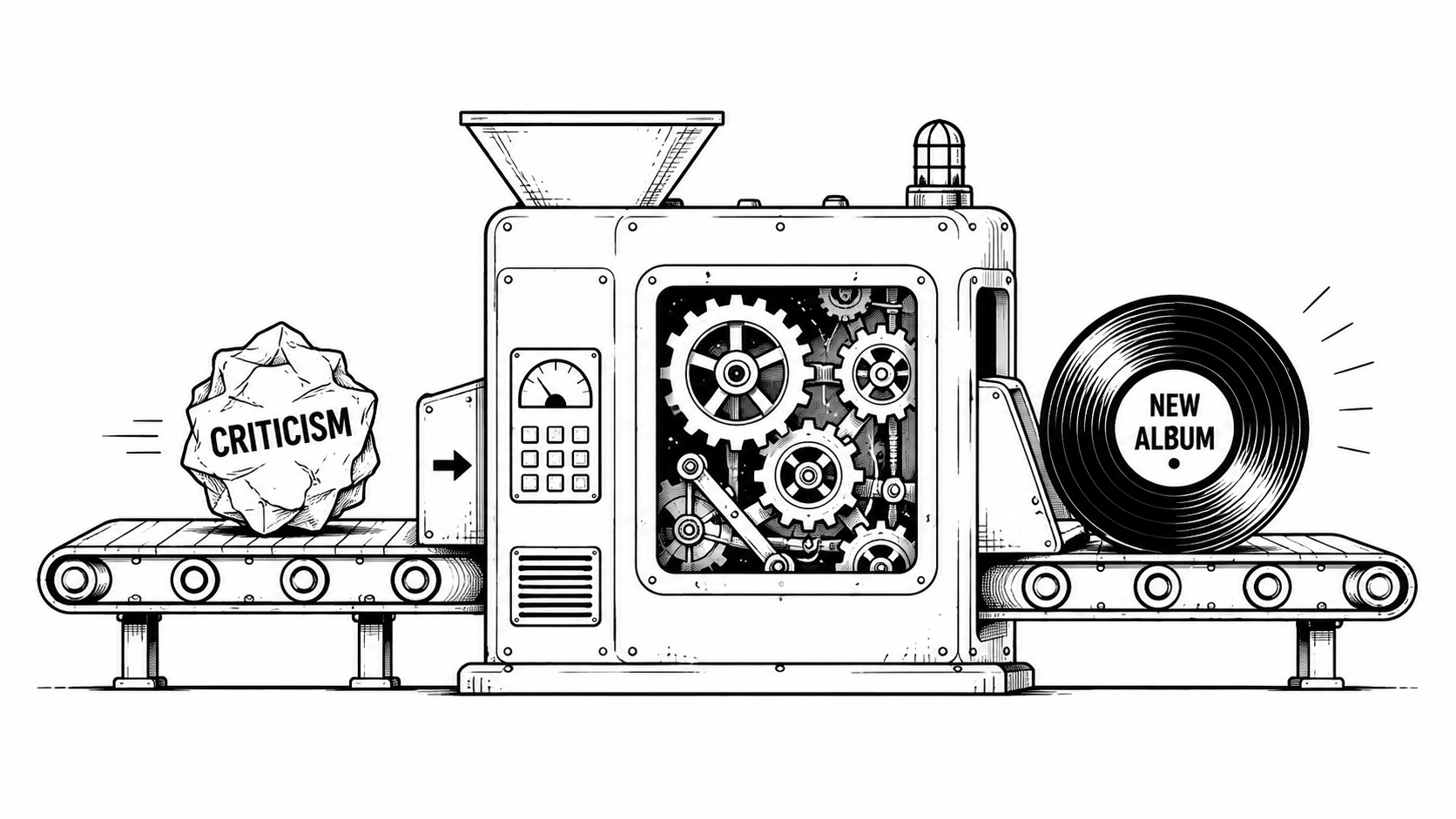
The story of how Bitch arrived on today begins weeks before release day. In mid-May, Lizzo took to her backup TikTok account to tell fans her album was coming in 23 days and ask them to pre-order it. The video was not a polished promotional asset. It was a distress signal. She explained that she had submitted promotional ideas to Atlantic Records — billboards, marketing plans, campaign concepts — and that none of them had been implemented. She said she texted the label weekly. She said she was starting to feel down about it. Then she went out and hung her own posters on city walls.
The context matters because Lizzo was not working in isolation. She was watching what happened to Cardi B. Also on Atlantic Records, Cardi promoted her 2025 album Am I The Drama? with a reported marketing budget of fifty dollars, selling CDs on New York City subway platforms and in the middle of Atlanta streets. The label’s indifference became the campaign. Am I The Drama? debuted at number one on the Billboard Hot 200 and has since been certified triple platinum. When fans accused Lizzo of copying the playbook without credit, she did not deflect. She replied directly: “Hol up — I’ve publicly said Cardi’s rollout changed the game and that I’m inspired by it. She’s one of the reasons I’m going so hard now. I definitely took notes honey.”
That acknowledgment matters analytically. As SSC examined in When Album Rollouts Become Case Studies, Cardi’s campaign was already being studied at Howard University as a repeatable framework — not a personality quirk, but a system. And as The Rollout Is the Story Now documented with Drake’s ICEMAN ice block, the artists sustaining cultural relevance in this environment are increasingly the ones who understand that the story around the music is inseparable from the music itself. Lizzo did not stumble into this. She studied it, named it, and deployed it.
The feud with Nicki Minaj is where the strategy sharpened. The original exchange was not random celebrity friction. Lizzo had publicly criticized Nicki for appearing at a MAGA-affiliated event — a political and cultural line that carried real weight for their shared audience. Nicki’s response was the post Lizzo resurfaced Friday: a public attack targeting her body, her album sales, and her legal situation. The insult was designed to diminish, and it was thrown in retaliation for a political stance. By reposting it on album release day with the caption “Since I’m blocked…,” Lizzo collapsed the distance between the original wound and the present moment. She reminded her audience what the attack was about, who delivered it, and why — and let that context become distribution. Every repost, every debate, every take about the feud was another conversation about the album.
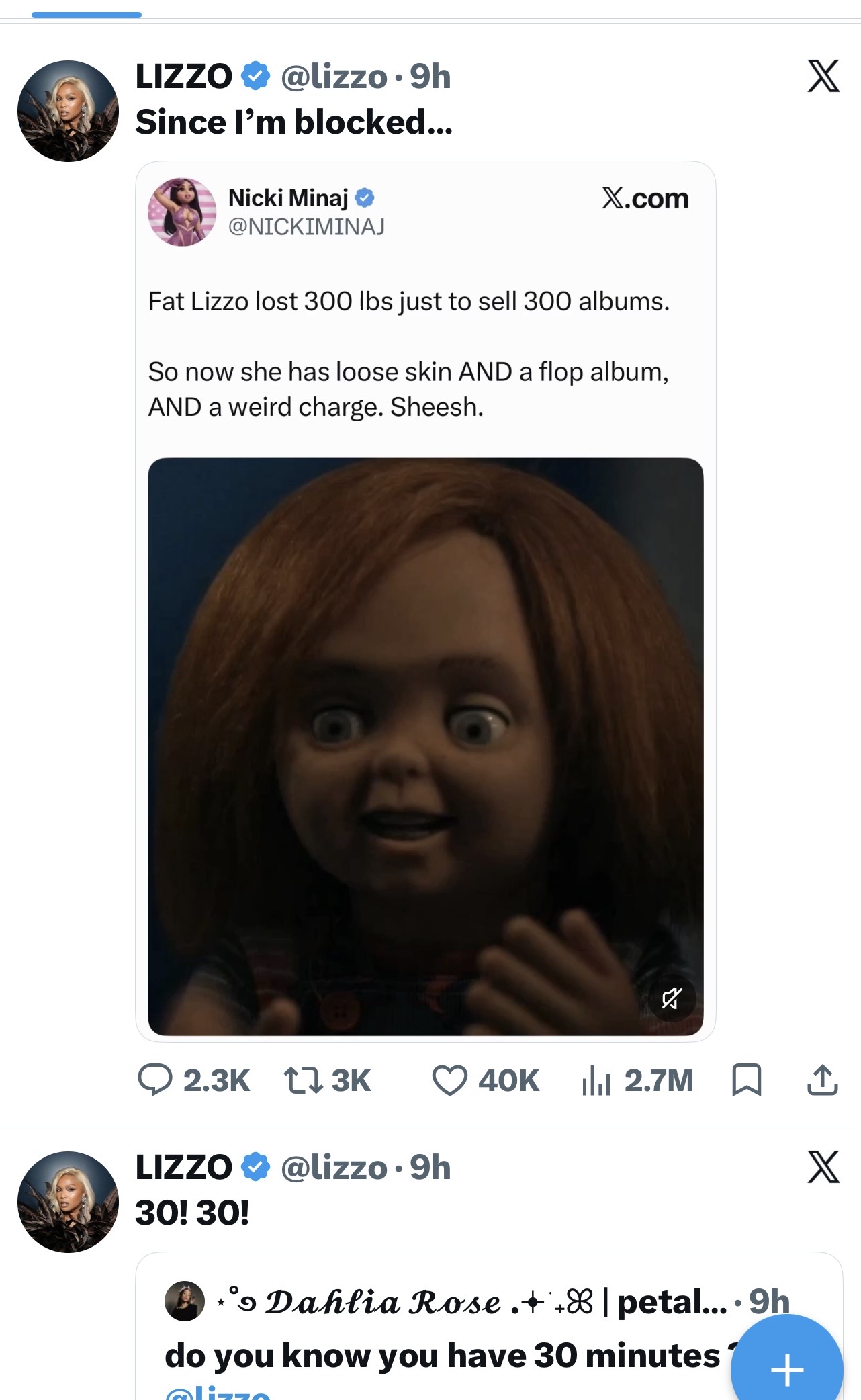
The strategy also aligns with the album’s title. Lizzo has described Bitch as an effort to reclaim a word historically used to diminish women. Reposting an insult from one of her most visible critics follows the same logic. The criticism is not ignored. It is absorbed, repurposed, and folded into the narrative itself. The political dimension makes that reclamation sharper — the insult came from someone she had called out on a matter of values, which means resurfacing it is not just a marketing move. It is a reminder of where each of them stood.
What connects the poster-hanging, the TikTok piano plea, and the Nicki repost is a single structural reality: when the institution fails you, the attention economy offers an alternative infrastructure. Cardi proved it works. Lizzo took notes. The story here is not a feud between two artists, or even a dispute between an artist and her label. It is evidence that the tools for building cultural momentum have shifted — and that the artists who understand those tools no longer need to wait for permission to use them.