
As predominantly white institutions roll back DEI offices and programs — Michigan abruptly closed its DEI offices and ended plans to promote diversity; UT Austin fired staff and canceled programs — the structural contradiction at the center of college sports has become impossible to ignore: these are institutions that rely on Black athletes to generate revenue, fill stadiums, and sustain multi-billion-dollar athletic programs while simultaneously dismantling the infrastructure that supports Black student life on their campuses.
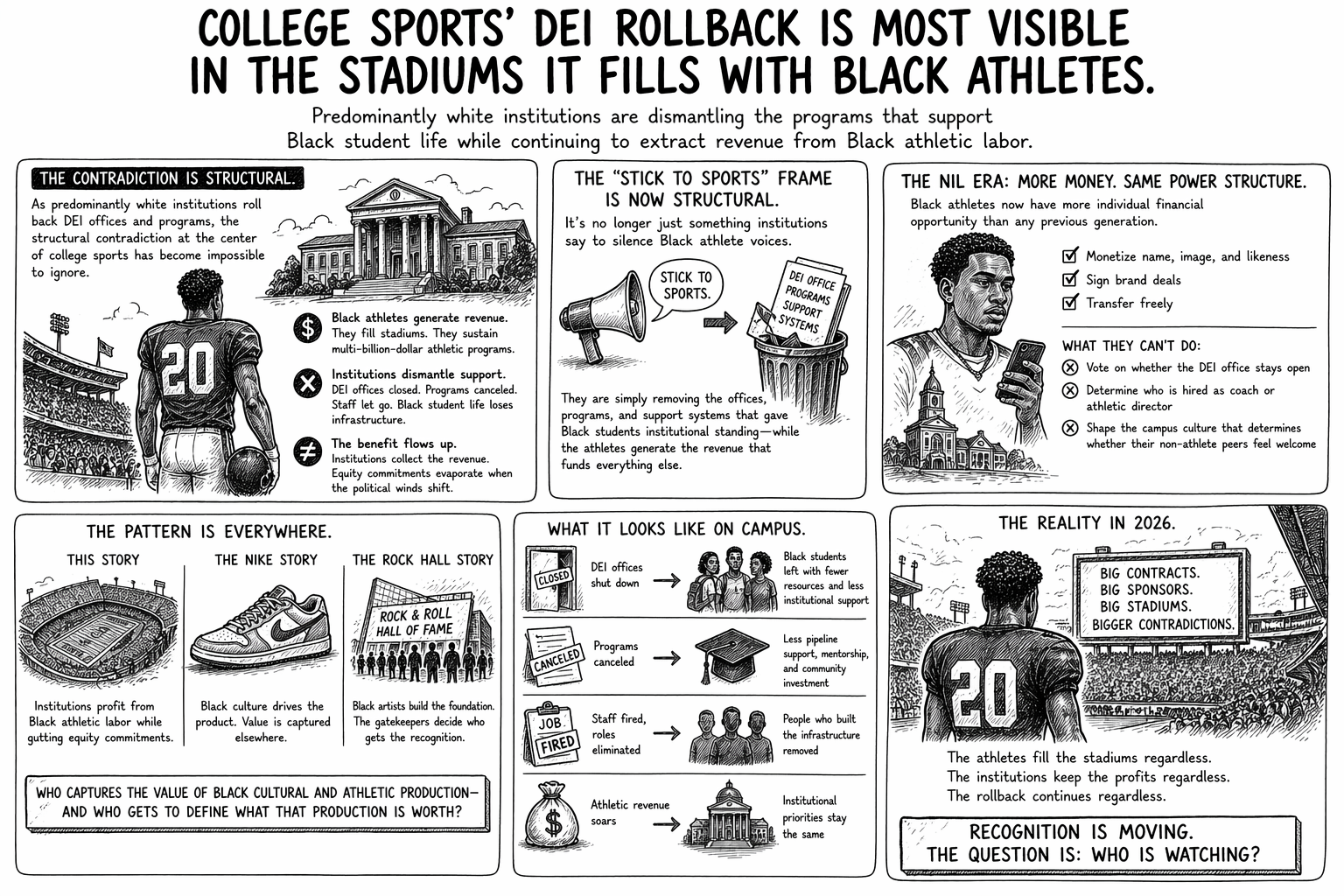
The “stick to sports” framing that has long been used to silence Black athlete voices on political questions is now operating structurally rather than rhetorically. The institutions do not need to tell athletes to stay quiet. They are simply removing the offices, programs, and support systems that gave Black students institutional standing on campus — while the athletes themselves generate the revenue that funds everything else. The NIL era has added a layer of apparent agency that obscures the underlying power structure.
Black athletes now have more individual financial opportunity than any previous generation of college players. They can monetize their name, image, and likeness, sign brand deals, and transfer freely. What they cannot do is vote on whether the DEI office stays open, determine who is hired as their coach or athletic director, or shape the campus culture that determines whether their non-athletic peers feel welcome.
The same question runs through this story, the Nike story, and the Rock & Roll New Edition Hall of Fame story: who captures the value of Black cultural and athletic production, and who gets to define what that production is worth? In college sports, the answer in 2026 is increasingly clear. The institutions collect the revenue. The equity commitments evaporate when the political winds shift. And the athletes fill the stadiums regardless.
Culture in Motion | Structural Reality | News Desk