
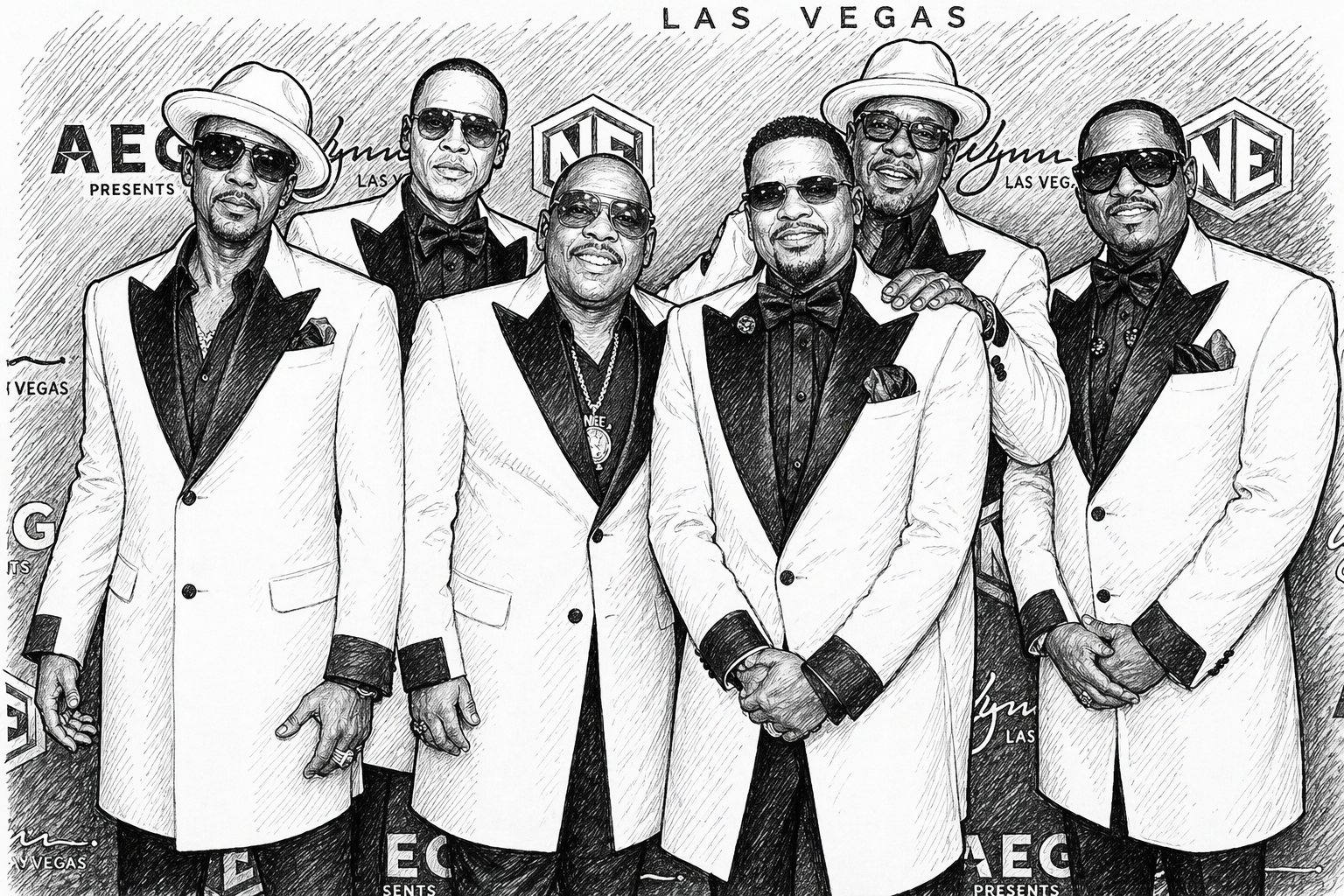
New Edition did not lose the Rock & Roll Hall of Fame vote. They won it. The Boston-born R&B group earned 1,022,683 fan votes in 2026 — more than any other nominee by a wide margin. Bobby Brown called the nomination “a great thing,” saying the group’s prayers were finally being answered. Michael Bivins, speaking at the unveiling of “New Edition Way” in Boston last summer, said the Hall of Fame remained one of the group’s final major goals. The community organized, turned out, and delivered an unambiguous answer.
The Rock Hall inducted Oasis.
This is not a complaint about Oasis. It is an observation about structure. The fan ballot counts as a single vote, weighed alongside more than 1,200 ballots submitted by artists, historians, and music industry professionals. The fan vote, in other words, is not a vote. It is a gesture — a mechanism that creates the appearance of democratic participation while ensuring the institution retains full authority over the outcome. When the community’s consensus is overruled, the Hall does not have to explain itself. It points to the process.
The artists who did make the Class of 2026 tell you something about whose taste governs the institution. Phil Collins, Billy Idol, Iron Maiden, Oasis, Joy Division/New Order — a lineup that reads as a comprehensive survey of white British and American rock credibility. Sade, Luther Vandross, and Wu-Tang Clan are in the class, which matters and should be said. But Sade got in on her second nomination. Wu-Tang made it on their first. Oasis, Iron Maiden, and Joy Division/New Order all got in on their third nomination this year. New Edition, which has met every stated criterion — influence, longevity, cultural impact — is being told to wait.
New Edition is the blueprint for every boy band that came after them. With No. 1 Billboard R&B chart hits like “Cool It Now” and “Can You Stand the Rain,” they gave the world a catalog that still lives at cookouts, weddings, and in group chats to this day. Their successful reiterations through solo careers, and a sold-out reunion tour, only extend the argument. The criteria are not in dispute. What is in dispute — though rarely named directly — is whose cultural framework determines which catalog counts as foundational and which gets described as influential-but-not-quite-ready.
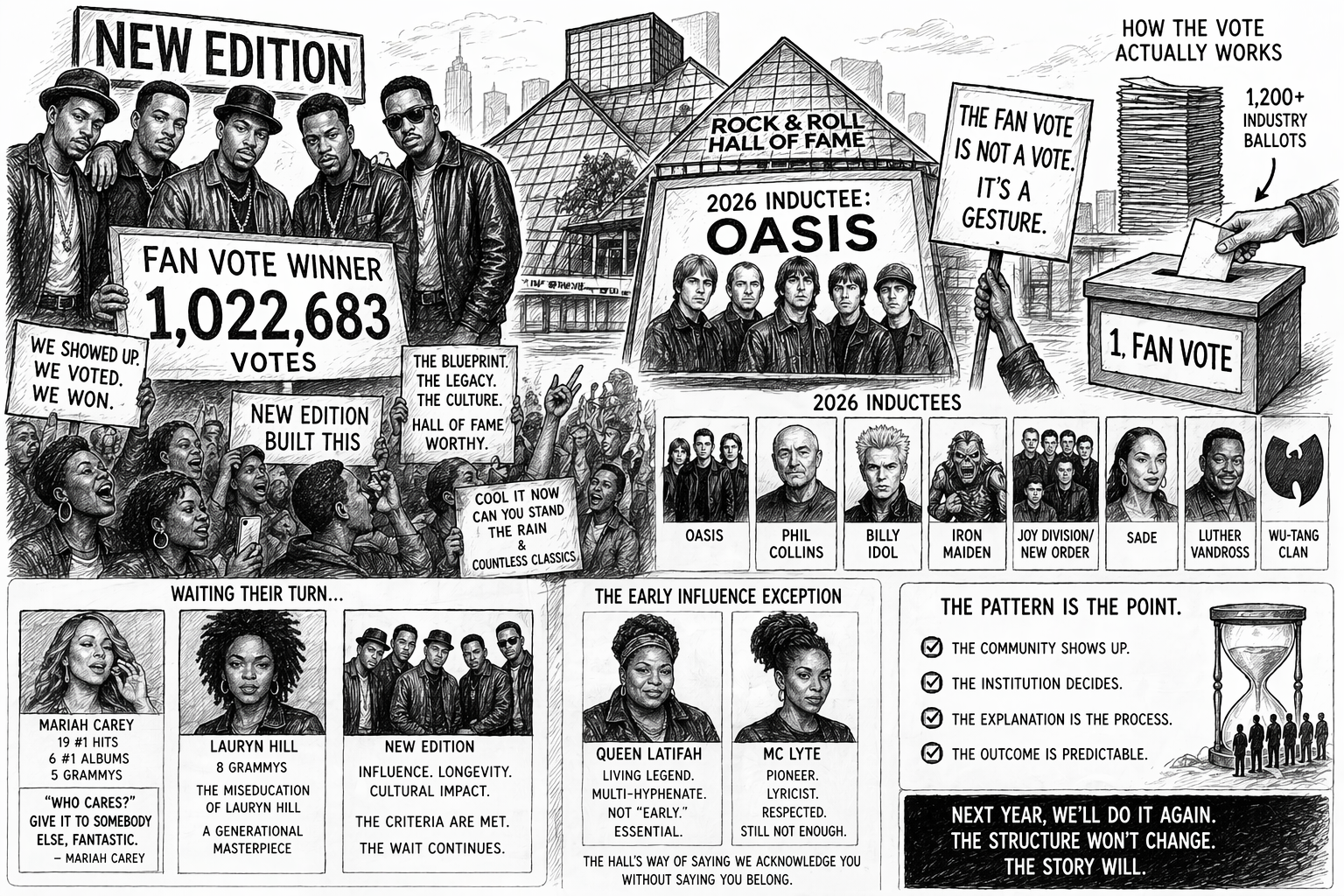
Mariah Carey’s situation sharpens the point. This marks the third straight year Carey has been passed over, despite a résumé that includes 19 No. 1 hits on the Billboard Hot 100, six No. 1 albums, and five Grammy Awards. When asked by TMZ whether she was bothered by the snub, Carey kept it short: “Who cares? Like, give it to somebody else, fantastic.” That response is not indifference. It is a woman who has spent three years watching an institution decline to validate a career that does not need validation, and has decided to stop performing disappointment for their benefit.
Lauryn Hill — eight Grammy wins, The Miseducation of Lauryn Hill still widely considered one of the most important albums in American music history — was also passed over. The list of Black artists waiting accumulates year after year while the institution expands its inductee count, adds new categories, and finds new ways to honor the artists it was always going to honor.
The Early Influence category is where this dynamic becomes most visible. Queen Latifah and MC Lyte were both honored there in 2026. The designation is reserved for artists who shaped the foundation of modern music. It is also, in practice, a category the Hall uses for Black artists who cannot make it through the general vote. Queen Latifah is not an early influence the way artists from a century ago were early influences. She is a living, active artist with a career spanning hip-hop, film, television, and sustained cultural leadership. MC Lyte is one of the most important emcees in the history of the genre. Both artists deserved the performer induction. The Early Influence category is the Hall’s way of saying we acknowledge you without committing to you belong here the same way the others do.
The fan vote will run again next year. New Edition will likely be nominated again. The community will organize again, deliver another million votes, and wait for an institution whose voting body does not reflect them to decide whether this is finally the year. The structure will work exactly as designed.
Culture in Motion | The Critic’s Desk