
Part of The Access Shift — an ongoing series examining how access is being quietly reshaped across American life.
NEWS DESK | SOCIAL STORYTELLERS COLLECTIVE
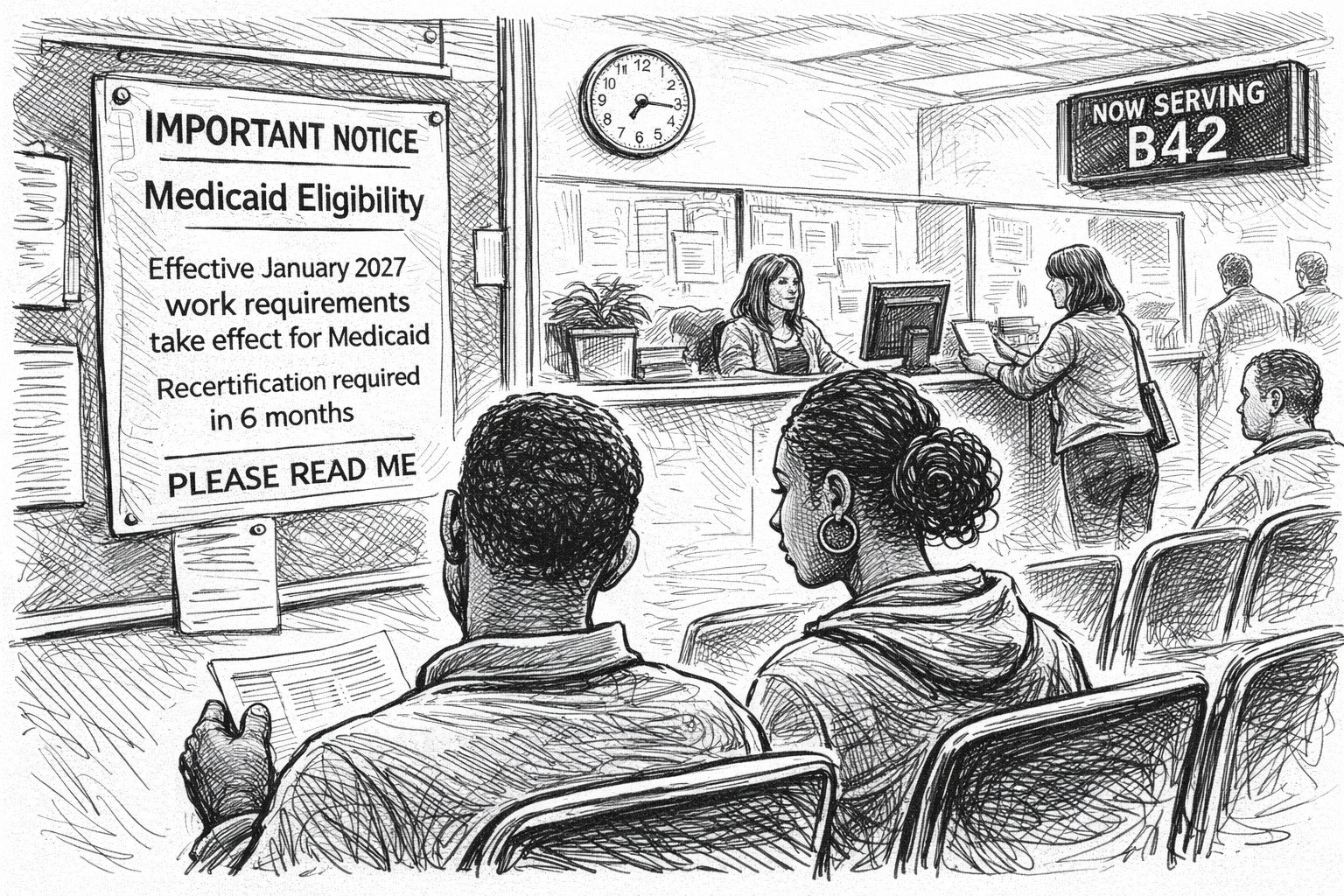
The Medicaid changes signed into law in July 2025 are not a future concern. They are an arriving reality — structured to take full effect after the 2026 midterms, which means the public debate most affected communities need hasn’t fully happened.
The timeline is already in motion. On January 1, 2026, enhanced federal funding for Medicaid expansion expired. In October 2026, eligibility will narrow for certain non-citizen immigrants, cutting off refugees, asylum seekers, and trafficking survivors. By December 31, states must shift to eligibility redeterminations every six months instead of annually — a change expected to push eligible people off coverage due to paperwork gaps. And beginning in January 2027, most recipients will need to meet an 80-hour monthly work requirement to maintain coverage.
The Congressional Budget Office estimates 7.8 million Americans will lose coverage by 2034 as a result of these provisions, contributing to a projected 16 million increase in the uninsured population. That impact will not be evenly distributed. Black Americans make up over 20% of Medicaid recipients, and in the last redetermination cycle, Black and Hispanic individuals were twice as likely as white peers to lose coverage — not because they were ineligible, but because navigating administrative systems while working multiple jobs, managing childcare, and lacking stable internet access is not a level playing field. The work requirement does not account for that reality. It penalizes it.
The immigrant eligibility restrictions deepen that impact, stripping coverage from Haitian, Somali, and other immigrant communities that have built lives and contributed to local economies — communities already navigating heightened enforcement pressure, as SSC has documented in The Airport Isn’t Just a Transit Hub Anymore and The Black Immigrant Population Has Doubled.
Why This Matters
The most consequential policy changes rarely arrive as headlines. They take shape through timelines, paperwork, and eligibility rules that feel administrative until coverage disappears. By the time the data reflects the full impact, millions will already have lost access. The communities most affected are the same ones SSC has tracked across Aid Cuts to HIV Treatment, 250 Million Americans Facing Health Insurance Premium Increases, and The Access Shift series — already operating without margin, already absorbing pressure from every direction. The question isn’t whether these changes will hurt. It’s whether enough people understand what’s coming before it does.
The Access Shift
The gradual redefinition of who systems are designed to serve.
Across sectors—from public infrastructure to healthcare to everyday spaces—access is no longer assumed. As costs rise and systems face increasing pressure, services once built for broad reach are becoming more selective, more conditional, and less universal. The Access Shift explores how these changes are unfolding in real time—and what they reveal about who is included, who is left out, and how the structure of everyday life is quietly being reshaped.