
Part of The Access Shift — an ongoing series examining how access is being quietly reshaped across American life.
NEWS DESK | SOCIAL STORYTELLERS COLLECTIVE
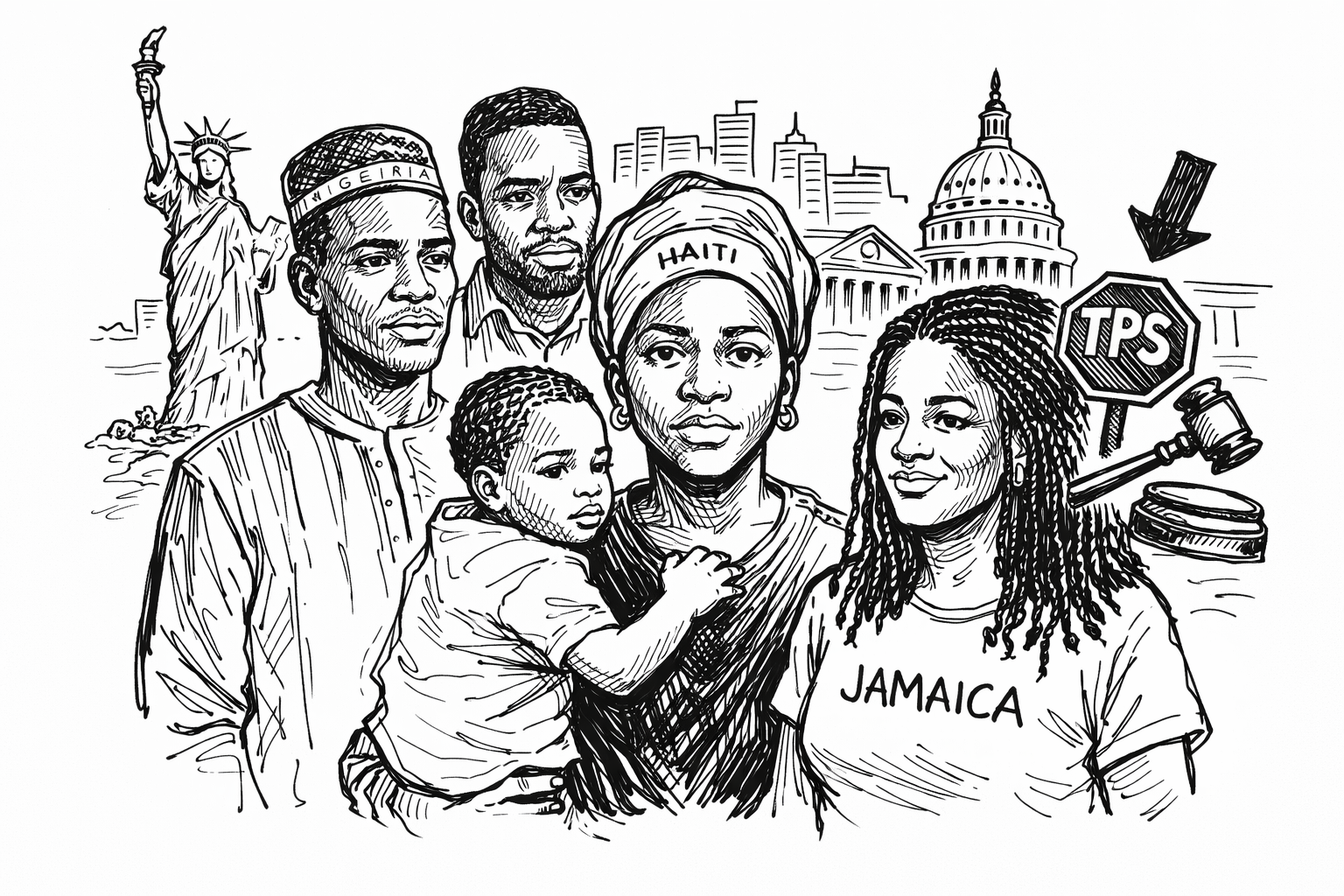
There is a version of Black America that most political conversations never fully account for. It speaks Haitian Creole and Yoruba and Jamaican patois. It arrived after 2000, in numbers that have more than doubled over the past two decades. It is building businesses, raising children, earning degrees, and navigating a policy environment that is increasingly hostile to its continued presence — often without being named in the debates that will determine its future.
One in four Black Americans is either an immigrant or the child of one. That is not a footnote to the story of Black America. It is a central chapter — and it is being written in real time.
The shift in composition matters as much as the scale. For most of the past century, Black immigration to the United States was predominantly Caribbean. That balance has changed. African-born immigrants have increased fourfold since 2000 and now account for 44% of all Black immigrants — matching the Caribbean share for the first time. Jamaica, Haiti, and Nigeria anchor the top of the list, but the diversity behind those numbers is expanding — Ethiopia, Kenya, Ghana, Senegal — a diaspora arriving with distinct languages, traditions, and relationships to Blackness that do not map neatly onto the American framework they are entering.
That arrival is happening inside a policy environment that is actively working to reverse it. Temporary Protected Status — the program that has historically provided legal footing for Haitian and Sudanese immigrants — is being scaled back. The diversity visa lottery, which has been one of the primary legal pathways for African immigrants, is under tighter scrutiny. In 2025, the overall U.S. immigrant population declined for the first time in 50 years. None of the policies driving that decline are explicitly race-based. None of them need to be. The regions being targeted are precisely the ones that have driven Black immigration growth over the past two decades. The effect is specific even when the language is general.
What gets obscured in this debate is who this population actually is. Sixty-one percent of Black immigrants are naturalized U.S. citizens — a higher rate than the overall immigrant population. Thirty-five percent hold a bachelor’s degree or higher. They are not a vulnerable population waiting for protection. They are an established, educated, civically engaged community whose continued growth is being constrained by policies that were never publicly debated in those terms. At the same time, a meaningful share remains exposed — those on temporary protections, those with pending applications, those whose legal status sits inside a program that may not exist next year. As SSC has tracked in The Black Recession Is Already Here and across The Access Shift series, it is always the most vulnerable layer of a community that absorbs the first and sharpest consequences when policy shifts.
Why This Matters
The definition of Black America is expanding — through migration, generational change, and global connection — at the exact moment federal policy is working to slow that expansion. Those two forces are not operating on separate tracks. They are in direct tension. And the communities being reshaped by that tension are the same ones already navigating economic regression, DEI rollbacks, and a contracting federal safety net. The question is not whether Black immigrant communities are resilient enough to withstand what is coming. Most of them have already demonstrated that they are. The question is whether the country is paying close enough attention to what it is dismantling — and who it is asking to absorb the cost.
The Access Shift
The gradual redefinition of who systems are designed to serve.
Across sectors—from public infrastructure to healthcare to everyday spaces—access is no longer assumed. As costs rise and systems face increasing pressure, services once built for broad reach are becoming more selective, more conditional, and less universal. The Access Shift explores how these changes are unfolding in real time—and what they reveal about who is included, who is left out, and how the structure of everyday life is quietly being reshaped.